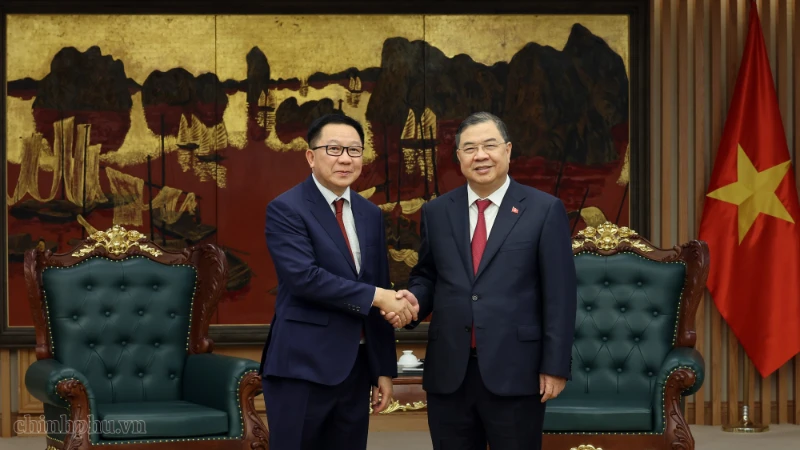
Vietnam Leaders Discuss Enhanced Cooperation and Talent Strategy
Technology
2026年7月15日
5
Nhan Dan
Relations
🇻🇳Vietnam🇱🇦Laos🌐United Nations / ASEAN

Vietnam Leaders Discuss Enhanced Cooperation and Talent Strategy

AI サマリー

On July 14, Vietnamese government leaders held meetings to discuss strengthening cooperation with Laos in agriculture and environment, and strategically developing talent for fields like AI and semiconductors. The nation aims to deepen economic ties with Laos and foster crucial human resources for future growth within the country.

On July 14, the leadership of the Communist Party and the State of Vietnam held several important meetings to discuss strategies for national development and strengthening international cooperation. Enhanced Cooperation with Laos in Agriculture and Environment Standing Deputy Prime Minister Pham Gia Tuc met with Lao Minister of Agriculture and Forestry Linkham Douangsavanh. Both sides reviewed the progress of cooperation in agriculture and environment between the two countries and discussed future directions. Specifically, achievements such as the implementation of high-level agreements, outcomes of the Vietnam-Laos Intergovernmental Committee's meetings, and the recent official visit of the Lao Prime Minister to Vietnam were shared. They agreed to deepen cooperation in areas including cultivation, livestock, forestry, water management, and environmental protection from 2026 to 2030, aiming to promote the processing and trade of agricultural products. The Lao side expressed its commitment to continue supporting Vietnamese enterprises investing in Laos. Promotion of National Talent Development Strategy Central Committee Secretary and Deputy Prime Minister Pham Thi Thanh Tra discussed the development of the "National Strategy for Attracting and Utilizing Talent" with the Ministry of Home Affairs. This strategy, based on the resolutions of the 14th National Party Congress, aims to support the nation's rapid and sustainable development by attracting and utilizing specialized talent, particularly in innovative technology fields such as AI, big data, and semiconductors, as well as experts contributing to national governance and sustainable development. Emphasis was placed on strengthening collaboration between the public and private sectors, and creating a conducive environment with appropriate compensation and development for talented individuals. Personnel Appointments at the Ministry of Education and Training Deputy Prime Minister Le Tien Chau attended a meeting regarding personnel appointments at the Ministry of Education and Training. Mr. Doan Trung Kien and Mr. Pham Quang Hung were appointed as new Deputy Ministers. The Deputy Prime Minister congratulated the new Deputy Ministers, stating that strengthening the leadership team is essential for the education sector to adapt to rapid technological advancements and digital transformation. These meetings underscore Vietnam's focus on its human resource strategy to accelerate economic growth and technological innovation, while deepening its international partnerships.

多角的分析

経済的影響

ベトナムは、ラオスとの農業・環境分野での協力強化を通じて、地域的なサプライチェーンの安定化と農産物貿易の拡大を図っている。これは、ベトナムがASEAN内での経済的影響力を高め、食料安全保障を確保する上で重要な戦略である。また、国内の人材戦略は、AIや半導体といった先端技術分野への投資を加速させ、高付加価値産業への転換を目指すベトナム経済の構造改革を後押しするものと考えられる。

投資家心理

ラオスとの連携強化は、ベトナム企業にとって新たな市場や資源へのアクセス機会を提供する可能性がある。特に農業分野では、ベトナムの技術力とラオスの資源を結びつけることで、新たなバリューチェーンの構築が期待できる。国内の人材戦略は、先端技術分野への投資を促進し、長期的な経済成長の見通しを明るくする要素となるため、テクノロジー関連企業や研究開発への投資に関心を持つ投資家にとって注目すべき動きである。

社会的影響

国家的人材戦略は、AI、ビッグデータ、半導体といった最先端技術分野で活躍する専門人材の育成・確保を目指しており、これは将来のベトナム社会における雇用構造や所得格差に影響を与える可能性がある。優秀な人材が国内に留まり、国の発展に貢献する環境が整備されることは、社会全体の技術レベル向上に繋がる一方、特定の分野に人材が集中することによる新たな課題も生じうる。教育省の幹部人事刷新は、急速に変化する教育ニーズへの対応、特にAIやデジタル化といった新しい教育カリキュラムへの適応を急ぐ姿勢を示している。

市民の声

ベトナム国民にとって、ラオスとの協力強化は、農産物の安定供給や価格に間接的な影響を与える可能性がある。国内の人材戦略においては、AIや半導体などの先端技術分野で活躍できる人材への期待が高まる一方、それらの分野で活躍できない、あるいは教育機会に恵まれない層との間に、新たな格差が生じる懸念もある。教育分野での幹部交代は、子供たちの教育の質や将来の進路選択に影響を与える可能性があり、保護者たちは教育改革の動向を注視することになるだろう。

背景・歴史的文脈

ベトナムとラオスの関係は、歴史的に「特別な関係」と称され、政治、経済、安全保障の各分野で緊密な協力関係を維持してきた。特に経済分野では、インフラ開発や貿易促進が両国関係の重要な柱となっている。今回の農業・環境分野での協力強化は、ASEAN経済共同体(AEC)の枠組み内での地域経済統合を深化させ、食料安全保障を高める狙いがある。一方、ベトナム国内の人材戦略は、2021年の第13回党大会以降、科学技術革新と産業構造の高度化を最重要課題の一つとして掲げている流れを汲むものであり、特に第四次産業革命に対応できる人材育成が喫緊の課題となっている。

原文ソース

Nhan Dan

原文を読む