General articles are free for 24 hours after publish.
Japan-US Align on China Policy? PM's US Visit Ahead of Summit
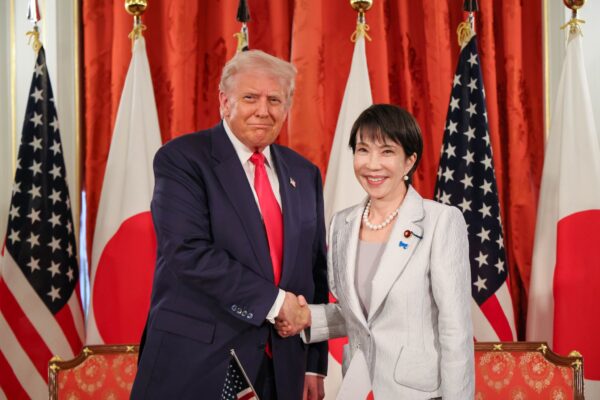
Japanese Prime Minister Sanae Takaichi is seeking a meeting with US President Donald Trump ahead of the US-China summit. Japan, viewing China's military rise as a security threat, emphasizes alignment with its ally, the US, on China policy. However, potential divergences are noted due to US priorities like the Iran situation.
Japanese Prime Minister Sanae Takaichi is seeking to strengthen alignment on China policy with the United States ahead of the US-China summit. The US-China summit, scheduled for September 24 in Washington, is expected to have broad global implications. For Japan, in particular, China's actions are a top national security concern, not only due to its alliance with the US but also its geographical proximity. The Japanese government has repeatedly pointed out, including in its defense white paper, that China is increasing its military capabilities and expanding its activities beyond Japanese waters and the first island chain. The intensified patrols by the Chinese Coast Guard around Taiwan and the regular navigation of Chinese vessels in waters surrounding the disputed Senkaku Islands (Diaoyu Islands) are significant security concerns for Japan. Furthermore, in June, Chinese and Russian military aircraft approached airspace near Okinawa, prompting Japan to scramble fighter jets. In this context, Prime Minister Takaichi, during her visit to the US for the UN General Assembly's General Debate (scheduled for September 22), aims to seek understanding and cooperation on Japan's China policy through a meeting with President Donald Trump. Both the US and Japan share concerns about China's assertiveness in the Indo-Pacific region, and in August, they issued a joint statement criticizing China's launch of submarine-based long-range ballistic missiles. However, differences in priorities between the two countries also exist. The Trump administration currently considers the situation in Iran its top priority, and there is a possibility that the shift of forces to the Middle East could affect the US military's presence in the Indo-Pacific region. Additionally, there is a concern that President Trump might seek to improve economic relations with China, potentially creating a policy divergence with Japan, which maintains a firm stance. While the Japan-US alliance is strong and a major irreversible rift between the two countries is unlikely, Prime Minister Takaichi understands that President Trump, who champions "America First," is a "free agent." In her meeting with the President during her US visit, she will be pressed to strongly impress upon him Japan's national interests and the importance of the Japan-US alliance. If the US-China summit results in Japan's interests being overlooked, it would create an unnecessary challenge for the alliance. Source: The Diplomat Indonesia
Original source
The Diplomat Indonesia