One Year On: Cambodia-Thailand Border Conflict's Lingering Impact on Economy and Civilians
Economy
2026年7月24日
5
CamboJA News
Relations
🇰🇭Cambodia🇹🇭Thailand

General articles are free for 24 hours after publish.

One Year On: Cambodia-Thailand Border Conflict's Lingering Impact on Economy and Civilians

Share
AI Summary

One year after the first round of border clashes between Cambodia and Thailand, a ceasefire largely holds, but the conflict's toll continues to weigh on civilians and the economy. Trade disruptions, labor market impacts, and displacement of residents persist, with unexploded ordnance remaining a concern.

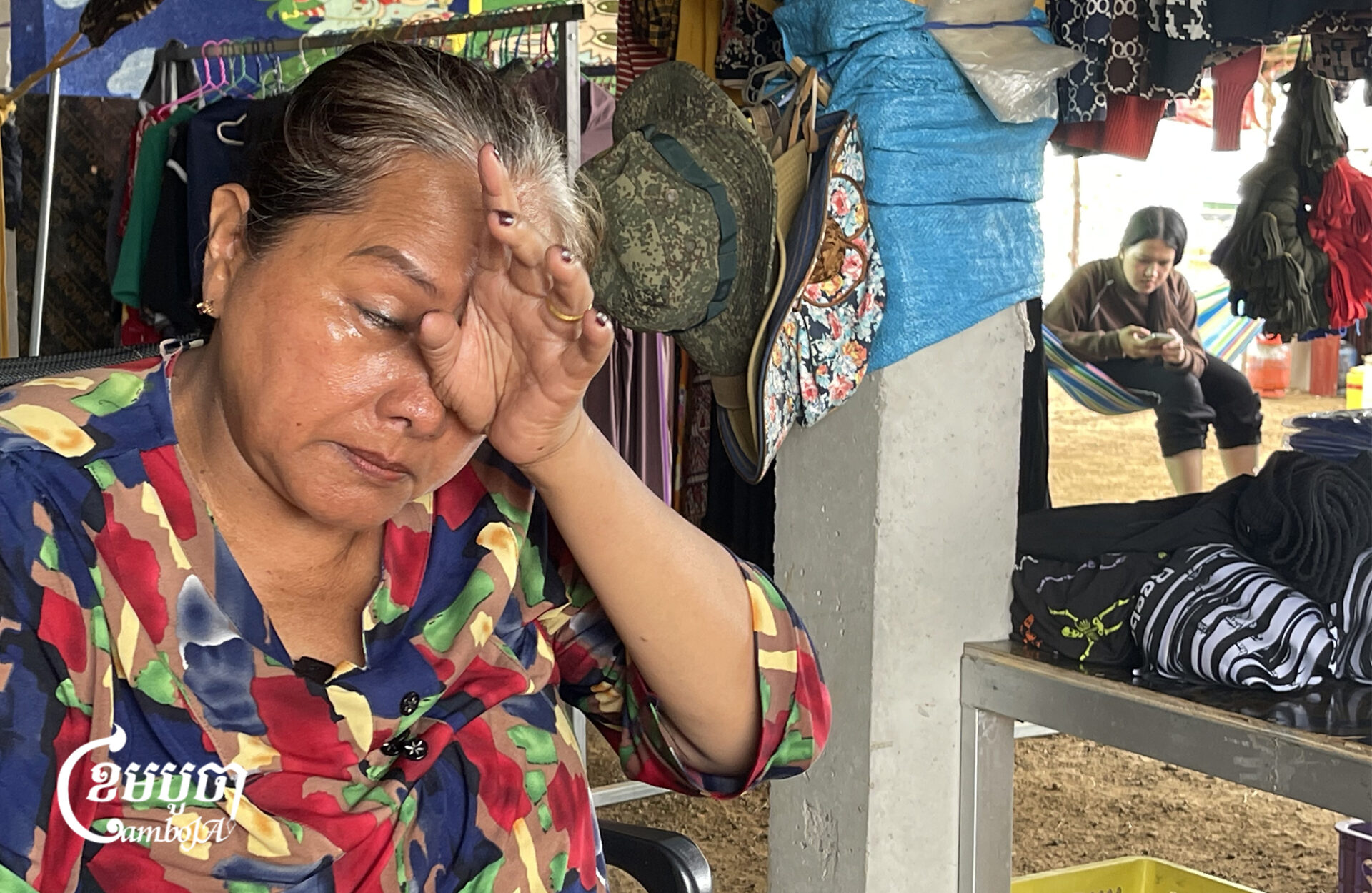
Cambodian Journalists Alliance Association Listen to the audio version of this article (generated by AI). Friday marked one year since the first round of border clashes broke out between Cambodia and Thailand. Despite a December ceasefire that has largely held, the conflict’s toll continues to weigh on civilians and the economy, analysts say. Ky Sereyvath, an economist at the Royal Academy of Cambodia, said the conflict and border closures have significantly disrupted bilateral trade, damaging infrastructure and forcing businesses along the border to suspend operations. Cambodia banned most land trade with Thailand ahead of the outbreak of hostilities in July 2025. Even so, exports to Thailand reached $357 million in the first half of 2026, while imports from Thailand stood at around $1 billion, according to Cambodia’s General Department of Customs and Excise (GDCE). In the same period last year, exports stood at around $448 million and imports at over $1.7 billion. “The Thai market has been diverted to markets in Vietnam and China,” Sereyvath said, adding that some Cambodian agricultural products have lost access to what was once their primary market. He called on the government to encourage local investment, particularly in small and medium-sized businesses. The economic fallout has also extended to nearly one million Cambodian migrant workers who returned from Thailand as fighting broke out. The World Bank said the conflict has significantly worsened economic challenges by disrupting labor markets, remittance flows and supply chains. Combined with a property downturn and other stressors, the bank trimmed its forecast for Cambodia’s GDP growth to 3.9% this year, before an estimated recovery to 4.9% in 2027. Labor Ministry officials said jobs have been secured for most returnees, but former migrant workers and labor rights groups have highlighted a lack of adequate, secure employment. The struggle for stable work has also extended to nearly 20,000 Cambodian border residents who remain displaced and say they have been uprooted from their livelihoods and homes, many of which now lie behind Thai barricades. Nearly 4,000 families are now living in temporary housing units built by the government in Banteay Meanchey and Preah Vihear provinces, authorities said. Koum Oeurb, a villager from the disputed village of Chouk Chey along the Banteay Meanchey border, now occupied by Thai forces, said he hopes the Cambodian government will secure the return of land that Thailand claimed as its territory during a broader round of fighting in December that stretched across the more than 800-km shared border. “I am still saddened by the loss of my land and house. I lost everything because of the Thai [forces],” he said. Thai Defense Ministry spokesperson Surasant Kongsiri said Thai troops are positioned along frozen frontline areas in line with the terms of the ceasefire. “These troop deployment lines are often located where the boundary lines have not been mutually agreed and demarcated,” he said. Maly Socheata, spokesperson for the Cambodian Ministry of National Defense, did not immediately respond to requests for comment. While senior Cambodian officials spent Friday paying respects to soldiers and border police killed – figures that have not been disclosed – over three weeks of fighting rooted in long-standing border disputes and tit-for-tat escalations, bilateral talks with Thailand have largely stalled. The fighting killed more than 100 people on both sides of the border and displaced nearly one million at its peak, according to previous tallies from Thai and Cambodian officials. “We, the government, are demanding our land back through diplomatic negotiations, peaceful existing mechanisms and international law,” said Pen Bona, spokesperson for the Cambodian government. He claimed Thai forces’ occupation of certain border zones, and their installation of shipping containers and concertina wire for makeshift fences, violates the bilateral ceasefire both sides agreed to in December, after a truce brokered by U.S. President Donald Trump and Malaysia in July 2025 collapsed. Bangkok has denied ceasefire violations, and military officials have said they intend to expand permanent border fences. Bona said the government is providing assistance to affected families and acknowledged the border closure has hurt trade and commerce, but said Thailand’s economy has borne a larger burden given the trade imbalance. Another lingering concern is unexploded ordnance along the border. Ly Thuch, first vice president of the Cambodian Mine Action and Victim Assistance Authority, said survey teams have identified dozens of unexploded munitions left from the clashes, contamination that has affected nearly 350 villages across seven border provinces. “We have recorded at least five incidents involving cluster munition remnants affecting civilians. These incidents have resulted in 10 civilian casualties, including 3 fatalities. All of the victims were civilians,” Thuch said. Thailand, which is not a signatory to the U.N. convention banning cluster munitions, has confirmed using them during the conflict. Cambodia has also been accused of laying fresh landmines that maimed Thai soldiers last year, an allegation it has denied. “As recent incidents have shown, children and local people have become victims while carrying out their daily activities,” Thuch said. “They not only affect farming and development but also create fear.” Thuch said he believes the actual extent of contamination is greater than currently recorded, as some sensitive, high-risk areas remain inaccessible to survey teams and have yet to be fully assessed. The concerns come as Cambodia is already one of the most heavily contaminated countries in the world by unexploded ordnance, a legacy of decades of civil war in the last century. Sophal Ear, a Cambodian-American political scientist and professor at Arizona State University, said concerns over landmines remain a source of tension, and that the most dangerous unresolved issue is the absence of any agreed interpretation of where each side’s forces are entitled to remain in disputed areas. “Unless these issues are managed through sustained dialogue and technical cooperation, the risk of miscalculation will remain even if neither government seeks another major conflict,” he said.

0

Original source

CamboJA News

原文を読む