General articles are free for 24 hours after publish.
Indonesia Advances mRNA-Based Dengue Vaccine Development
Indonesian research institutions and companies are collaborating to develop an mRNA-based vaccine targeting all four dengue virus serotypes. Building a supportive ecosystem for commercializing research findings is a key challenge.
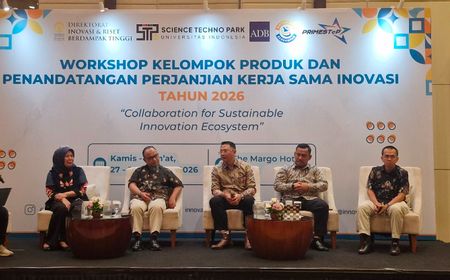
JAKARTA - The development of health technology in Indonesia requires an ecosystem that is able to bring research results from the laboratory to become products that can be used by the community. One of the candidates being developed is a tetravalent dengue vaccine based on messenger RNA (mRNA) technology. The effort is part of a collaboration between the University of Indonesia (UI), the National Research and Innovation Agency (BRIN), the Education Fund Management Agency (LPDP), PT Etana Biotechnologies Indonesia (Etana), and Tsinghua University. In the Product Group Workshop and Signing of the 2026 Innovation Cooperation Agreement at UI, Depok, Thursday, August 27, Director of Corporate Relation & Strategic Affairs Etana, Andreas Donny Prakasa, said that biotechnology innovation is not enough to stop at the success of research. According to him, one of the biggest challenges in the development of biotechnology products is the valley of death, which is the phase when research results show potential, but are not ready to be developed into commercial products. The stages leading to a health product that can be used by the community require a long process. Research results need to go through scale-up development, validation, compliance with Good Manufacturing Practice (GMP) standards, preclinical and clinical testing, as well as regulatory processes and market preparation. "The industry needs to be involved from the early stages of research so that market needs, production scale, regulations, and economics are considered. This is where the teaching factory plays a strategic role, as a place where research results are prepared to be upgraded from laboratory scale to industrial standards," said Donny. The research results of interest are mRNA-based tetravalent dengue vaccine candidates. The technology was developed considering the diversity of dengue viruses circulating in Indonesia. Representative of the UI dengue vaccine research team, Prof. Dra. Beti Ernawati Dewi, explained that the vaccine candidate was designed to cover four dengue serotypes, namely DENV-1 to DENV-4. The development was carried out by utilizing in silico mutation analysis as well as artificial intelligence approaches. These approaches are used to help design vaccine candidates that match the characteristics of local dengue strains. "The development of this mRNA-based dengue vaccine is part of an effort to bring innovations that meet Indonesia's needs, by utilizing the diversity of dengue strains circulating in the country," said Prof. Beti. Based on preliminary testing, the candidate showed neutralisation activity against all four dengue serotypes. Several vaccine constructs have also been reported to show better results than wild type and the commercial comparator Dengvaxia. However, the results of the initial research do not mean that the vaccine is ready for widespread use. The vaccine candidate still needs a series of research and testing stages to ensure its safety, effectiveness, quality, and feasibility before it can enter the stage of use in the community. Apart from technological capabilities and funding, the regulatory aspect is an important part of the health innovation journey from research to product. Representative of the Food and Drug Supervisory Agency (BPOM), Jeffeta Pradeko Putra, explained the BPOM GROW program (Green Research and Opportunities With BPOM). This initiative is designed to provide assistance to researchers in regulatory aspects, including the process leading to the production and registration of research products. "BPOM is committed to supporting the downstream of research from the beginning. Through collaboration between academics, businesses, and governments, we facilitate regulatory assistance to distribution permits so that Indonesian researchers' innovation products meet safety and quality standards, and are ready to provide real benefits to the community," said Jeffeta. Assistance from the initial stage is considered important because the development of biopharmaceutical products has complex safety and quality requirements. By understanding the regulatory needs from the start of the research, it is expected that technology development can run more directed. The development of vaccines and biopharmaceutical products requires time and large resources. Therefore, the success of downstream processing does not only depend on one party. The strengthening of teaching factory and laboratory facilities of universities needs to be linked to the Technology Readiness Level (TKT) or Technology Readiness Level (TRL). The mapping helps determine the position of an innovation as well as the stages that need to be taken before the technology can be further developed. Collaboration also needs to include funding, technology evaluation, testing, regulatory compliance, and commercialization readiness. In the context of health products, the Pentahelix approach is considered relevant because it brings together five elements, namely academics, industry, government, community, and media. Through the 2026 Product Group Workshop which took place on 27-28 August 2026, Etana together with UI and BPOM encouraged the strengthening of the research downstream ecosystem. A number of focuses include mapping TKT/TRL from the early stages, continuity of funding from research to commercialization, and increasing industry involvement in assessing the potential for developing research results. Forums that bring together researchers, industry, and regulators on a regular basis are expected to shorten the distance between innovations in the laboratory and public health needs. For the development of dengue vaccines, this kind of ecosystem is important so that innovations that arise from research in the country do not stop as prototypes, but have a clear path to the testing stage, meeting standards, and ultimately can provide benefits to the community.
Original source
VOI English