Thailand's Education Shift: From Academics to Well-being
In Thailand, parents are increasingly prioritizing a school's 'well-being' — encompassing emotional health and stability — alongside academic results. Institutions like Singapore Global International School (SGIS) are adapting, aiming to balance academic rigor with holistic child development.
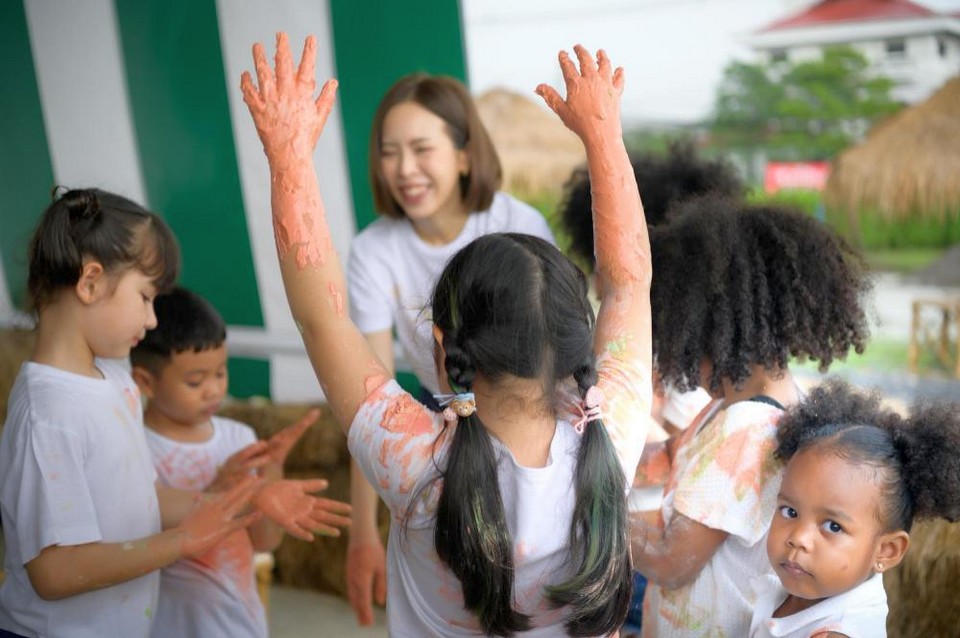
In Thailand, parents are increasingly judging school quality not just by exam results, facilities, and university pathways, but by a child's "well-being." This shift reflects a growing concern for children's emotional health and stability. Schools like Singapore Global International School (SGIS) in Bangkok are adapting their educational approaches to integrate academic rigor with holistic development, including values and the child's everyday experience. Parents are asking more critical questions: Can a school help children work seriously without constant pressure? Can it build confidence without complacency? Can it foster the emotional steadiness needed for a changing world? Well-being is no longer a vague promise but a practical measure of whether a school understands children as learners, classmates, and young people. The question for parents is not only whether a school can deliver results, but whether its environment helps children achieve those results in a healthy, stable way. Well-being, once considered a side issue addressed through counseling or support for struggling students, is now seen as intrinsically linked to a student's ability to concentrate, manage pressure, and build relationships. When children feel anxious or unseen, even strong teaching can lose its effectiveness. Therefore, the environment that allows children to learn well is becoming as crucial as the teaching itself. Parents are looking beyond superficial happiness, recognizing that a cheerful campus does not equate to a healthy school culture. True well-being is quieter, evident in how teachers respond to student struggles, how routines are managed, and whether students feel genuinely known. SGIS, for instance, frames its approach around Singapore's research-based pedagogy, holistic development, and education that extends beyond exam results. Structure and predictability, often overlooked aspects of well-being, are also gaining importance. Clear routines can reduce uncertainty, especially for students who feel overwhelmed by change. A steady school day with clear expectations and purposeful learning can enhance a child's sense of security. Furthermore, well-being shapes long-term readiness by fostering resilience, emotional steadiness, independence, and responsible decision-making—qualities essential for navigating a complex world. For parents comparing school options, the more pertinent question is: "Will this environment help my child learn, cope, relate to others, and grow with a sense of balance?" Well-being does not replace academic standards; rather, it helps make them sustainable, ensuring that achievement is built on steady foundations.
多角的分析
タイの私立・国際学校市場は、保護者のニーズの変化に対応することで、新たな成長機会を見出している。ウェルビーイング重視は、教育サービスの高付加価値化を促し、結果として学費の上昇につながる可能性がある。これは、教育格差の拡大という経済的・社会的な課題も同時に提起する。
教育セクターへの投資家は、ウェルビーイングをカリキュラムに組み込む学校への関心を高めるべきだ。これは、長期的な生徒維持率の向上や、ブランドイメージの強化に繋がり、結果として投資リターンの安定化に寄与すると考えられる。特に、データに基づいたウェルビーイング指標を持つ学校は、透明性が高く魅力的である。
タイ社会では、過度な学業競争が子どもの精神的負担となっている現状が浮き彫りになっている。ウェルビーイング重視へのシフトは、子どもの健全な成長を支える社会的な機運の高まりを示す。これにより、学校と家庭が連携し、より包括的な子育て環境を構築することが期待される。
バンコクの保護者たちは、子どもの学業成績だけでなく、学校での日々の生活における精神的な健康や幸福度を重視するようになっている。これは、子どものストレスやプレッシャーに対する懸念の表れであり、より人間的でサポートの行き届いた教育環境を求めていることを示している。
背景・歴史的文脈
タイの教育システムは、長らく学業成績を最優先する傾向にあった。特に、シンガポールのようなアジアの成功モデルに影響を受け、厳格なカリキュラムや試験対策が重視されてきた。しかし、近年、過度な競争がもたらす子どもの精神的負担や燃え尽き症候群が社会問題化し、保護者の間で教育のあり方に対する疑問が呈されるようになった。これを受け、一部の私立・国際学校が、学業成績だけでなく、子どもの感情的・社会的な発達を促す「ウェルビーイング」を教育の柱として打ち出す動きが加速している。これは、タイ社会における価値観の多様化と、より人間中心の教育への希求を反映している。
原文ソース
Pattaya Mail