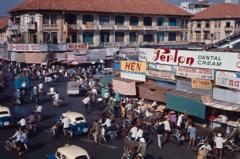
Saigon at 50: The Lost Memory of 'Freedom' and a Changing Vietnam
Fifty years after the end of the Vietnam War, the former Saigon, now Ho Chi Minh City, has lost its name and the atmosphere of freedom it once represented. The author laments the loss of intellectual freedom and diversity amidst economic growth, questioning the meaning of 'freedom' in modern Vietnam.
Fifty years after the end of the Vietnam War, the former Saigon, once the capital of the Republic of Vietnam, has been renamed Ho Chi Minh City, and with its historical name, the memory of the "freedom" that once existed is being recounted. Writer Nguyen Vien, based on his experiences living in the city since his move to Saigon in 1954, writes about the city's changes and his nostalgia for what has been lost. Vien recalls his family's experience of fleeing their home village in 1961 after it was attacked by the National Liberation Front. He then reflects on his position as a "loser" under the regime after April 30, 1975, from his experience working as a civil servant in Saigon. He notes that the Communist Party had planned to establish Ho Chi Minh City even before the war, and that Saigon and the old Gia Dinh province were officially merged to form Ho Chi Minh City in 1976. Vien states that he initially had no special feelings about the city's renaming or the expansion of its administrative boundaries. However, 50 years later, he laments the loss of the "intellectual and open atmosphere" and "respect for differences of opinion" that once characterized Saigon. He contrasts this with his student days, when he could interact with others regardless of ideological differences, pointing out that in today's Ho Chi Minh City, free expression and diverse exchange of opinions have become more difficult. For example, he notes that while they used to print their own books and magazines and express their ideas freely, this environment is now gone. Vien interprets the administrative district's name "Saigon" being lost as an effort by well-intentioned people to preserve the memory of it being a "land of freedom" and a source of inspiration for new ideas. While acknowledging that the city has become more prosperous due to economic growth, he emphasizes that Saigon's "spirit and mettle" – its flexibility in embracing new things – is the driving force behind Vietnam's overall progress and the most commendable aspect. He concludes by stating, "Only in freedom can humans truly be themselves. And only when humans understand change can there be progress." While Vietnam is currently experiencing rapid economic growth under a one-party system, this article suggests concerns that the free discourse and diversity that characterized the former Saigon may be diminishing. This hints at the challenges modern Vietnam faces in balancing its pursuit of economic development and its relationship with the international community with its internal values and freedoms.
多角的分析
ベトナム経済は近年目覚ましい成長を遂げ、特にホーチミン市は経済の中心地として発展を続けている。しかし、この記事は経済成長の裏側で、かつてサイゴンが持っていたとされる「知的で開放的な雰囲気」や「多様な意見の尊重」といった非物質的な価値が失われつつある可能性を示唆している。これは、経済発展が必ずしも社会全体の幸福度や自由度の向上に直結しないという、多くの発展途上国に共通する課題を浮き彫りにしている。特に、思想・表現の自由が制限される一党体制下では、経済成長の恩恵が一部に偏るリスクや、社会的な不満が蓄積する可能性も考慮する必要がある。
ホーチミン市はベトナム経済の牽引役であり、外国人投資家にとって魅力的な市場であり続けている。都市のインフラ整備や不動産開発は活発であり、経済成長に伴う消費市場の拡大も期待できる。しかし、この記事が示唆するような、過去の自由な雰囲気が失われ、社会的な閉塞感が強まる傾向は、長期的な投資環境においてリスク要因となり得る。特に、表現の自由や情報へのアクセスが制限される社会では、市場の透明性や予測可能性が低下する可能性があり、投資家は政治的・社会的なリスクを慎重に評価する必要があるだろう。日本企業も、ベトナムの経済成長の恩恵を受ける一方で、こうした社会的な変化や潜在的なリスクを理解し、事業戦略に反映させることが求められる。
この記事は、ホーチミン市(旧サイゴン)の名称変更50周年を機に、都市のアイデンティティと「自由」という概念について深く考察している。著者は、経済成長と都市の物理的な発展は認めつつも、かつてサイゴンにあったような、思想や意見の多様性を尊重し、自由に表現できる社会的な雰囲気の喪失を嘆いている。これは、ベトナム社会が、経済発展という目標を追求する中で、失われつつある過去の価値観や、市民の精神的な充足感との間で葛藤を抱えていることを示唆している。特に、若い世代がSNSなどを通じて情報にアクセスする中で、過去の「自由」の記憶や、現代社会における自由のあり方について、どのような考えを持つようになるのかが注目される。また、地方出身者と都市住民の間、あるいは異なる政治的見解を持つ人々の間での社会的な摩擦や、それらがどのように管理・抑制されているのかも、社会的な文脈として重要である。
ホーチミン市(旧サイゴン)の名称変更50周年という節目に、この記事は市民、特に長年この街に住む人々の複雑な感情を代弁している。著者は、経済成長によって街が豊かになったことを認めつつも、かつてサイゴンにあった「自由な空気」や、異なる意見を持つ人々がお互いを尊重し合えた時代を懐かしんでいる。これは、多くの市民が、物質的な豊かさだけでなく、精神的な自由や自己表現の機会も求めていることを示唆している。都市の拡大と人口増加は、インフラへの負担増や生活コストの上昇といった、日々の生活における具体的な摩擦を生む可能性がある。また、過去の歴史的背景を持つ人々が、新しい社会システムの中でどのように自己のアイデンティティを保ち、次世代に記憶を伝えていくのかという課題も、市民生活の根幹に関わる問題である。
背景・歴史的文脈
ベトナム戦争は1975年4月30日に終結し、同年7月2日にはベトナム社会主義共和国が成立した。サイゴンは、南ベトナムの首都として、西側諸国の影響を強く受けた自由主義的な文化や雰囲気を有していた。戦後、共産党政権下で「サイゴン」は「ホーチミン市」と改名され、政治的・社会的な体制転換が行われた。この記事で言及されている「50年」は、この体制転換から50年という節目を指す。著者は、経済成長という表面的な変化の裏で、かつてサイゴンが持っていたとされる「自由」や「多様性」といった精神的な価値が失われたことへの郷愁と懸念を表明している。これは、ベトナムが社会主義体制を維持しながら経済発展を目指す中で直面する、イデオロギーと現実、過去と現在、そして経済成長と精神的自由との間の緊張関係を示唆している。
原文ソース
BBC Vietnamese