‘Dapat Isa Lang’ Movement Launched in Davao City to Gather 7 Million Signatures
Politics
2026年7月1日
5
MindaNews Philippines (GN)

‘Dapat Isa Lang’ Movement Launched in Davao City to Gather 7 Million Signatures

AI サマリー

The 'Dapat Isa Lang Movement' (D1LM), advocating for a genuine anti-political dynasty law, has launched in Davao City. The movement aims to gather 7 million signatures nationwide to push for a referendum in early 2027, hoping to limit political dynasties by the 2028 elections.

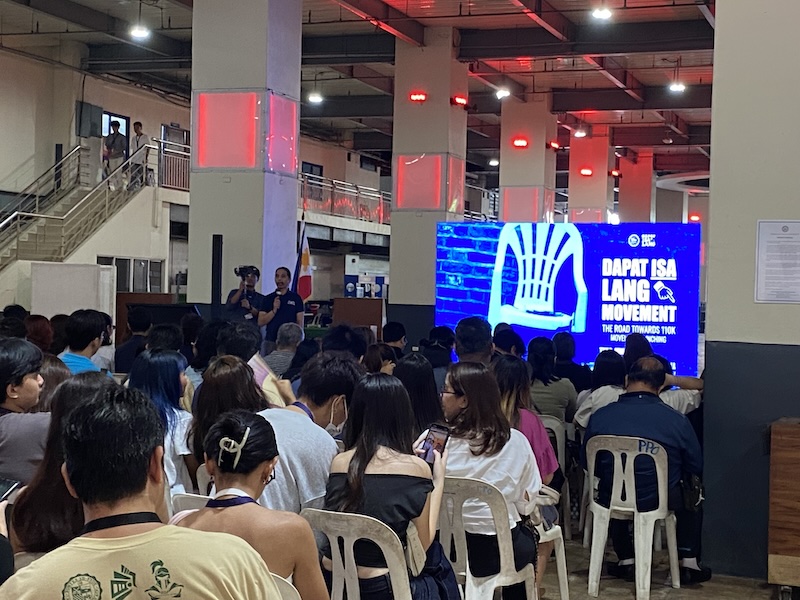
The 'Dapat Isa Lang Movement' (D1LM), a nationwide people’s initiative to push for a genuine anti-political dynasty law, was launched in Davao City on Tuesday, aiming to gather at least 7 million signatures nationwide, including 110,000 from the city’s three districts, by October 15. The launch was held at the Arrupe Hall of the Ateneo de Davao University, with students lining up as first signatories. The nationwide D1LM was launched in May by convenors led by retired Senior Associate Justice Antonio Tirol and former Elections Commissioner Luie Guia. The D1LM proposes a “genuine anti-political dynasty bill” that restricts political families to only one elected official in a national position and one in a local position. It also bans relatives up to the fourth civil degree—including spouses, children, parents, siblings, and cousins—from simultaneously holding office and imposes a one-term cooling-off period for family members wanting to immediately succeed an incumbent relative. Organizers aim to target around 7 million signatures, representing at least 10% of registered voters nationwide, by October 15. This is to push for a referendum in the first half of 2027 in the hope that “dynasties will be limited by the 2028 elections.” Miguel Karlo Abadines, Executive Director of the Simbahang Lingkod ng Bayan (SLB), which serves as the National Secretariat of the D1LM, stated that the movement is composed of “people and organizations who are tired of corruption and poverty brought about by the system of political dynasties.” Participants also lit a “flame of democracy” as a solemn promise that power belongs to the people, not to dynasties. Political dynasties are supposed to be prohibited by the 1987 Constitution, which mandates the State to “guarantee equal access to opportunities for public service and prohibit political dynasties.” However, in four decades, the dynasty-dominated Congress has failed to pass the anti-dynasty law. Recently, House Bill 8389, passed on third reading by the House of Representatives, has been criticized as a pro-dynasty bill. Senate Bill 1901, on the other hand, proposes stricter limitations. Abadines noted that 83% of the House of Representatives, 75% of Senators, 87% of Provincial Governors, and 75% of City Mayors in the Philippines are members of political dynasties. Dynasties, according to D1L, weaken government accountability, influence appointments, and control the budget and project implementation. In Mindanao, dynasties dominate the political landscape, making accountability difficult, especially when they hold both executive and legislative offices. Results from the May 2025 elections showed that dynasties rule in 23 out of 28 provinces. The Duterte family in Davao City is cited as an example, with seven members holding public posts. D1LM organizers emphasized that the signature campaign is more than just a campaign; it is “a call to reclaim public office as a public trust and to create space for leadership based on merit, service, and accountability.” Information Source: MindaNews Philippines (GN)

多角的分析

経済的影響

政治王朝の存在は、資源の不均等な配分や、特定の家族に有利な政策の実施を通じて、経済成長の潜在力を阻害する可能性がある。公職へのアクセスが血縁や縁故によって決まる場合、能力のある人材が排除され、イノベーションや効率性が損なわれる。また、政治的影響力を行使した請負業者によるプロジェクトの不透明な実施は、公共資金の浪費につながり、経済全体の健全性を損なう。

投資家心理

政治王朝による支配は、投資家にとって予測不可能性を高める要因となる。政策決定が血縁関係者の意向に左右される場合、投資環境の安定性が損なわれ、長期的な投資判断が困難になる。また、汚職や縁故主義が蔓延すると、公正な競争が阻害され、外国からの直接投資(FDI)の誘致が難しくなる可能性がある。

社会的影響

ダバオ市でのD1LM発足は、政治王朝の支配が続くフィリピン社会における構造的な不平等を是正しようとする市民の声の表れである。学生が最初に署名したことは、次世代がより公正な政治システムを求めていることを示唆している。政治王朝は、公職を世襲財産のように扱い、市民の政治参加の機会を奪うことで、社会的な不満や格差を固定化させる。特にミンダナオ島での王朝の支配は、地方の発展機会をさらに制限する可能性がある。

市民の声

政治王朝は、一般市民が公職に就く機会を奪い、自分たちの声が政治に反映されないという無力感を生み出している。ダバオ市の例のように、一族が複数の公職を占める状況は、市民にとって「自分たちの代表」ではなく「一族の代表」が政治を行っているという感覚を強める。これは、政治への信頼を失わせ、民主主義の根幹を揺るがす。

背景・歴史的文脈

フィリピン憲法は1987年制定以来、政治王朝を禁止している。しかし、その具体的な施行法は、長年にわたり議会で制定されてこなかった。これは、多くの議員自身が政治王朝のメンバーであるため、自己の利益を保護する動きが働いたためと考えられる。過去にも類似の試みはあったが、政治的圧力や法案の不備により、実効性を伴わなかった。ミンダナオ島では、特に地方政治において、この問題が根強く残っており、地域開発やガバナンスの課題となっている。

原文ソース

MindaNews Philippines (GN)

原文を読む