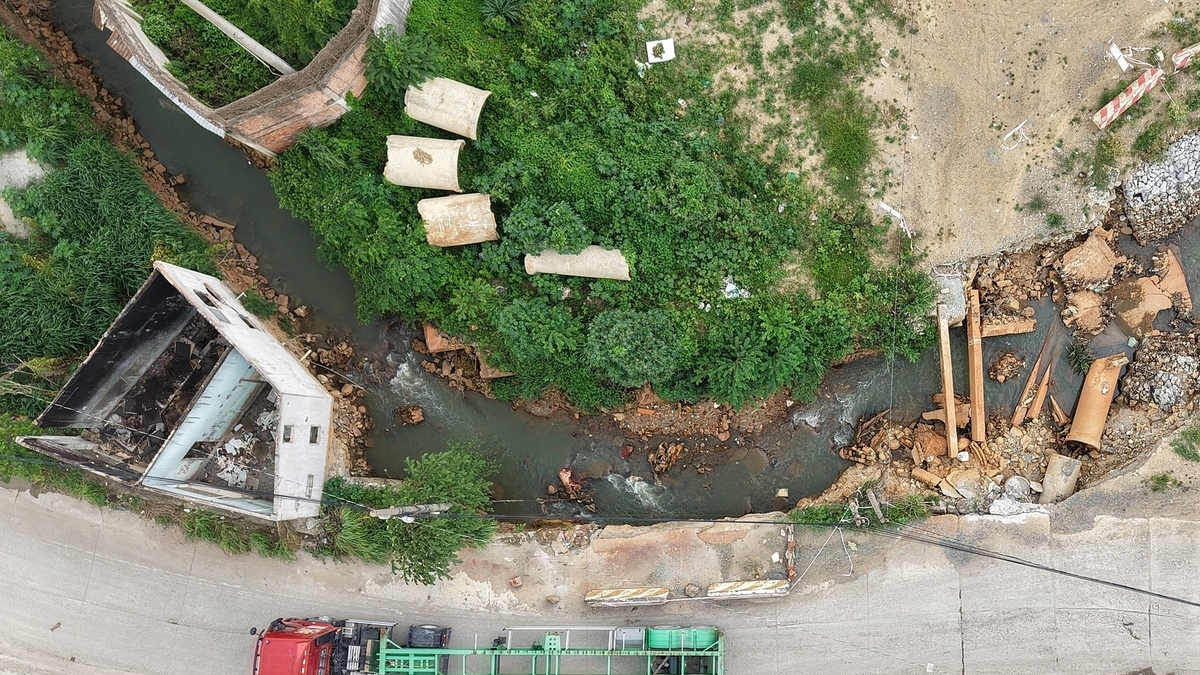
Flooded River in Dong Nai Causes Landslides, Threatening Homes
Severe landslides have occurred along the Siệp River in Đồng Nai province following heavy rains, threatening residential homes and infrastructure. The river has a history of fatal incidents, including a car being swept away.
Landslides along the Siệp River in Đồng Nai province, southern Vietnam, have worsened due to unseasonal heavy rains, posing a threat to residents. The river has a history of fatal incidents, including a car being swept away. Recent early monsoon downpours have caused significant landslides along the Siệp River, which straddles the border between Đồng Nai province's Biên Hòa city and Ho Chi Minh City. Particularly in sections exceeding 250 meters where embankment construction is incomplete, the soil has been deeply eroded, endangering nearby homes. Local residents report that during heavy rains, water from upstream concentrates in these undeveloped sections, creating strong currents that erode both banks and damage local roads. Local authorities have installed warning signs, advising residents to avoid the area when water levels rise. However, a local bridge connecting to residential areas was washed away by floodwaters approximately two weeks ago. Mr. Hùng, a local resident, stated, "Even with landslides before, the bridge was still passable, but the heavy rains earlier this month washed away sections of concrete into the river." The strong currents have also exposed the foundations of utility poles along the river, creating a risk of collapse. Furthermore, a resident was forced to evacuate their home along with their belongings after the river's flow deeply eroded the foundation. The road alongside the river has also been eroded, forming overhangs and increasing the risk of further landslides. Residents attest that during heavy rains, the water flow in this area becomes extremely swift. Additionally, the riverside road is already damaged, and the daily passage of numerous heavy trucks and dump trucks is causing further subsidence and cracking of the soil near the riverbank. This area has seen tragic incidents before. Two years ago, a car crossing the Siệp River was swept away by floodwaters, resulting in the death of a 44-year-old woman. In sections where renovation work is incomplete, the river narrows, and the flow is constricted in many places. During heavy rains, water cannot drain quickly enough, leading to flooding in surrounding areas. Several local bridges cross these undeveloped sections of the river, connecting the Suối Siệp road to residential areas. During heavy rains, as water levels rise and currents become swift, these crossings become dangerous. In the landslide-prone areas, local authorities have placed concrete barriers and erected ropes across about one-third of the road to warn people and vehicles of the danger. According to the Biên Hòa City People's Committee, the affected landslide section is part of the Siệp River renovation project managed by the Ho Chi Minh City Urban Infrastructure Investment Project Management Board (formerly under Bình Dương province). The project commenced in 2016 but has faced prolonged construction. In 2025, the drainage culvert crossing National Highway 1K and the site of the previous car-sweeping incident are scheduled for recommencement and have now been completed.
多角的分析
この土砂崩れは、インフラ整備の遅れが直接的な原因となっている。ドンナイ省におけるシエップ川改修プロジェクトは2016年に着工されたものの、長期化しており、未整備区間が豪雨による被害を拡大させている。これは、ベトナムが急速な経済成長を遂げる中で、インフラ投資が追いついていない、あるいはプロジェクト管理に課題を抱えていることを示唆している。特に、地方部におけるインフラの脆弱性は、経済活動の継続性や住民の安全確保において、潜在的なリスクとなり得る。今後、同様のインフラ関連の災害が経済活動に与える影響は無視できない。
このニュースは、ベトナムのインフラ開発におけるリスクを浮き彫りにしている。シエップ川の土砂崩れは、プロジェクトの遅延や管理体制の問題を示唆しており、これはインフラ関連プロジェクトへの投資家にとって懸念材料となる。特に、地方部や自然災害のリスクが高い地域への投資においては、プロジェクトの実行可能性、環境アセスメント、およびリスク管理体制の精査が不可欠となる。過去の同様の事故(車両流出による死亡事故)を踏まえると、安全基準の遵守や、予期せぬ自然現象への対応策が不十分である可能性も考慮する必要がある。
シエップ川沿いの住民は、インフラ整備の遅れにより、直接的な危険に晒されている。未整備の護岸は、豪雨時に家屋への浸食や道路の寸断を引き起こし、住民の安全と生活基盤を脅かしている。過去の死亡事故の発生は、この地域におけるインフラの脆弱性と、住民が直面するリスクの高さを物語っている。当局による警告表示や通行止め措置は取られているものの、根本的な解決には至っておらず、住民はいつ危険が現実のものとなるかという不安を抱えながら生活している。これは、開発の恩恵が必ずしも全ての住民に均等に行き渡っていない状況を示唆している。
今回のシエップ川の土砂崩れは、住民の生活に直接的な危険をもたらしています。特に、護岸整備が遅れている地域では、豪雨のたびに家屋が浸食され、生活道路が寸断されるという事態に直面しています。過去にはこの川で悲惨な事故も発生しており、住民は常に不安を抱えながら暮らしています。当局は警告を発していますが、根本的なインフラ整備が進まない限り、住民の安全は確保されません。これは、地方部におけるインフラの遅れが、住民の安全と生活の質に直結する問題であることを示しています。
背景・歴史的文脈
ベトナムでは、急速な経済成長に伴い都市化が進み、河川や水路の改修・整備が喫緊の課題となっている。シエップ川の改修プロジェクトは2016年に開始されたが、ベトナム特有の行政手続きの遅延、予算配分の問題、あるいは過去のビンズオン省(当時)からホーチミン市への管轄変更などが影響し、工事が長期化していると考えられる。この遅延が、未整備区間における自然災害への脆弱性を高め、今回の土砂崩れや過去の死亡事故といった悲劇につながっている。ベトナムの一党体制下では、政策決定やプロジェクトの推進において、中央政府の意向が強く反映される一方、地方レベルでの実行や管理には、しばしば課題が見られる。
原文ソース
VnExpress