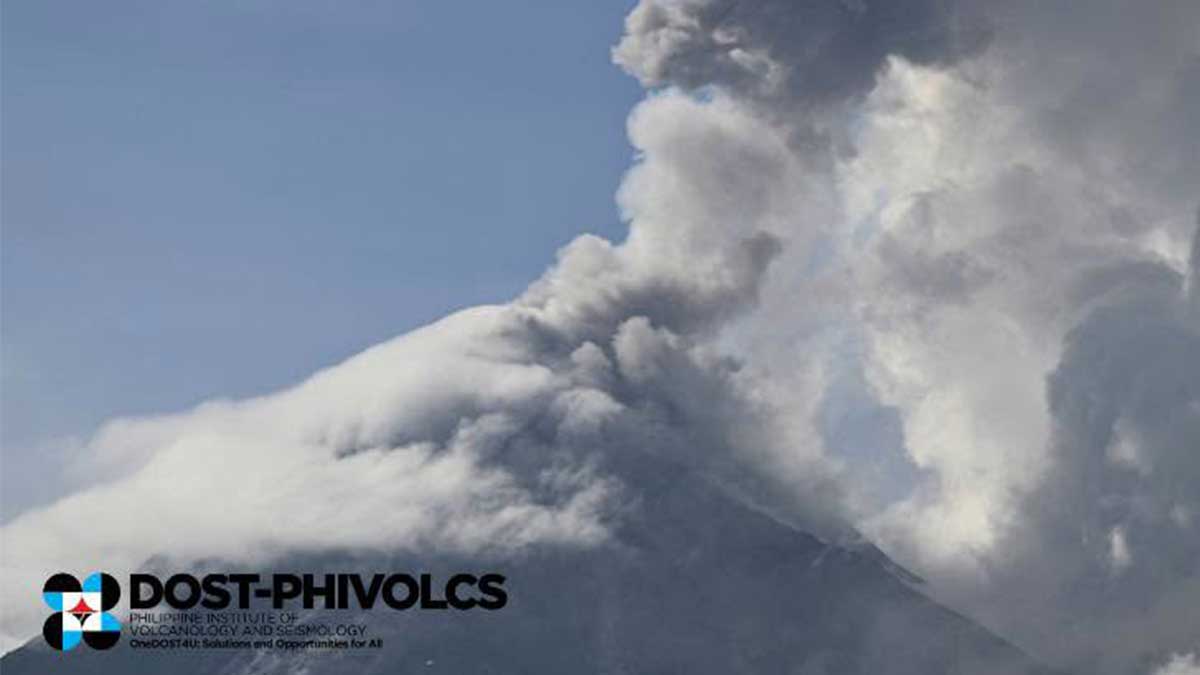
Mayon Volcano: Lava Fountaining Observed as Alert Level 3 Remains
A short-lived lava fountaining event was observed at the summit crater of Mayon Volcano in the Philippines on the afternoon of July 13. The Philippine Institute of Volcanology and Seismology (Phivolcs) maintains Alert Level 3 and continues round-the-clock monitoring.
This article requires PRO
This article is outside the free access window or is a special report. PRO unlocks it and the full archive.
Related articles
- Phivolcs Logs Earthquake Swarm Off Masbate, Urges Alertness
The Philippine Institute of Volcanology and Seismology (Phivolcs) has recorded 54 earthquakes off the coast of Claveria, Masbate, urging coastal residents to remain vigilant for potential tsunamis. The quakes range from magnitude 1.6 to 5.4, and while swarms don't always precede larger events, caution is advised.
- Earthquake Swarm Detected Off Masbate Coast; Phivolcs Monitoring
The Philippine Institute of Volcanology and Seismology (Phivolcs) reported a swarm of 54 earthquakes off Claveria, Masbate, since July 13. Some quakes registered up to Intensity V, prompting ongoing monitoring.
- Mayon Volcano Continues Effusive Eruption for 190th Day; Phivolcs Releases New Footage
The Philippine Institute of Volcanology and Seismology (Phivolcs) released new footage on Tuesday showing the Mayon Volcano's effusive eruption and minor Strombolian activity. The volcano has been active for 190 consecutive days, with Alert Level 3 remaining in effect.