General articles are free for 24 hours after publish.
Vinh's Rapid Drainage After Record Rain Highlights Infrastructure Upgrades
Vinh city in Vietnam's Nghe An province experienced record rainfall on September 19th. However, infrastructure improvements and the operation of drainage pumping stations led to rapid floodwaters receding in many areas. Despite this, some areas continue to face challenges.
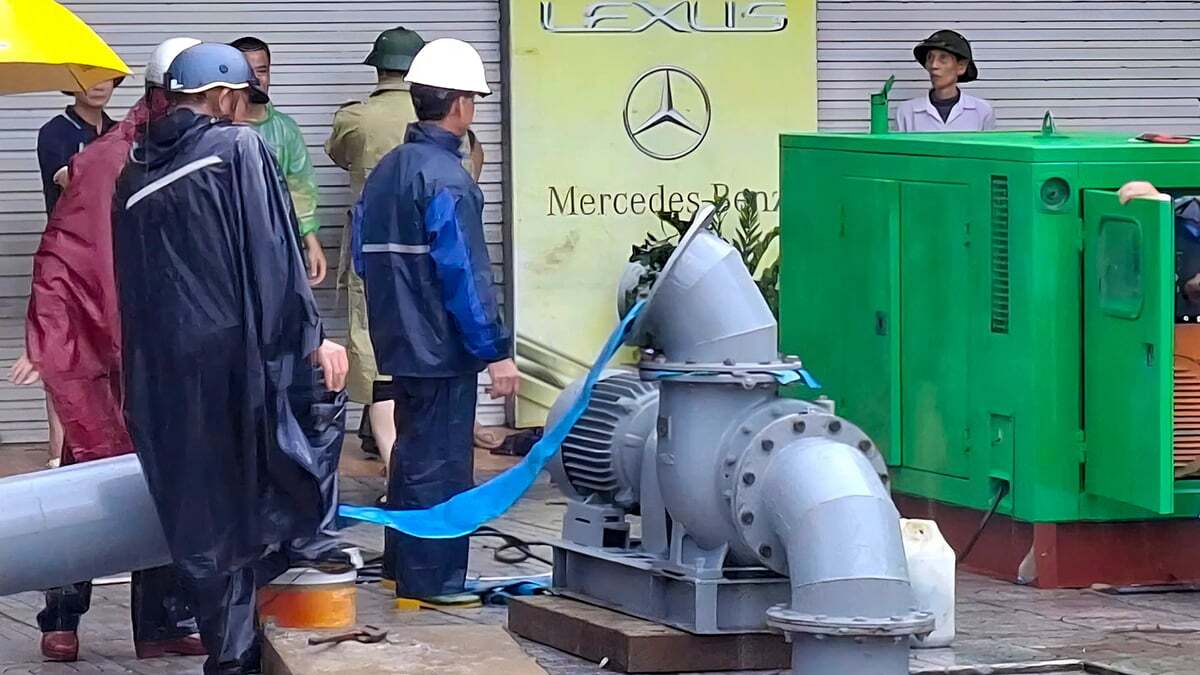
Vinh city in Nghe An province, Vietnam, experienced record rainfall of 399mm on September 19th, causing significant flooding. However, thanks to infrastructure upgrades and the efficient operation of drainage systems, many areas saw rapid recovery. The heavy rain began around 7 AM on the 19th, leading to water levels of 30-60cm on many central streets. As the rain subsided in the afternoon, floodwaters gradually receded, and by 11 PM, most main roads were clear. By the morning of the 20th, streets were largely back to normal, with affected residents and businesses resuming operations after cleaning up. According to Mr. Nguyen Xuan Tien, Director of the Nghe An Provincial Hydro-Meteorological Station, the extreme intensity of the rainfall, concentrated in a short period, was a key factor. Specifically, between 10 AM and 11 AM, the Vinh station recorded 145mm of rain, contributing to widespread street flooding. Vinh city has a history of flood damage from heavy rains. However, in recent years, the city has focused on strengthening its drainage infrastructure. Mr. Hoang Quoc Truong, Director of the Department of Public Works under the Provincial Department of Construction, stated that following the recent downpour, three major pumping stations – Ben Thuy, Cua Nam, and Cau Den – operated at full capacity, each with a design capacity of 20,000 cubic meters per hour. Additionally, temporary pumps were deployed in severely flooded areas. The city has also been engaged in intensive dredging of waterways and collection pits, many of which had not been cleaned for over 20 years, improving water flow and drainage capacity. Vinh also features six regulating lakes that temporarily hold rainwater before it is channeled to the pumping stations. Despite these improvements, challenges remain in certain areas. The 72m street, particularly near the Quan Bau area, continues to be one of the most severely affected. This is due to the concentration of water from surrounding areas, a narrow old drainage channel, and gradient issues, leading to water levels reaching 40-50cm and causing some vehicles to stall. In response to the recent event, the Department of Construction plans to increase the capacity of the Ben Thuy, Cua Nam, and Cau Den pumping stations and redesign drainage routes for areas like the 72m street and Nguyen Van Cu street. It is noted that previous drainage designs were primarily based on road surface area and did not fully account for increased water flow from new urban developments. Vinh city, like many urban centers in Vietnam under its one-party system, has experienced rapid urbanization and economic growth since transitioning from a planned to a market economy. Investments in infrastructure are crucial for sustained economic activity and citizen welfare. However, the increasing frequency of extreme weather events due to climate change presents challenges that exceed the capacity of existing infrastructure, necessitating further measures. Source: VnExpress
Original source
VnExpress