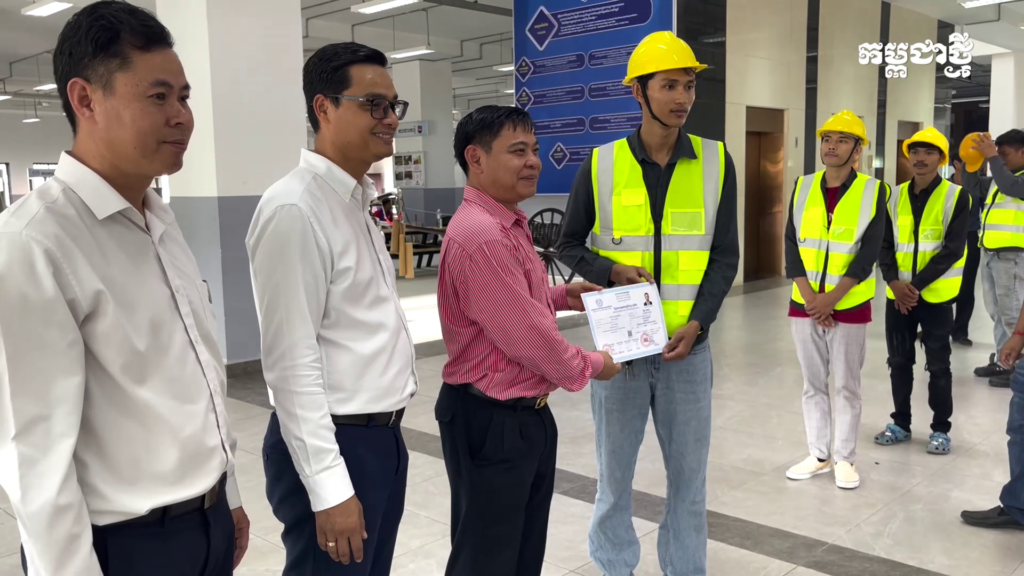
Cambodia Launches Skill Certification for Ex-Migrant Workers from Thailand to Improve Livelihoods
Cambodia's Ministry of Labor has launched a program to issue skill certification for former migrant workers returning from Thailand. This initiative aims to enable workers to earn higher wages and improve their living standards. Over 7,500 individuals have already taken the skill assessment tests.
The Ministry of Labor and Vocational Training of Cambodia has initiated a program to issue skill certification for former migrant workers returning from Thailand. This initiative aims to significantly improve their livelihoods by providing official recognition of their acquired skills, which is expected to lead to higher wages. Sun Messa, spokesperson for the Ministry, stated that the skill certification goes beyond a mere document, offering better employment opportunities and increased income. He added that it serves as a stepping stone for former workers from Thailand to pursue lifelong learning. This certification is intended to guarantee employment opportunities not only within Cambodia but also in the eight countries where Cambodia has labor market agreements. The Cambodian government began implementing skill assessments for former Cambodian workers in Thailand's construction sector on April 24, 2026, with the government covering the test fees. As of July 10, 2026, over 7,500 former workers have undergone these skill assessments. At the National Polytechnic Institute of Cambodia (NPIC) in Phnom Penh, a major testing and registration site, numerous former workers are undergoing tests for various construction skills, including bricklaying and plastering, tiling, formwork installation, plumbing, building electrical wiring, scaffolding, and welding. Kim Teng, a 37-year-old participant, shared that he worked in construction in Thailand and returned to Cambodia in June 2025. He is now working in construction in Phnom Penh and decided to take the test after learning about the ministry's announcement and the benefits, as well as encouragement from his company. "Most employers require a certificate to make it easier to find work, as advertised. This will make it easier to find work both domestically and abroad," he said, expressing hope for higher earnings and the opportunity to learn new construction skills, with a long-term goal of becoming a construction contractor. Hun Chantara, Director of the Skill Assessment Center at NPIC, explained that assessments are conducted every Friday, Saturday, and Sunday from 8 AM to 8:30 PM, with registration possible one week in advance. The tests themselves take approximately three hours and are evaluated by a committee comprising representatives from the institute and private companies. Kong Adith, President of the Cambodian Labor Confederation, highlighted that this program addresses the workers' demand for higher income and employment. He noted a significant shortage of skilled personnel in Cambodia's construction sector and urged more former workers from Thailand to register for the tests. As of July 10, 2026, 7,500 former Cambodian workers from Thailand have been tested in the construction sector. Assessments are held at 10 centers nationwide, including four in Phnom Penh: NPIC, National Institute of Technical Education, Preah Kossamak Polytechnic Institute, and Industrial Technical Institute. Other centers are located in Siem Reap, Svay Rieng, Battambang, Banteay Meanchey, and Takeo provinces. Candidates can register at the above locations or contact 1297 or visit htts://erpl.mlvt.gov.kh. Article by Hun Sirivath.
多角的分析
この技能証明プログラムは、カンボジアの労働市場における技能格差を埋め、特に建設部門での生産性向上を目指す経済政策の一環と見られる。タイで培われた実務経験を公式に認め、国内での賃金上昇に繋げることで、元労働者の経済的自立を支援し、国内経済への還流を促進する狙いがある。政府がテスト費用を負担している点は、初期投資を抑え、参加を奨励する意図が強いことを示唆している。これは、労働力の質的向上を通じて、カンボジアの産業競争力を高めるための重要なステップである。
このプログラムは、建設業界への投資家にとって、より熟練した労働力の確保という点でプラスに作用する可能性がある。技能認定を受けた労働者は、より高い生産性と品質を示すと期待されるため、プロジェクトの効率化やリスク低減に繋がる。また、労働者の満足度向上は、長期的な雇用安定に寄与し、建設プロジェクトの遅延リスクを減らす要因となりうる。ただし、認定基準の厳格さや、認定者の実際のスキルレベルが市場の需要とどの程度合致するかは、今後の注視点となる。
タイからの帰還労働者にとって、この技能証明は単なる資格以上の意味を持つ。それは、異国での苦労が公式に認められ、国内でのキャリアアップに繋がる希望の光となる。彼らがより高い賃金を得ることで、家族の生活水準が向上し、子供たちの教育機会も広がる可能性がある。また、技能認定は、社会的な地位の向上にも繋がり、彼らがカンボジア社会でより尊重される存在となることを期待させる。一方で、認定を受けられない、あるいはテストに合格できない労働者へのフォローアップが課題となる可能性もある。
タイからの帰還労働者にとって、この技能証明は生活を大きく変える可能性を秘めている。これまでタイで得ていた賃金と同等かそれ以上の収入をカンボジア国内で得られるようになれば、家族との時間を増やし、子供たちの教育にもより投資できるようになる。例えば、建設現場でレンガを積む作業員だった人が、技能証明を得ることで、より専門的な技術を要する職種に就き、日給が2万~4万リエル(約600円~1200円)上昇する可能性がある。これは、地方から都市部へ移住してきた多くの労働者にとって、大きな希望となるだろう。しかし、テストの機会が限られていたり、合格基準が厳しかったりする場合、一部の労働者は取り残される可能性も懸念される。
背景・歴史的文脈
カンボジアでは、長年にわたり多くの国民が、より高い賃金を求めてタイへ出稼ぎに出ている。特に建設分野は、タイでカンボジア人労働者が多く従事する主要産業の一つである。しかし、これらの労働者の多くは、正式な技能証明を持たず、非公式な形で雇用されていることが少なくなかった。そのため、帰国後に国内で十分な評価を得られず、低賃金で不安定な職に就かざるを得ないケースも散見された。こうした状況を踏まえ、カンボジア政府は、元労働者の技能を公式に認定し、国内でのキャリアアップと生活水準向上を支援する政策を打ち出した。このプログラムは、労働者の権利保護と国内経済の活性化を同時に目指すものである。
原文ソース
Kampuchea Thmey Local