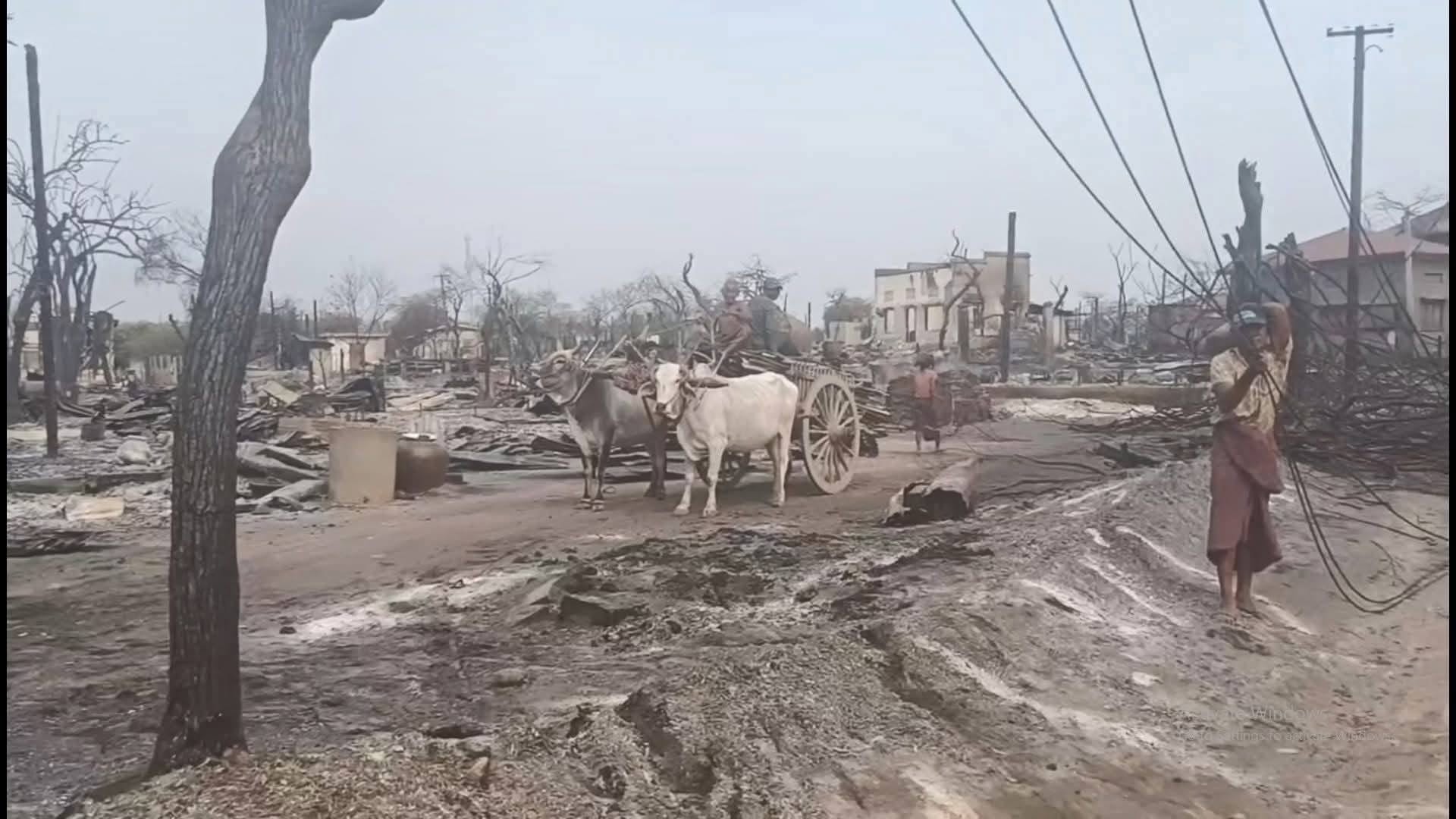
Min Aung Hlaing's 100-day plan sees 1045 human rights violations, 162 deaths from mass killings
Ayeyarwaddy Times July 4 Behind the so-called 100-day plan, which coup leader and interim president Min Aung Hlaing has put forward to improve his international image, the military junta has been continuously committing
This article requires PRO
This article is outside the free access window or is a special report. PRO unlocks it and the full archive.
Related articles
- Mae Tao Clinic highlights Thai-Myanmar border crisis after winning Okinawa Peace Prize
In an exclusive interview with DVB following the announcement of the 13th Okinawa Peace Prize, Dr. Cynthia Maung, founder and director of the Mae Tao Clinic, reflected on the clinic’s recognition as the first non-Japanes
- MAA calls for a one-day work stoppage to protest the visit of the interim president Min Aung Hlaing to Malaysia
Ayeyarwaddy Times October 5 Myanmar Affairs Alliance (MAA) has urged Myanmar nationals residing in Malaysia to participate in a "work stoppage strike" by refraining from going to work entirely on the upcoming October 7th
- Skeletons of 12 Civilians Discovered in Mass Graves in Myanmar’s Myaing Township
The human remains of 12 civilians abducted by Myanmar military forces in June 2023 have been discovered in two mass graves near Wetpoke Village in Magway Region’s Myaing Township, according to local resistance fighters a
- Myanmar workers in Malaysia call for strike ahead of Min Aung Hlaing visit to Kuala Lumpur
The Myanmar Affairs Alliance, an advocacy coalition representing Myanmar migrant workers across Malaysia, issued an urgent appeal on Monday, calling for a nationwide “Work Stoppage Strike” on Wednesday. The strike is org