General articles are free for 24 hours after publish.
Laos Hydropower Dependence Shifts as Cambodia Diversifies Amid ASEAN Grid Plans
Cambodia, while reliant on hydropower imports from Laos, is diversifying its renewable energy sources. Advancements in the ASEAN Power Grid initiative signal potential shifts in the region's overall energy supply structure.
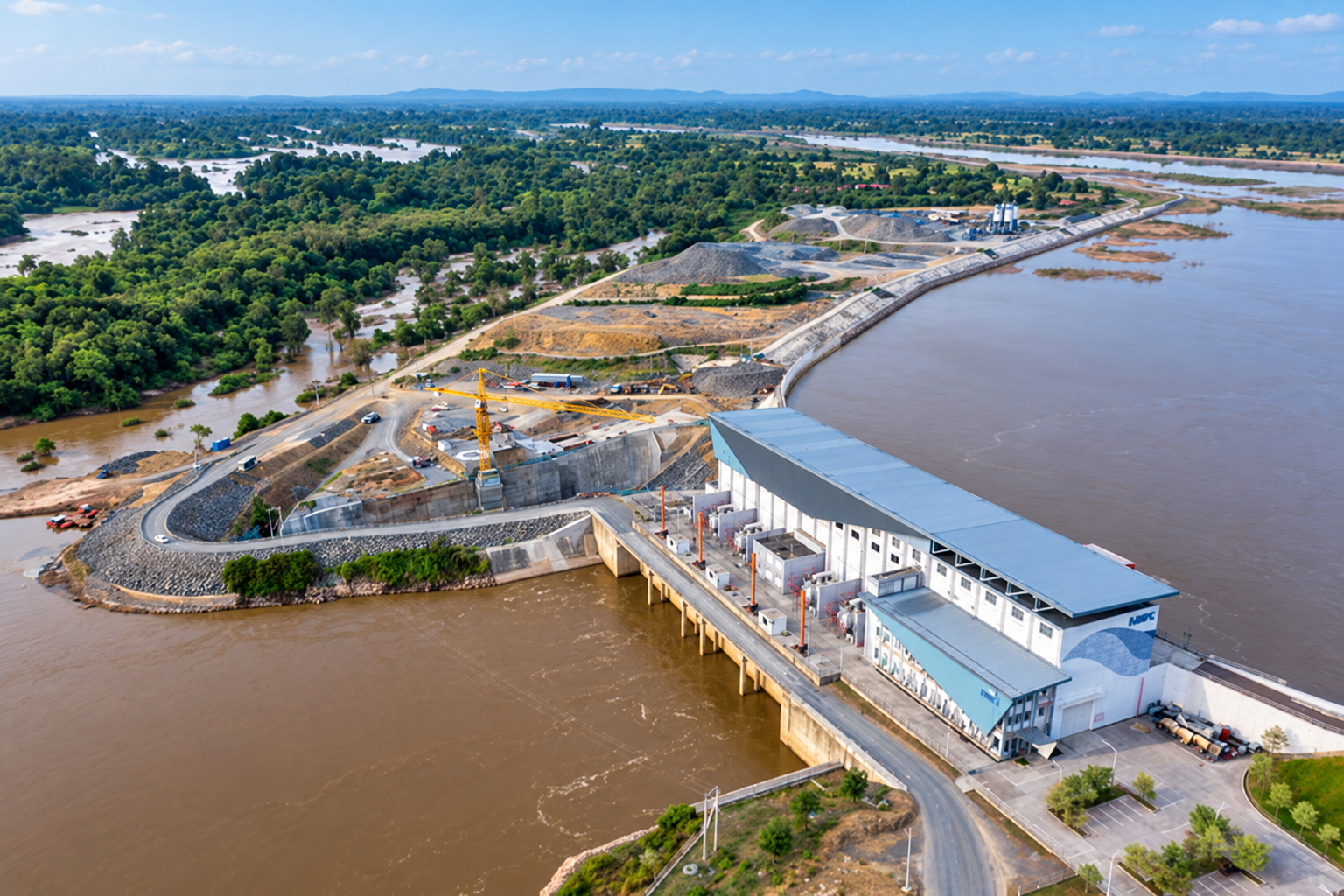
Laos’ dams and transmission lines are powering the region’s shift towards lower-carbon energy. But its neighbours are also rapidly expanding other renewable-energy sources. Laos has long produced surplus electricity and looked to export it. Today, around 80% of its energy—largely generated through hydropower—is sold to neighbouring countries. Electricity exports generate approximately USD 2.6 billion for Laos, one of the poorest nations in mainland Southeast Asia. Across the region, countries including Thailand, Cambodia, Vietnam, Singapore and Malaysia have become reliant on hydropower from Laos. Slowly but surely, however, this is changing. Laos’ hydropower exports are facing increasing competition from non-hydro renewable energy and broader changes in the region’s power sector. Growing investment in other renewable sources and the first steps towards a regional power grid are beginning to change both the nature of this reliance and what it means for Laos to be the “Battery of Southeast Asia”. The environmental and social effects of hydropower, particularly on biodiversity and local fisheries throughout the Greater Mekong Region, also continue to loom large over the sector’s future. Cambodia: Future for the Grid Cambodia has experienced difficulties powering its rapid urbanisation. Unplanned growth in cities such as Phnom Penh and Sihanoukville has left authorities scrambling to keep pace with energy demand, which increased by around 14% nationwide in 2025 compared with the previous year. Energy security has been supported by increases in solar power, but the country still struggles with reliable energy supplies. These challenges have been further strained by factors such as the Strait of Hormuz crisis, which has led to volatile prices for imported fuel. Cambodia imports around 200 MW of hydropower from the Don Sahong dam in Laos, which has attracted controversy over its impact on downstream fisheries and the endangered Irrawaddy dolphin. Cambodian civil society organisations have also long raised concerns about hydropower projects in the country and across the region. In 2020, Cambodia implemented a 10-year ban on new hydropower projects on its section of the mainstream Mekong, citing the need to diversify its energy sources. The Don Sahong dam on the Mekong, shortly before the river flows into Cambodia. Cambodia imports 200 MW of hydropower from the dam, which remains controversial because of its impact on downstream fisheries and the endangered Irrawaddy dolphin. Image: Andy Ball/Dialogue Earth. Cambodia’s Imports Could Reach 3 GW In the longer term, Cambodia aims to continue importing electricity from Laos at a stable level, according to its 2022 Power Development Plan. Imports are expected to increase to around 3 GW by 2030 and remain at that level until 2040. However, Cambodia eventually hopes to expand power sharing with Laos through one of the region’s most ambitious infrastructure plans: an interconnected electricity grid linking the member states of the Association of Southeast Asian Nations. The ASEAN Power Grid initiative, which has been under development since 1997, aims to facilitate energy sharing among all ASEAN members across mainland and maritime Southeast Asia. Cambodia-Laos Power Connection Advances In May 2026, the ASEAN Centre for Energy, Electricité du Cambodge and Electricité du Laos signed a joint study framework to advance cross-border power connections. The agreement forms part of a phased approach to developing the ASEAN Power Grid. It includes collaboration on technical assessments, economic analysis and preliminary environmental assessments for future projects. Laos and Cambodia took a major step towards regional grid interconnectivity in 2023 when they launched a high-capacity, China-built 500-kilovolt transmission line. The line connects a substation in Champasak province in southwestern Laos with the Cambodian border. Tyler Roney has been Dialogue Earth’s editor for mainland Southeast Asia since 2020 and is based in Bangkok. He has worked in China and mainland Southeast Asia for newspapers, magazines, online publications, radio, and television, including reporting with Foreign Policy, The Diplomat, AP, Coconuts Media, and Nikkei Asian Review. With an interest in wildlife photography and conservation, Tyler focuses on the effects of hydropower and development in the Lower Mekong basin.
Original source
Cambodia Investment Review