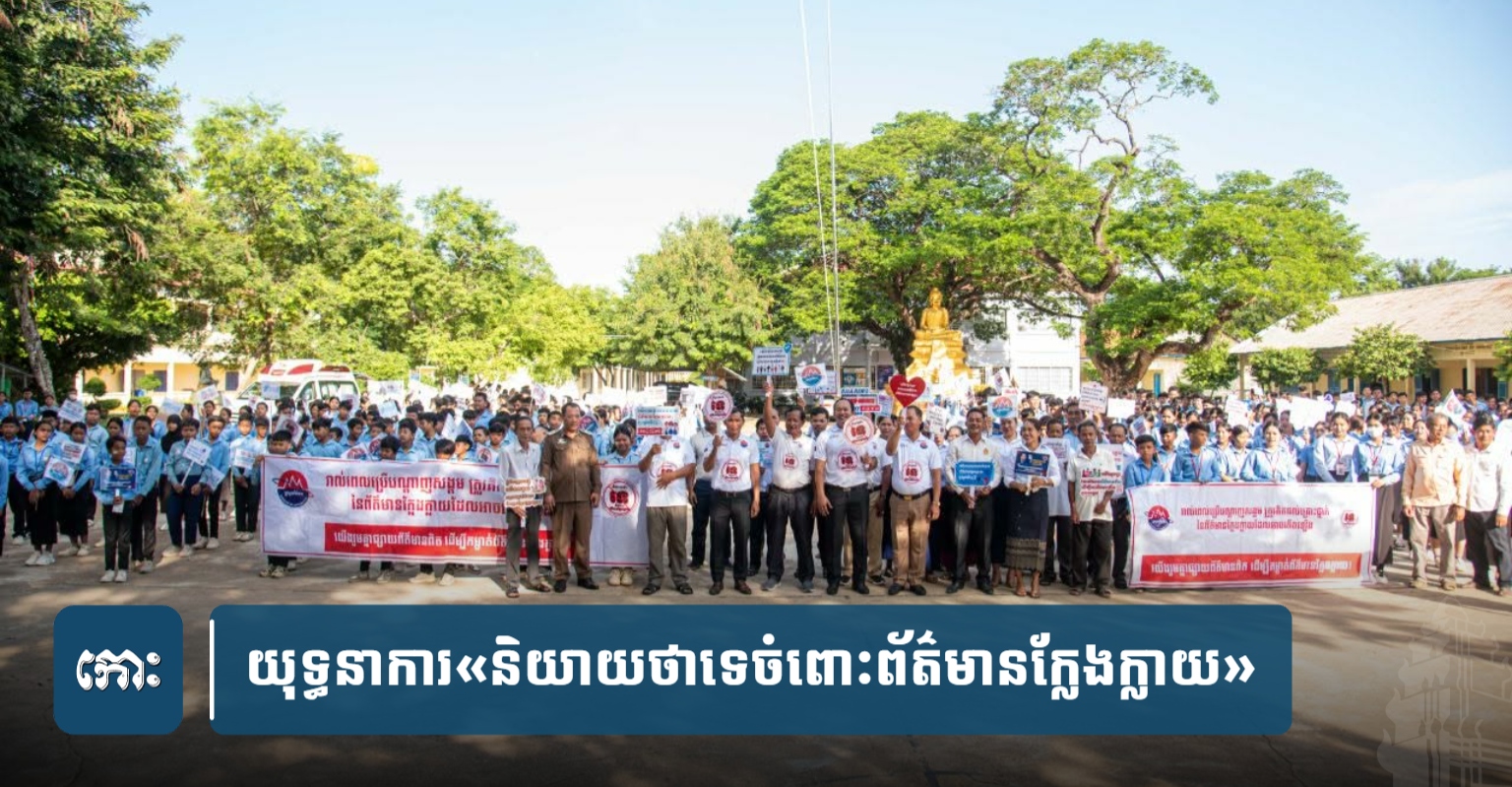
Cambodia Launches 'Say No to Fake News' Campaign for Youth in Poipet
Politics
2026年7月10日
5
Koh Santepheap Khmer

Cambodia Launches 'Say No to Fake News' Campaign for Youth in Poipet

AI サマリー

In Cambodia's Poipet province, a 'Say No to Fake News' campaign is targeting young people to combat the spread of misinformation. The Ministry of Education and the Ministry of Information are collaborating, aiming to educate over 1,000 high school and middle school students on information literacy and digital skills. This initiative is part of a national strategy to enhance information security and ensure quality information for citizens.

In Poipet province, western Cambodia, a campaign titled 'Say No to Fake News' is being implemented to combat the spread of misinformation. On July 10, 2026, the Poipet Provincial Department of Information, in collaboration with the Provincial Department of Education, Youth, and Sports, organized this campaign for approximately 1,000 students from Hun Sen Kandal Middle and High Schools. The initiative, attended by the Kandal District Governor, aims to address the proliferation of false information on social media and enhance students' understanding of its severe impact on society and individuals. The campaign emphasized the importance of verifying information sources, identifying credible outlets, and critical thinking before sharing. This effort is part of a national strategy, guided by Minister of Information Net Pheaktra, focused on strengthening information security and ensuring the provision of quality and secure information to all citizens. The Kandal District Governor highlighted that the campaign specifically targets high school and middle school students nationwide, underscoring the need to improve information and media literacy to ensure accurate information reception and responsible use of social media. He described fake news as a 'hidden weapon and poison that can easily destroy social order and individual dignity,' urging students, as active social media users, to ask themselves whether information is real, its source, and if it benefits society before clicking share. Fake news is identified as a significant challenge in the digital era, with profound negative impacts on individuals and the nation. Victims of fake news or defamation campaigns may face job loss, social isolation, and discrimination. The widespread dissemination of fake news erodes public trust in official sources, government institutions, and professional journalists, leading to information management chaos. Fake news is often used to incite ethnic, religious, or political discrimination, potentially causing division and even violence. This campaign is recognized for playing a crucial role in mitigating the adverse consequences of fake news and protecting citizens from dangers posed by fabricated or misleading information, including that generated by AI. To counter this issue, both individuals and society must enhance their media and digital literacy by thoroughly verifying information sources before believing or sharing. The Kandal District Governor expressed full support for the 'Say No to Fake News' campaign and reiterated his call for students to use technology and social media with understanding and high responsibility. Source: Koh Santepheap Khmer

多角的分析

経済的影響

本件は直接的な経済活動に焦点を当てたものではないが、偽情報が経済活動に与える間接的な影響は大きい。例えば、偽情報による市場の混乱や、特定の産業・企業に対する不当な評判の低下は、投資意欲の減退や消費者の購買行動の歪みを招く可能性がある。カンボジア経済は観光や外国直接投資に依存しており、偽情報によってこれらの分野への信頼が損なわれるリスクは無視できない。特に、デジタルプラットフォームの普及に伴い、偽情報は瞬時に拡散するため、経済への影響は予測困難かつ甚大になりうる。政府による情報リテラシー教育は、長期的に見て健全な経済環境を維持するための予防策と言える。

投資家心理

投資家にとって、偽情報対策はリスク管理の一環として重要である。カンボジア国内の投資環境に関する不正確または誤解を招く情報は、投資判断を誤らせる可能性がある。特に、政治的・社会的な安定性に関する偽情報は、直接的に投資リスクの評価に影響を与える。今回のキャンペーンは、情報流通の透明性を高め、より正確な情報に基づいた投資判断を可能にするための土壌作りと捉えられる。ただし、キャンペーンの効果がどの程度、偽情報の拡散を抑制し、投資家の信頼醸成に寄与するかは、今後の継続的な取り組みにかかっている。

社会的影響

カンボジア社会において、偽情報は深刻な分断や対立を生む要因となりうる。特に、民族、宗教、政治的信条に関する偽情報は、社会の安定を脅かす。若年層はSNSの主要な利用者であり、偽情報の拡散に加担するリスクも、その被害者となるリスクも高い。今回のキャンペーンは、次世代を担う若者たちに批判的思考力と情報リテラシーを身につけさせることで、より健全で分断の少ない社会を構築することを目指している。フン・セン・カンダン中学校・高校という具体的な教育機関での実施は、現場での具体的な変化を促す一歩となる。しかし、偽情報対策は学校教育だけでなく、家庭や地域社会全体での継続的な取り組みが不可欠である。

市民の声

カンボジア国民、特に若年層にとって、偽情報は日常生活に直接的な影響を与える。SNSで誤った情報を信じ、拡散してしまうことで、人間関係が悪化したり、社会的な孤立を招いたりする可能性がある。また、公的機関やメディアへの信頼が失われると、必要な情報へのアクセスが困難になり、生活上の不利益を被ることも考えられる。今回のキャンペーンは、市民が情報に踊らされず、自らの判断で真実を見抜く力を養うための重要な機会となる。しかし、教育の機会が得られない層へのアプローチや、AIによる偽情報生成といった新たな脅威への対応も、今後の課題として挙げられる。

背景・歴史的文脈

カンボジアでは、近年デジタル化の進展とともに、インターネットやソーシャルメディアを通じた偽情報や虚偽ニュースの拡散が社会的な課題となっている。特に、2023年の総選挙前後には、政治的な対立を煽るような情報が多数確認された。これに対し、カンボジア政府は情報セキュリティの強化を国家戦略として掲げ、情報省を中心に国民の情報リテラシー向上に向けた啓発活動を強化している。今回のキャンペーンは、その一環として、将来世代である若年層を対象に、偽情報への抵抗力を養うことを目的としている。これは、国内の安定維持と、情報空間における国家の主導権確保という両面からのアプローチと言える。

原文ソース

Koh Santepheap Khmer

原文を読む