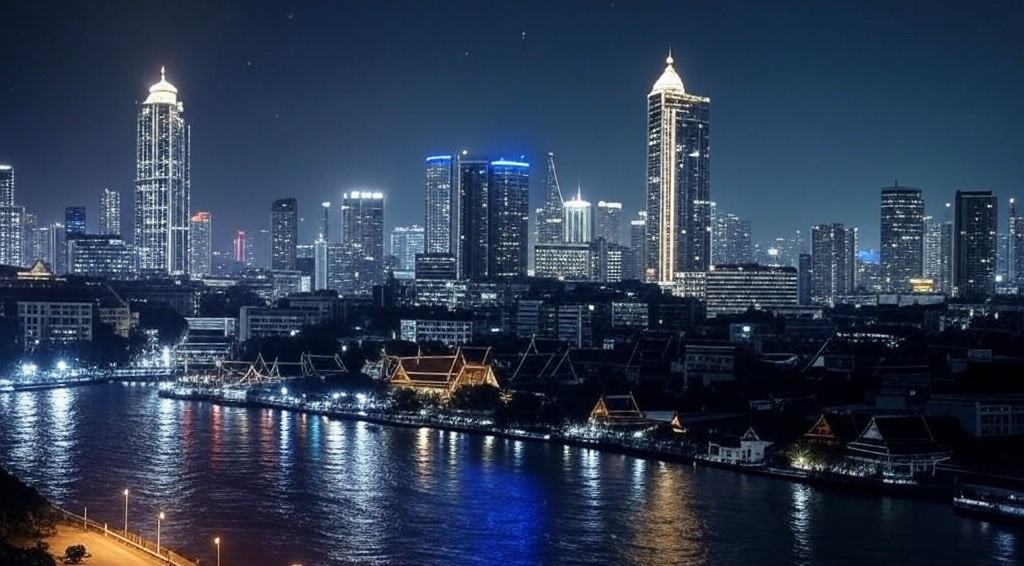
Bangkok Emerges as Southeast Asia's Wealth Hub Amidst Ultra-Rich Population Boom
Bangkok is emerging as a premier hub for the ultra-wealthy, driven by its strong domestic entrepreneurship and growing international appeal. The city is projected to see its ultra-high-net-worth population grow by over 50% by 2030, positioning it as Southeast Asia's fastest-growing wealth hub.
Bangkok is emerging as a premier hub for the global ultra-wealthy due to its combination of strong domestic entrepreneurship and growing international appeal. The city is currently Southeast Asia’s fastest-growing wealth hub, with its ultra-high-net-worth population projected to grow by more than 50% by 2030. Bangkok is on track to become one of the world’s fastest-growing centres for ultra-high-net-worth individuals over the next five years, according to new data that positions the Thai capital ahead of every other major city in Southeast Asia, including Jakarta. Thailand was home to 2,090 ultra-high-net-worth individuals in 2025, of which 1,210 listed Bangkok as their primary residence, according to Altrata’s World Ultra Wealth Report 2026. The wealth intelligence firm defines UHNW individuals as those holding net assets above US$30 million. Bangkok’s UHNW population is projected to climb to roughly 1,840 by 2030, an increase of more than 50 percent, or an average annual growth rate of 8.7 percent, according to Maya Imberg, Altrata’s senior director and head of thought leadership and analytics. That trajectory ranks Bangkok 12th among the world’s 100 largest urban economies by nominal GDP for UHNW growth, and first in Southeast Asia. A separate forecast from Knight Frank’s Wealth Report 2026 points in the same direction, projecting Thailand’s UHNW population will grow 26 percent between 2026 and 2031, alongside a 6.3 percent rise in prime residential prices. The composition of Bangkok’s wealthy class runs counter to some regional assumptions. Fully inherited wealth accounts for less than one-tenth of the city’s ultra-wealthy population, with Imberg noting that most individuals built their fortunes themselves, often with a degree of family backing rather than inheritance alone. Altrata attributes the durability of this growth to structural rather than cyclical factors: institutional quality, tax and trade policy, entrepreneurship, capital market depth, and currency strength. The firm also points to rising “ultra-mobility” among wealthy individuals, who increasingly invest, work, and live across several jurisdictions rather than anchoring exclusively to one. Knight Frank Thailand’s managing director, Nattha Kahapana, frames the shift as part of Thailand’s repositioning in the eyes of global wealth: less an emerging market, more an evolving wealth centre built on liveability, infrastructure, and lifestyle. Demand is concentrated in super-prime condominiums in Bangkok, alongside branded residences in Phuket and Koh Samui, and wellness-oriented holiday homes, with buyers coming from Asia, the Middle East, and Europe. The wealth build-up is unfolding even as global equity markets show signs of stress. As outlined in TBN’s recent analysis of stock market fragility signals, the SET Index has swung sharply in 2026, including an 8 percent single-day drop that triggered a circuit breaker in March before recovering to a 2.75-year high above 1,500 points by May. That volatility underscores a broader theme in the UHNW data: Thailand’s wealth expansion is being driven by long-run structural factors, entrepreneurship, institutional credibility, capital market access, rather than short-term market cycles, even as those same cycles inject volatility into the domestic index. Bangkok’s rise fits inside a broader global expansion. The world’s UHNW population reached a record 556,850 individuals in 2025, up 14.4 percent year-on-year, the strongest expansion since 2017, with combined wealth of US$63.8 trillion. Altrata expects that figure to reach 746,570 individuals by 2030, driven by technological transformation, private capital expansion, and the restructuring of the global economy around artificial intelligence, energy transition, and digital infrastructure. For Bangkok, the data suggests the city’s wealth trajectory is no longer a side note to the broader ASEAN growth story, but one of its more distinctive chapters. Source : World Ultra Wealth Report 2026 – Altrata
多角的分析
バンコクの超富裕層人口の増加は、タイ経済の構造的な強さ、特に起業家精神と制度的信頼性の高さを反映しています。これは、単なる一時的な市場の変動ではなく、長期的な成長要因に支えられていることを示唆しています。資本市場の深さと通貨の安定性も、富裕層を惹きつける重要な要素であり、タイ経済の持続的な発展に寄与すると考えられます。一方で、グローバルな経済的ストレス下でも成長を続けるこの現象は、タイ経済のレジリエンス(回復力)の高さを示唆しています。
投資家にとって、バンコクの超富裕層の増加は、高級不動産、ラグジュアリーサービス、および富裕層向けの金融商品への投資機会の拡大を示唆しています。自己構築型の富裕層が多いという事実は、イノベーションや成長産業への投資意欲が高いことを意味するため、スタートアップやテクノロジー関連企業への関心も高まる可能性があります。ただし、ASEAN地域全体の経済動向や地政学的なリスクも考慮に入れる必要があります。
バンコクにおける超富裕層の増加は、社会経済的な格差の拡大という側面も持ち合わせています。富裕層が集まる地域では高級不動産価格の上昇が続き、一般市民の住宅取得を困難にする可能性があります。また、富裕層が求めるライフスタイルやサービスへの投資が集まる一方で、それ以外の層への恩恵が限定的になることも懸念されます。都市のインフラや生活の質が向上する一方で、その恩恵が一部の層に偏る可能性が指摘されています。
バンコクにおける超富裕層の増加は、一般市民の生活に直接的な影響を与える可能性があります。特に、高級住宅地の開発が進むことで、地価や家賃の高騰を招き、手頃な価格の住宅へのアクセスがさらに困難になることが懸念されます。また、富裕層向けのサービス産業の拡大は雇用機会を生む可能性もありますが、物価上昇や生活コストの増加といった側面も考慮する必要があります。都市の発展が、全ての人々にとって恩恵となるような配慮が求められています。
背景・歴史的文脈
タイにおける富裕層の増加は、過去数十年にわたる経済発展と軌を一にしています。1997年のアジア通貨危機後、タイ経済は構造改革を進め、輸出主導型経済からサービス業や内需主導型経済へとシフトしました。特に、2000年代以降のインフラ投資や、観光産業の振興、ASEAN経済共同体(AEC)の発足などが、タイを地域経済のハブとしての地位を高めました。また、タイ政府は外国からの投資を誘致するための税制優遇措置や、ビジネス環境の改善にも努めてきました。これらの要因が複合的に作用し、バンコクを国際的なビジネスおよび居住の魅力的な場所へと変貌させています。
原文ソース
Thailand Business News