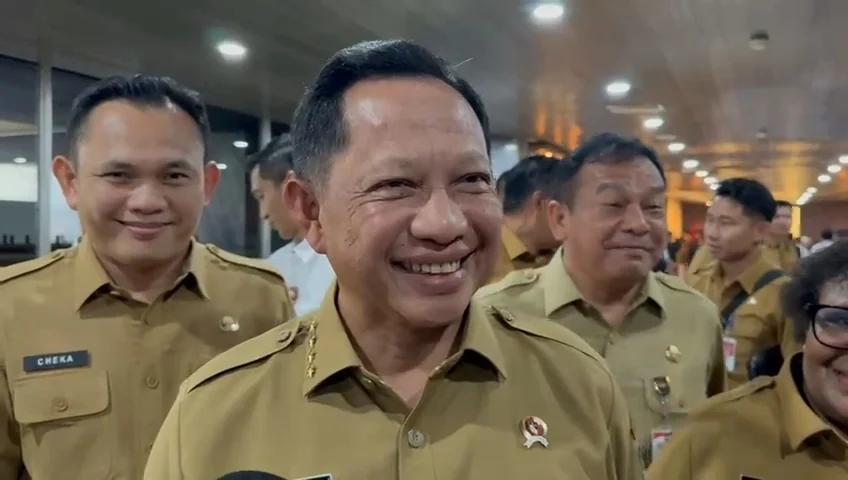
Indonesian Regional Heads to Receive Bonuses Tied to Local Revenue Increase, Mendagri Agrees to Anti-Corruption Measure
Indonesia's Ministry of Home Affairs has agreed to a proposal for regional heads to receive bonuses tied to increases in Local Own-Source Revenue (PAD). This new incentive aims to prevent corruption and stimulate regional economies. Specific conditions and scales for the bonuses are yet to be determined.
This article requires PRO
This article is outside the free access window or is a special report. PRO unlocks it and the full archive.
Related articles
- President Prabowo and Former President Jokowi Hold Two-Hour Closed-Door Meeting
Indonesian President Prabowo and former President Joko Widodo held a two-hour closed-door meeting at Prabowo's private residence in Jakarta. The meeting was confirmed to be unrelated to the Supreme Court's ongoing hearing regarding Gibran's academic qualifications.
- Constitutional Path to Impeach Gibran, VP, Explained by Experts After MK Ruling
Following the Indonesian Constitutional Court's (MK) ruling that left doubts about Gibran Rakabuming Raka's high school diploma, experts have outlined the constitutional impeachment process. They emphasize that the rigid constitutional impeachment procedure, not the Election Results Dispute (PHPU), is the appropriate path.
- Jokowi Visits Prabowo Amidst Constitutional Court Ruling on VP Eligibility
President Joko Widodo (Jokowi) visited President-elect Prabowo Subianto at his residence in Kertanegara, South Jakarta. The meeting occurred on the same day the Constitutional Court ruled on the eligibility of Gibran Rakabuming Raka, Jokowi's son and Prabowo's running mate, as Vice President. The meeting lasted approximately two hours, with no details of the discussion disclosed.
- Indonesia's PKH Task Force Returns Rp13.2 Trillion, Focus on Kejagung's Interpretation of Prabowo's 'Asta Cita'
Indonesia's PKH (National Family Hope) Task Force has reportedly returned Rp13.2 trillion. MACS Institute is observing how the Attorney General's Office (Kejagung) will interpret and implement Prabowo's 'Asta Cita' policy.