General articles are free for 24 hours after publish.
Thailand MFA Updates Procedures for Document Legalization
Thailand's Ministry of Foreign Affairs (MFA) has issued updated guidelines for the legalization of documents required for use abroad. Applicants must confirm receiving authority requirements, prepare necessary paperwork, book online appointments, and verify current fees and processing times.
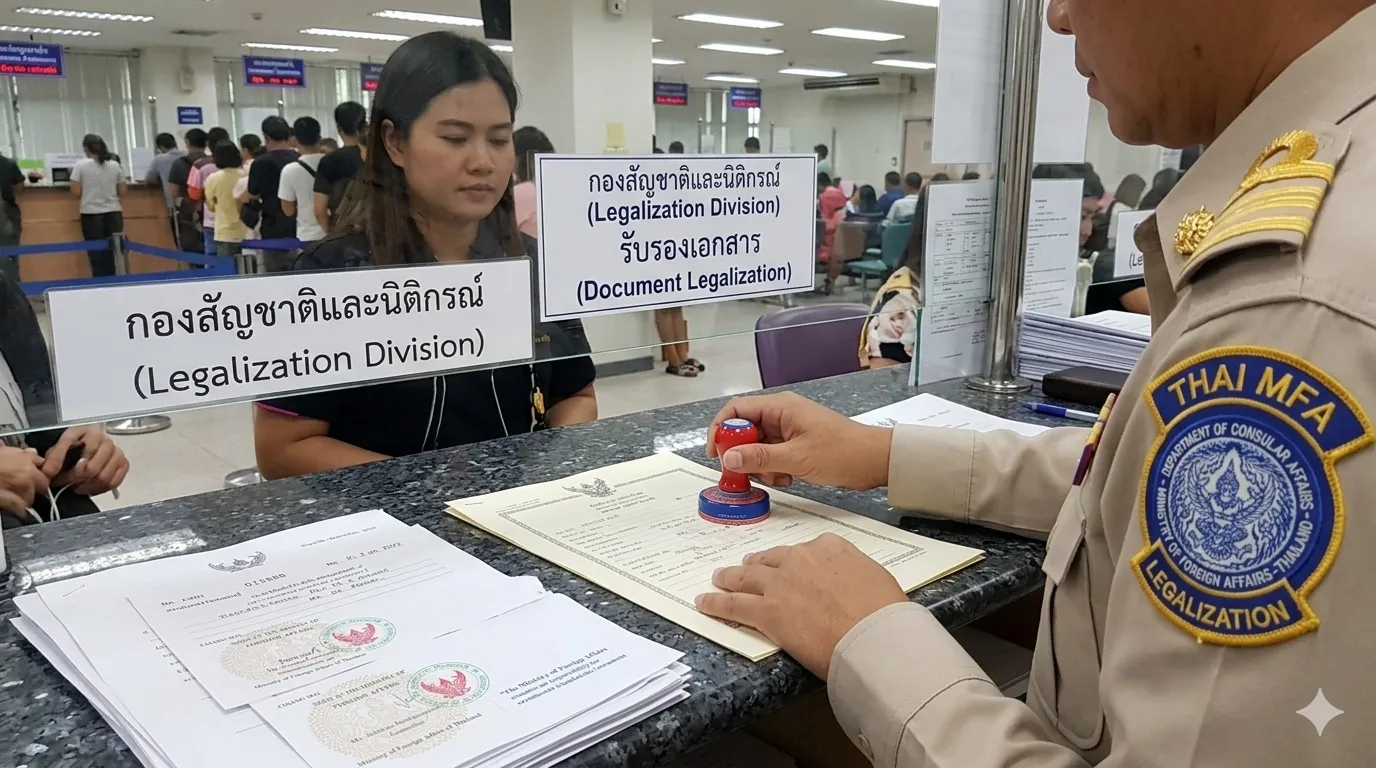
Thailand's Ministry of Foreign Affairs (MFA) has provided updated information regarding the legalization process for documents intended for use abroad. This official authentication is crucial for foreign governments, educational institutions, employers, banks, or embassies to accept Thai-issued documents. The specific process varies depending on the document type and the destination country. Applicants are advised to prepare original documents, arrange for any necessary translations or certifications, book an online appointment, and confirm current fees, locations, and processing times. Following MFA legalization, further authentication may be required at the destination country's embassy, as is the case with Thailand police clearance certificate authentication. The Legalization Division within the MFA is responsible for verifying the authenticity of signatures and seals of Thai officials. Unlike certification, which may confirm a copy, translation, or signature, legalization authenticates an official document for potential use overseas. However, it does not guarantee acceptance by a foreign authority. It is strongly recommended that applicants first contact the receiving authority (embassy, government office, school, employer, court, or immigration authority) to obtain their current checklist. Confirming these requirements before paying for translations or making travel arrangements is essential, as requirements can differ by country and document type. The document legalization process involves obtaining a clear original or an officially certified copy and meticulously checking all names, dates, seals, and signatures against the receiving authority's records. If translation is required, applicants must confirm the accepted language and ensure the translator's signature and stamp meet the stated rules. Applicants typically need to book an online appointment via the official qLegal booking system before visiting the Legalization Division. Walk-in services are not the norm, and appointment capacity can be limited, necessitating booking well in advance of travel plans. When attending the appointment, bring the appointment confirmation, passport or Thai ID, original documents, translations, and copies. If someone submits the file on your behalf, include a required authorization letter. That representative may also need their own identification and a copy of yours. At the appointment, staff review the file and may reject incomplete, unclear, or incorrectly prepared documents. After submission, follow the stated collection or delivery instructions and retain the receipt. The information above reflects conditions available as of September 2026, but confirm appointments, office hours, fees, processing times, and document rules before traveling. Before your appointment, check each document as if an officer will review it line by line. The Ministry of Foreign Affairs does not correct errors in names, dates, signatures, seals, or translations. Each document category may follow a different certification path, so confirm the requirements for your exact document and destination. Thai documents intended for use abroad often need translation into English or the destination country’s language. This can include civil records, university documents, police clearance certificates, company documents, and powers of attorney. The receiving authority may also require notarization or prior certification by the relevant Thai department. For example, a civil document may need certification through the district office or Department of Provincial Administration. An academic record may need verification from the university registrar. Company documents and powers of attorney may require certification by another Thai authority or a notary before the MFA can process them. Foreign documents intended for use in Thailand usually need certification in the issuing country first. Depending on the document and country, that may involve the foreign ministry, a Thai embassy or consulate, an apostille where applicable, or another authorized body. Requirements for translation and certification of foreign documents can differ by document type. Check whether the translation must come from an approved or qualified translator. Ask whether you must submit both the original and the translation, and whether the translator must sign, stamp, or attach identification. Thailand’s Department of Consular Affairs also provides guidance on legalizing document translations. Use this quick review before leaving home: - Original document and required certifications - Official translation (if needed) - Translator’s credentials (if required) - Appointment confirmation - Identification (passport, Thai ID) - Copies of all documents - Authorization letter (if applicable) Each document is normally treated separately for fee purposes. Several certificates in one application can therefore create several charges, even when they relate to the same case. Staff may return or delay a file with missing pages, unclear seals, damaged originals, mismatched names, unsigned translations, expired certificates, or incorrect copies. The same problem can occur when a document has not been certified by the correct Thai department first. The MFA may ask you to correct the underlying issue instead of legalizing the document. If the document type is unusual, contact the issuing office or the MFA service desk before your appointment. That extra check can prevent a wasted trip and help you identify the correct certification chain. Thailand MFA legalization costs depend on the number of documents, the service speed, and whether you need translation checking or return delivery. Current summaries commonly list 200 THB per document for regular legalization and 400 THB per document for express service, but confirm the amount when you book. Regular Information source: Chiang Rai Times
Original source
Chiang Rai Times