General articles are free for 24 hours after publish.
Cambodia Holds FMIS Project Progress Meeting to Discuss Achievements and Challenges in Financial Management Reform
A progress meeting for Cambodia's FMIS (Financial Management Information System) project was held to discuss achievements in the first half of 2026 and future challenges. The project, aimed at enhancing transparency and efficiency in national financial management, has reached 96% completion, with advancements in e-procurement and data analysis functions.
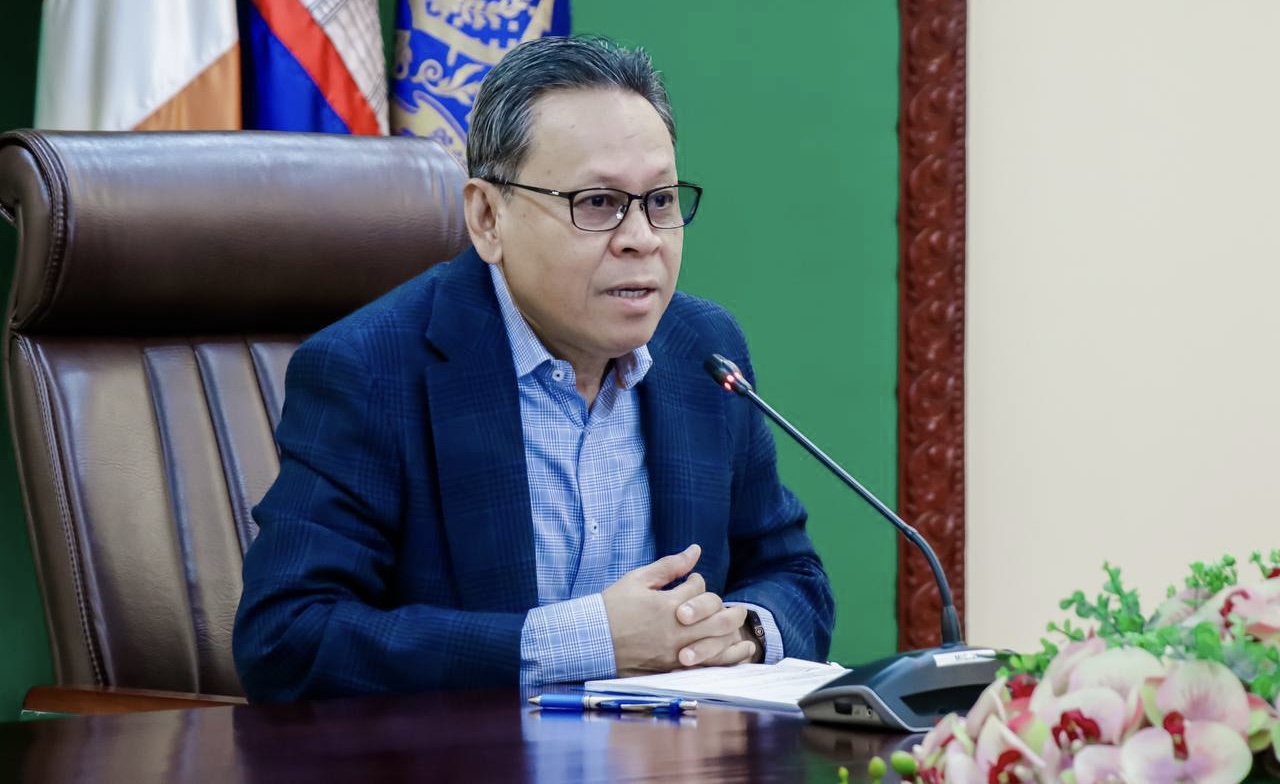
Phnom Penh, July 17, 2026 -- A meeting was held on July 16 at the Ministry of Economy and Finance to review the progress of the Financial Management Information System (FMIS) project and to formulate future implementation plans. The meeting was chaired by Dr. Hian Sahip, Secretary of State and Head of the FMIS Project Management Working Group. The meeting was attended by leaders and representatives from the General Secretariat of the Public Financial Management Reform Committee, the National Treasury General Department, the General Department of Budget, the General Department of Sub-national Finance, the General Department of Public Procurement, the General Department of State Property and Non-Tax Revenue, the Inspectorate General, the General Department of Internal Audit, the General Department of International Cooperation and Debt Management, the General Department of Public Financial Management Information Technology, the General Secretariat of the Ministry of Economy and Finance, and the Secretariat of the FMIS Project Management Working Group. Dr. Hian Sahip highlighted the close cooperation from key general departments of the Ministry of Economy and Finance, who are members of the FMIS Project Management Working Group. Through their contributions, opinions, and time, they have helped achieve the project's successes. The implementation of FMIS plays a crucial role in the Public Financial Management Reform Program, and its value has been recognized by relevant ministries and institutions, especially the full adoption of FMIS procedures. As of the first half of 2026, the FMIS Project Management Working Group has achieved 96% of the set indicators. Key progress includes expanding the scope of FMIS usage, developing the e-procurement (e-GP) function and integrating external systems, implementing the Techo Intranet project through training and dissemination, and increasing the number of reports used by budget units at both national and sub-national levels to 81. Real-time data from FMIS demonstrates significant potential in eliminating the culture of "blame-shifting" among officials and between units by ensuring transparency, accountability, and clear tracking of data and work implementation stages. During the meeting, representatives from the relevant general departments of the FMIS Project Management Working Group expressed their interest and high appreciation for the benefits of FMIS in facilitating budget execution and public financial management, particularly in supporting public financial reform in Cambodia. These general departments pledged to continue their cooperation with the FMIS Project Management Working Group on subsequent tasks to ensure the project's smooth operation. Dr. Hian Sahip further stated that some ministries and institutions still lack a comprehensive understanding of the importance and benefits of using the FMIS for budget management. Therefore, he emphasized the need for increased attention to dissemination, awareness-raising, and training to enable users to understand and maximize the "superior benefits" derived from using the FMIS. In conclusion, Dr. Hian Sahip encouraged and urged the working group to continue their work with dedication, particularly to strengthen and expand their capabilities to keep pace with digital transformation. He also stressed the importance of maintaining integrity and fostering good cooperation with stakeholders to enhance the efficiency of public service delivery and improve the living standards of the people through the development and strengthening of FMIS utilization to its full potential. Source: AKP Khmer
多角的分析
FMISプロジェクトの進捗は、カンボジアの公共財政管理の効率化と透明性向上に向けた重要な一歩です。96%の達成率は、システム導入の成功を示唆していますが、残りの4%の達成と、e-GPやデータ分析機能のさらなる活用が今後の経済的効率に直結します。特に、リアルタイムデータによる「責任転嫁」文化の排除は、予算執行の遅延削減や不正防止に繋がり、財政規律の強化と経済成長の基盤整備に貢献すると考えられます。
FMISの導入と進捗は、カンボジアの投資環境における透明性と予測可能性を高める要因となります。公共調達プロセス(e-GP)のデジタル化は、入札プロセスの公平性を向上させ、外国投資家にとってより信頼性の高いビジネス環境を創出する可能性があります。また、財政管理の効率化は、政府の財政健全性への信頼を高め、長期的な投資を促進するでしょう。
FMISの導入は、公共サービスの提供における透明性と説明責任を向上させ、市民の信頼を得る上で重要です。一部の省庁・機関で理解が不足しているという指摘は、研修や広報活動の強化が必要であることを示唆しています。FMISがもたらす「責任転嫁」文化の排除は、公務員の職務遂行における公平性を高め、市民がより質の高い公共サービスを受けられる可能性を高めます。これにより、国民の生活水準向上への貢献が期待されます。
FMISプロジェクトの進捗は、カンボジア市民の生活に間接的ながらも重要な影響を与えます。公共財政の透明性が高まることで、税金がより効率的に使われ、インフラ整備や社会サービス(医療、教育など)の質が向上する可能性があります。また、電子調達(e-GP)の導入は、公共事業における不正や無駄を減らし、より多くの予算を市民福祉のために振り向けることを可能にします。しかし、一部の公務員がシステムを十分に理解していないという現状は、市民が期待するサービス改善に遅れが生じる懸念も示唆しています。
背景・歴史的文脈
カンボジアにおける公共財政管理情報システム(FMIS)の導入は、2000年代初頭から進められている公共財政管理改革(PFM Reform)の一環です。この改革は、国際通貨基金(IMF)や世界銀行などの国際機関の支援を受け、財政の透明性、効率性、説明責任の向上を目的としてきました。FMISは、予算編成、執行、会計、調達といった公共財政管理の主要プロセスを統合・デジタル化する基幹システムであり、その段階的な導入と機能拡充が図られてきました。今回の会議で言及されている「FMISプロジェクト第4段階」は、こうした継続的な改革努力の最新の進展を示しています。特に、中国からのインフラ投資が増加する中で、財政管理の透明性確保は、国内のガバナンス強化と国際社会からの信頼維持の両面で重要性を増しています。
原文ソース
AKP Khmer