General articles are free for 24 hours after publish.
High Waves Disrupt Octopus Fishermen's Livelihoods in Maurongga, Indonesia
In Maurongga, Ende Regency, East Nusa Tenggara, Indonesia, high waves have made octopus fishing difficult, forcing fishermen to seek alternative income sources like collecting stones on the shore. The community has implemented a 'Loi' fishing ground management system for sustainable practices.
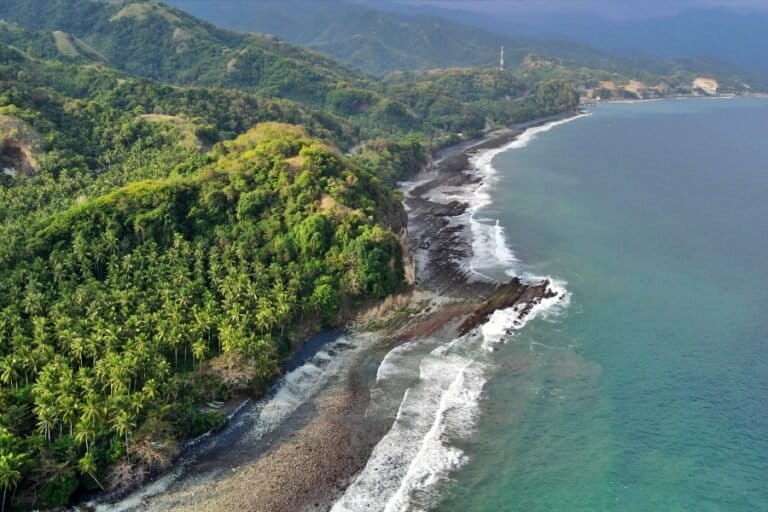
Imran Tabri gazes out at the sea from Maurongga Beach in Ende Regency, East Nusa Tenggara. High waves have made the waters murky, hindering octopus fishing, and forcing fishermen to pull their boats ashore. "It's currently the high wave season, so we pull our boats ashore to prevent them from being damaged by the waves," Imran stated. While the fishermen are unable to go to sea, some women and children on the coast gather green stones. These stones are put into sacks and sold to supplement family income, with a 25-kilogram sack fetching around Rp20,000 (approximately $1.30 USD). Imran began fishing for octopus in Maurongga in 2015. He learned the trade while living in his hometown on the southern coast of Ende City, noticing an untapped opportunity. "At that time, no one was fishing for octopus. The potential for octopus in Maurongga was very large, so I started fishing for them," he explained. By 2019, after receiving assistance from the Tananua Foundation, the number of octopus fishermen grew to seven, including two women. The fishermen later received support in the form of boats. Data from the Tananua Foundation Flores indicates that octopus became Maurongga's largest catch in 2025, with 479.8 kilograms valued at approximately Rp16.07 million (around $1,050 USD). To protect the waters they depend on, fishermen are implementing a fishing ground management system known as 'Loi'. Ismail Isman, chairman of the LMMA Embo Angi fishermen's group, explained that the fishing area is divided into two sections. One section is closed for three months while fishermen continue to fish in the other. The closures then alternate. According to Imran, this system allows octopus time to reproduce. He noted that the average weight of octopuses caught by fishermen has increased, with some reaching up to three kilograms. Source: Mongabay Indonesia
Original source
Mongabay Indonesia