General articles are free for 24 hours after publish.
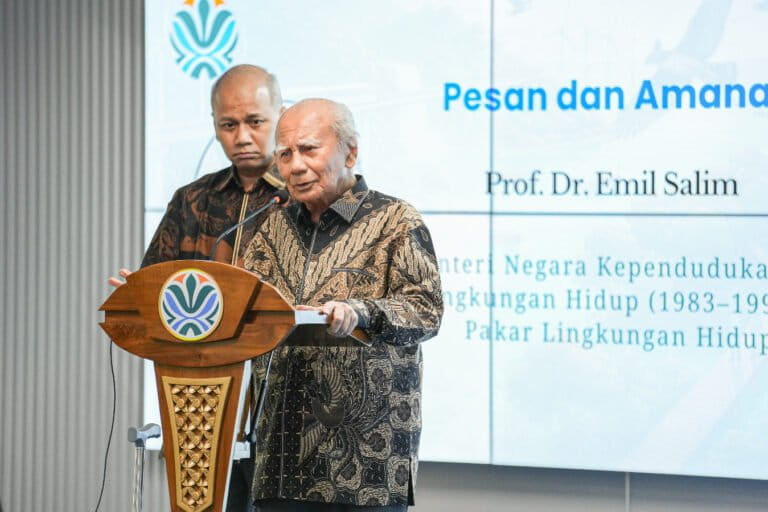
Emil Salim: Environmentalism's Evolution and Indonesia's Sustainable Future
Eminent Indonesian economist Emil Salim recounts his shift in environmental perspective from development-centric to conservation-focused. A pivotal conversation with President Soeharto transformed his view of nature from an economic resource to a subject of respect.
Emil Salim, a distinguished Indonesian economist and former Minister of Environment during the New Order era, has shared his evolving perspective on the environment. Previously viewing nature as an economic resource for development, Salim's appointment as Minister of Environment marked a turning point, leading him to recognize nature as a subject to be respected and protected. This significant shift began when President Soeharto appointed him as Minister of Environment. Salim candidly admits he initially confessed to not understanding environmental issues. For years, his education had focused on nature as an object to be utilized for economic growth and human development. However, a simple conversation with President Soeharto while fishing in the waters of Tanjung Priok, North Jakarta, altered his thinking. Pointing to the polluted sea, President Soeharto reportedly asked, "I used to be able to fish here. Gradually, I have to go further and further. Why is this sea dirty?" Salim, who was then Minister of Transportation responsible for ports and maritime activities, felt it was a subtle reprimand from the president. Shortly thereafter, Soeharto conveyed an unexpected decision: "Now I ask you to become Minister of Environment." Although Salim initially considered refusing due to his lack of expertise, he eventually understood that development, while transforming nature, also carries the responsibility for its restoration. Consequently, he sought to deepen his knowledge through spiritual approaches. This experience highlights the importance of environmental protection in Indonesia and offers insights into the contemporary challenge of balancing development with environmental conservation.
Original source
Mongabay Indonesia