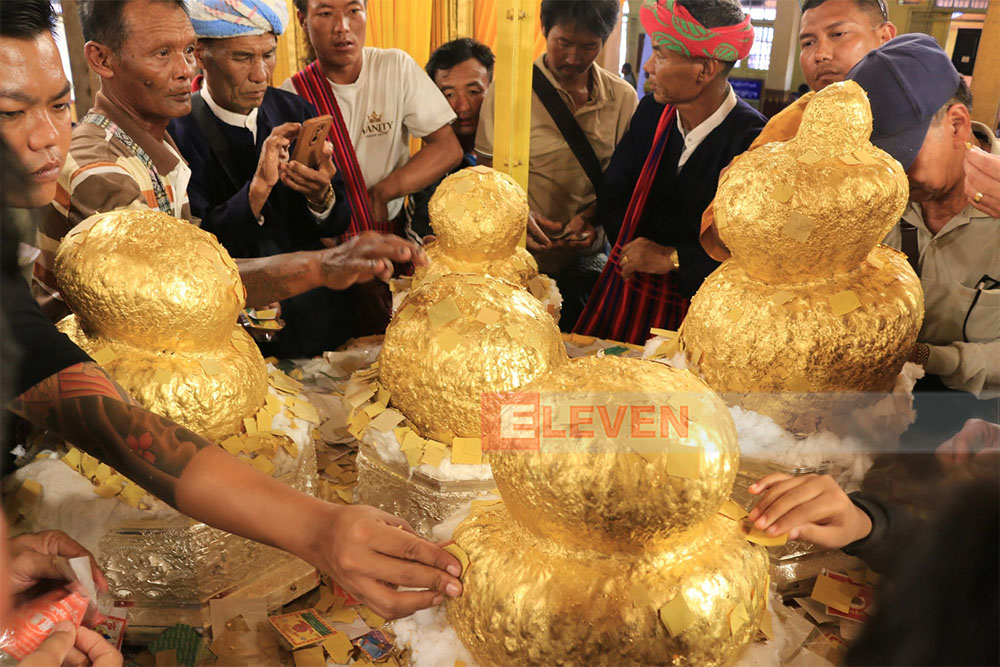
Inlay Phaung Daw Oo Myat Saw Buddha Images Return to Original Monastery, Monastery Entry Ceremony Held
It is known that the Inlay Phaung Daw Oo Myat Saw Buddha images have returned to their original monastery in Nyaungshwe Township, southern Shan State, and a monastery entry ceremony has been held. It is known that the im
Read up to 3 eligible full articles per Japan day (JST) for free
Create a free account to open up to 3 eligible full articles per Japan calendar day (JST). Headlines and summaries remain available across ASEAN 7.
Related articles
- Winners of performing arts competitions awarded
Winners of the 27th Myanmar Traditional Cultural Performing Arts Competition were honoured at a ceremony held at the Myanmar International Convention Center (1) in Nay Pyi Taw on Thursday. President U Min Aung Hlaing att
- Myanmar Embassy in Kuwait requests cooperation for truth in Myanmar woman's death in Iraq
The Myanmar Embassy in Kuwait announced on October 28 that it has requested coordination and cooperation from the Iraqi Ministry of Foreign Affairs for the truth to emerge and for necessary support to be provided regardi
- Myanmar-Russia discuss cooperation in mining sector
State Counsellor Min Aung Hlaing met with a delegation led by Mr. Vladislav Sviblov, head of the Russia-based Areal Group of Companies, at the reception hall of the State Counsellor's Office in Nay Pyi Taw on the morning
- Myanmar: Where Culture Lives in Every Heart
“MINGALABA! ” — a simple greeting, yet one that carries the warmth and hospitality of Myanmar. Across this golden land, culture is not something found only in museums or history books. It lives in the sound of temple bells at dawn, the fragrance of Thanaka, the graceful folds of a longyi, the taste of mohinga, the rhythm of traditional music and the glow of oil lamps offered at pagodas. From generation to generation, Myanmar people have inherited a remarkably rich cultural heritage that reflects their history, beliefs, creativity and way of life. Every country has its own customs and traditions. For Myanmar, preserving them is more than remembering the past. It is a responsibility to keep our national identity alive and pass our cultural treasures on to future generations. A Heritage We Can See and Feel Myanmar’s cultural heritage can broadly be understood in two forms: tangible and intangible heritage. Tangible heritage includes pagodas, stupas, ancient buildings, sculptures, paintings, traditional handicrafts and historical artefacts. Intangible heritage lives through languages, literature, beliefs, customs, festivals, music, dance, performing arts and traditional knowledge. Myanmar’s Remarkable Landmarks Among Myanmar’s most recognizable landmarks is the magnificent Shwedagon Pagoda, whose golden stupa dominates the Yangon skyline. Elsewhere, ancient sites tell stories of civilizations that flourished centuries ago. The Pyu Ancient Cities – Hanlin, Beikthano and Sri Ksetra – and the Bagan Archaeological Area are among Myanmar’s cultural treasures recognized as UNESCO World Heritage properties. Myanmar’s natural landscapes also enrich the country’s cultural identity. The floating villages and traditional life around Inlay Lake fascinate visitors, while the Myeik Archipelago in Tanintharyi Region is renowned for its hundreds of tropical islands, clear waters, coral reefs and white-sand beaches. Thanaka: The Golden Heritage of Beauty If you are a foreign visitor walking through a Myanmar market for the first time, something may immediately catch your eye: the pale golden paste on people’s cheeks. “What is that?