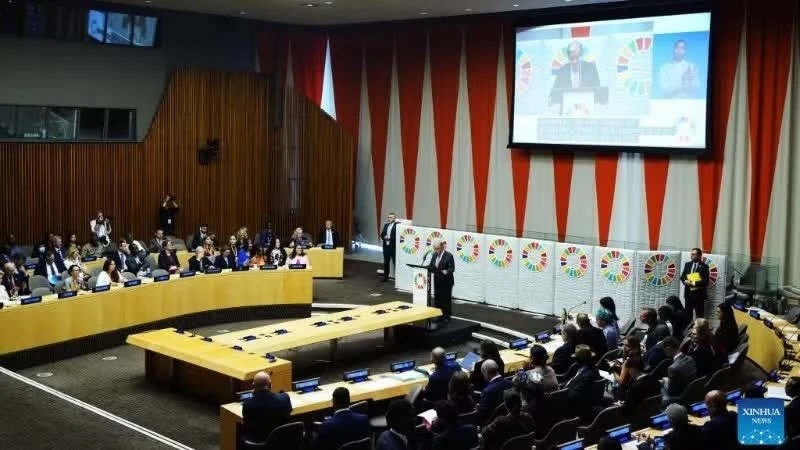
SDG Achievement Path Faces Thorny Challenges Amid Global Crises
Technology
2026年7月19日
5
Nhan Dan

General articles are free for 24 hours after publish.

SDG Achievement Path Faces Thorny Challenges Amid Global Crises

Share
AI Summary

The world faces compounded crises including geopolitical tensions, economic instability, and climate change, significantly slowing progress towards Sustainable Development Goals (SDGs). Poverty and hunger are escalating, necessitating urgent global action to meet the 2030 targets.

The world is currently facing a confluence of crises, including escalating geopolitical tensions, economic instability, and climate change, all of which are significantly slowing global progress towards achieving the Sustainable Development Goals (SDGs). Conflicts and poverty have the potential to reverse years of global progress, and without timely responses, the UN's roadmap to 2030 for SDG implementation will be fraught with challenges. At a high-level meeting of the UN Economic and Social Council (ECOSOC) themed "The Road to 2030," UN Deputy Secretary-General Amina Mohammed highlighted the alarming reality that nearly one billion people worldwide still live in extreme poverty, 2.3 billion go to bed hungry, and over two billion lack access to safe drinking water. While more than two-thirds of SDG indicators are on track or making moderate progress, the advancement is uneven across goals and among nations. The world has changed significantly since 2015, when the UN adopted the 17 global goals calling for collective action to end poverty, reduce hunger, protect the planet, and ensure peace and prosperity for all. The Earth is warming at an alarming rate, and conflicts have reached their highest levels in decades. The US-Iran war is not only shaking the Middle East but also creating ripple effects on energy markets, food prices, and global food security. Warnings of tens of millions falling into hunger due to conflicts in the Middle East, once considered overly pessimistic, are becoming a reality. The largest increases in global hunger and poverty are concentrated in Asia and Africa, regions accounting for about 80% of the total rise. In Somalia, the Middle East crisis has had immediate consequences, with fuel prices in Mogadishu more than doubling in just a few days, increasing the cost of food, water, transportation, and humanitarian aid. In Ethiopia, disruptions related to the Strait of Hormuz have driven up fuel prices, with a cascading effect on daily necessities. Diesel prices have increased by 31%, and humanitarian fuel costs have risen by 50-70%, making it more difficult to deliver aid to communities on the brink of starvation in the Horn of Africa nation. Alongside the war in the Middle East, climate change and extreme weather events could exert even greater pressure by 2027. Meanwhile, the World Food Programme (WFP) is facing a funding shortfall of 75% for its operations, leading to severe implications. Notably, the funding levels the organization appeals for have not changed from a decade ago, while the need for assistance has doubled. The current resource deficit is considered unprecedented, forcing the WFP to make very difficult decisions about prioritizing aid recipients in various countries. The WFP aims to assist approximately 110 million people globally in urgent need of aid this year, requiring about $13 billion. The UN emphasizes the importance of being prepared to make choices, mobilize finances, and enhance multilateral cooperation to implement comprehensive solutions that simultaneously advance multiple SDGs and strengthen resilience against future shocks. Now is the time for the world to act, to identify priorities, scale up effective solutions, and reaffirm political commitment in the final stretch to achieve the SDGs by 2030.

0

Original source

Nhan Dan

原文を読む