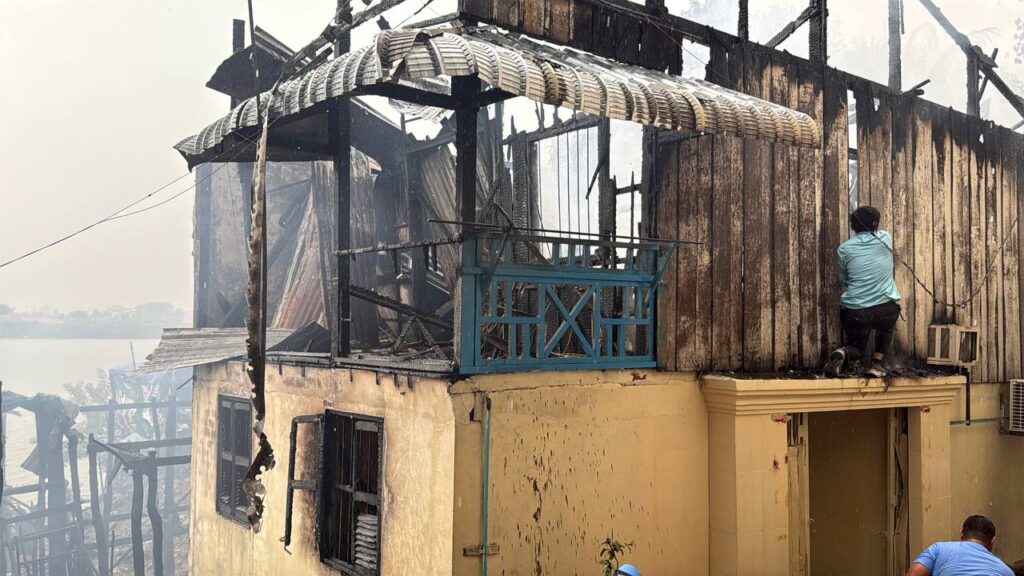
Massive Fire in Phnom Penh Destroys 21 Riverside Homes, Residents Displaced
Society
2026年7月6日
3
Kampuchea Thmey Security

Massive Fire in Phnom Penh Destroys 21 Riverside Homes, Residents Displaced

AI サマリー

A large fire in Phnom Penh's Svay Pak commune on July 5th destroyed 20 wooden houses and damaged the wall of one more along the riverside. No injuries were reported, but residents lost belongings and were displaced. The cause is under investigation.

A major fire broke out on July 5, 2024, around 11:30 AM in the Svay Pak commune of Phnom Penh's Russey Keo district, destroying 20 wooden houses and damaging the wall of one more along the riverside. Fortunately, no injuries were reported. According to nearby residents, they heard an explosion before the fire erupted, followed by black smoke billowing into the sky and flames spreading rapidly. Residents attempted initial firefighting efforts, but the intensity of the blaze made it impossible to contain and prevent further spread to neighboring homes, prompting them to report to authorities and request fire trucks. In response to the report, nine fire trucks from the Phnom Penh Fire Department, one from Russey Keo district, three vehicles from OCIC in Chroy Changvar, and two boats from the Kilos 9 Vihar Chon Klai Chon (Old Temple) joined the firefighting efforts. Local authorities also actively assisted in the operation. Authorities indicated that narrow roads and strong winds were the primary factors contributing to the rapid spread of the fire. The blaze resulted in the complete destruction of 20 wooden, zinc-roofed houses and damage to the wall of one other. The cause of the fire is currently under investigation by the police. This incident highlights the vulnerability of infrastructure in densely populated riverside areas and the challenges in fire response. Many residents have lost their belongings and are displaced, necessitating support for their future recovery.

多角的分析

経済的影響

今回の火災は、プノンペン市内のインフラ整備の遅れと、特に低所得者層が多く居住する地域における住宅の耐火性の低さという経済的課題を浮き彫りにした。密集した木造家屋が密集する地域では、火災発生時の被害が甚大になりやすく、復興には多額の費用と時間を要する。これは、都市開発におけるインフラ投資の必要性と、貧困層への住宅支援の重要性を示唆している。

投資家心理

投資家にとって、この種の火災はインフラの脆弱性を示す兆候となりうる。特に、開発途上地域における不動産投資やインフラ関連プロジェクトへの投資を検討する際には、耐火基準や防災対策の整備状況を慎重に評価する必要がある。また、保険市場への影響も考慮すべき点であり、火災保険の引受能力や保険料率の変動も注視する必要がある。

社会的影響

火災により、多くの住民が住居と家財道具を失い、避難生活を余儀なくされた。特に、川沿いの低所得者層が多く住む地域では、再建のための資金や代替住居の確保が困難な場合が多い。これは、社会的なセーフティネットの整備や、被災者への迅速かつ十分な支援体制の構築が急務であることを示している。SNS上では、被災者への支援を呼びかける声も上がっている。

市民の声

プノンペン市民、特に火災現場となったスバイパク地区の住民にとっては、住み慣れた家を失うことは計り知れない悲劇である。多くの住民が、日々の生活に必要な最低限の財産すら失い、今後の生活の見通しが立たず不安を抱えている。復興支援の迅速な実施と、同様の災害が再発しないような都市計画の改善が強く求められている。

背景・歴史的文脈

カンボジアの首都プノンペンでは、急速な都市化と人口増加に伴い、住宅不足やインフラの未整備が長年の課題となっている。特に、メコン川やトンレサップ川沿いには、低所得者層が多く居住する密集した住宅地が形成されており、木造家屋が密集しているため、火災発生時の延焼リスクが高い。過去にも同様の火災が発生しており、2022年3月にはチョン・ブー地区で大規模火災が発生し、数十棟の家屋が焼失した事例がある。これらの地域では、消防設備の不足や道路の狭さも消火活動の妨げとなる要因となっている。今回の火災は、こうした構造的な問題を改めて浮き彫りにした形だ。

原文ソース

Kampuchea Thmey Security

原文を読む