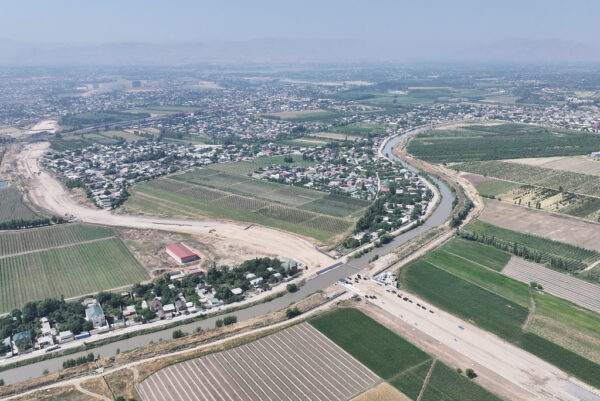
Chinese Workers Resume Work on Dushanbe-Kulma Highway Months After Attacks
Infrastructure
2026年6月30日
7
The Diplomat Indonesia

Chinese Workers Resume Work on Dushanbe-Kulma Highway Months After Attacks

AI サマリー

Construction has reportedly resumed on the Dushanbe-Kulma highway linking Tajikistan and China, months after Chinese workers were killed in attacks last November. Tajikistan has enhanced security measures, while China had pressed for safety assurances.

Chinese workers have reportedly resumed construction on a critical highway project linking Tajikistan with China, months after Chinese employees of the China Road and Bridge Corporation were killed in an armed attack in the area. The Dushanbe-Kulma highway connects the Tajik capital to China via Khorog, the capital of the Gorno-Badakhshan Autonomous Oblast (GBAO), and the Kulma Pass border crossing. In 2022 – not long after the central Tajik government put down yet another round of unrest in GBAO – the Tajik Transportation Ministry announced that China Road and Bridge Corporation would undertake a project to rehabilitate the road. In late November 2025, five Chinese workers were killed in two separate attacks near the Afghanistan-Tajikistan border. Three Chinese citizens were killed in an attack that targeted a gold-mining company compound on November 26 in Shamsiddin Shohin district in Khatlon Region. Four days later, on November 30, two more Chinese workers – employees of China Road and Bridge Corporation – were killed in Shodak village in GBAO’s Darvoz district. Both attacks took place close to the Afghanistan-Tajikistan border. After the second attack, Chinese Ambassador to Tajikistan Guo Zhijun “demanded that Tajikistan take all necessary measures to ensure the safety of Chinese enterprises and citizens in Tajikistan.” In a WeChat message, the embassy urged Chinese business and citizens to evacuate from the border areas. With the Chinese specialists gone, work ground to a halt on the tricky Qal’ai Khumb-Vanj portion of the larger Dushanbe-Kulma highway, which stretches between Darvoz district, where the November 30 attack occurred, and neighboring Rushan district. In March 2026, Tajikistan’s parliament approved a Chinese-funded project to construct nine border facilities along the country’s frontier with Afghanistan, with a grant of 569 million somoni – approximately $61 million. And now work on the highway is apparently underway once more. Citing the transportation ministry, RFE/RL’s Tajik service, Ozodi, reported that Chinese workers are back on the job after Dushanbe adopted additional security measures. According to the ministry, “after taking the necessary measures to ensure the safety of Chinese workers in cooperation with relevant agencies, Chinese workers have returned to the facility and the remaining work is currently underway.” Tajik officials, in their comments to Ozodi, acknowledged additional security measures without being specific. But an RFE/RL reporter witnessed Chinese employees being guarded by Tajik special forces in late May. Chinese workers, typically engaged in Belt and Road Initiative (BRI) infrastructure projects, have been targeted in the Afghanistan-Pakistan border area and in Pakistan’s Balochistan Province – but the borders with Central Asia have not been the sites of such attacks until recently. In mid-November 2024, Chinese workers were attacked for the first time in Tajikistan – in the same district where the first of the November 2025 attacks occurred. In the wake of 2025 attacks, the Taliban authorities in Afghanistan claimed to have opened an investigation. They also claimed to have arrested two individuals in connection with the attacks, which were both reported to have originated in Afghanistan’s Badakhshan Province. No specific groups claimed responsibility, though Tajik authorities suggested that criminal groups and drug smugglers were to blame; Taliban officials suggested that unnamed groups wishing to damage the Afghanistan-Tajikistan relationship were behind the attacks. In the months since, there has been no update on the Taliban’s investigation but in January, RFE/RL cited two separate Tajik border officials in GBAO’s Khatlon Province as saying that the Shamsiddin Shohin district attack, targeting the gold mining company, stemmed from water disputes. Further details on the attack targeting the road workers have not been made available.

多角的分析

経済的影響

中国が推進する一帯一路構想(BRI)におけるインフラ開発は、中央アジア諸国の経済発展に寄与する一方で、プロジェクトの安全性確保が喫緊の課題となっている。今回の事件は、BRIプロジェクトにおける投資リスクを浮き彫りにし、中国企業はプロジェクトの継続と従業員の安全確保という二律背反の状況に直面している。タジキスタン政府による治安強化策は、今後のBRIプロジェクトの実施可能性に影響を与えるだろう。

投資家心理

今回の事件は、中央アジアにおけるインフラ投資のリスク要因を再認識させるものとなった。特に、国境地帯や治安が不安定な地域でのプロジェクトは、政治的リスクとオペレーショナルリスクの両方を内包している。投資家は、プロジェクトの経済的リターンだけでなく、地政学的な安定性や安全保障体制を慎重に評価する必要がある。中国政府の関与やタジキスタン政府の治安対策の有効性が、今後の投資判断の鍵となる。

社会的影響

襲撃事件は、地域社会における緊張を高める可能性がある。特に、アフガニスタンとの国境付近という地理的要因は、民族間・国家間の関係に影響を与えうる。中国人労働者の安全確保のための治安対策強化は、地域住民の生活や移動の自由にも影響を及ぼす可能性がある。また、水利権を巡る紛争が事件の一因となったという情報は、地域における資源配分や紛争解決メカニズムの重要性を示唆している。GBAO地域における過去の治安不安も、この地域の脆弱性を示している。

市民の声

今回の事件は、タジキスタンの市民、特に国境地域に住む人々の生活に直接的な影響を与えうる。治安維持のための厳格な警備体制は、移動の制限や監視の強化につながる可能性がある。また、中国からの投資やインフラ開発が地域経済にもたらす恩恵と、それに伴う潜在的なリスク(例えば、環境問題や地域社会との摩擦)のバランスが、市民にとって重要な関心事となる。GBAO地域における過去の不安定な情勢も、市民の不安材料となりうる。

背景・歴史的文脈

タジキスタンとアフガニスタンの国境地帯は、長年にわたり不安定な状況が続いている。特に、ゴルノ・バダフシャン自治州(GBAO)は、中央政府の統制が弱く、過去に紛争や治安不安が発生している。2022年には、中央政府がGBAOでの治安不安を鎮圧した。中国は、一帯一路構想(BRI)の一環として、タジキスタンにおけるインフラ開発に積極的であり、ドゥシャンベ・クルマ高速道路はその重要なプロジェクトの一つである。しかし、アフガニスタンとの国境付近での中国関係者への攻撃は、2024年11月に初めて発生し、翌2025年11月には死亡者が出る事態となった。この背景には、地域における犯罪組織や、国家間の関係悪化を望む勢力の存在が指摘されている。

原文ソース

The Diplomat Indonesia

原文を読む