General articles are free for 24 hours after publish.
Ex-SC justices: No due process violation if impeachment voting threshold changes
Former Philippine Supreme Court justices stated that changing the voting threshold for convicting the Vice President in an impeachment trial would not violate due process. They argued that rule changes during proceedings are not problematic as voting has not yet commenced.
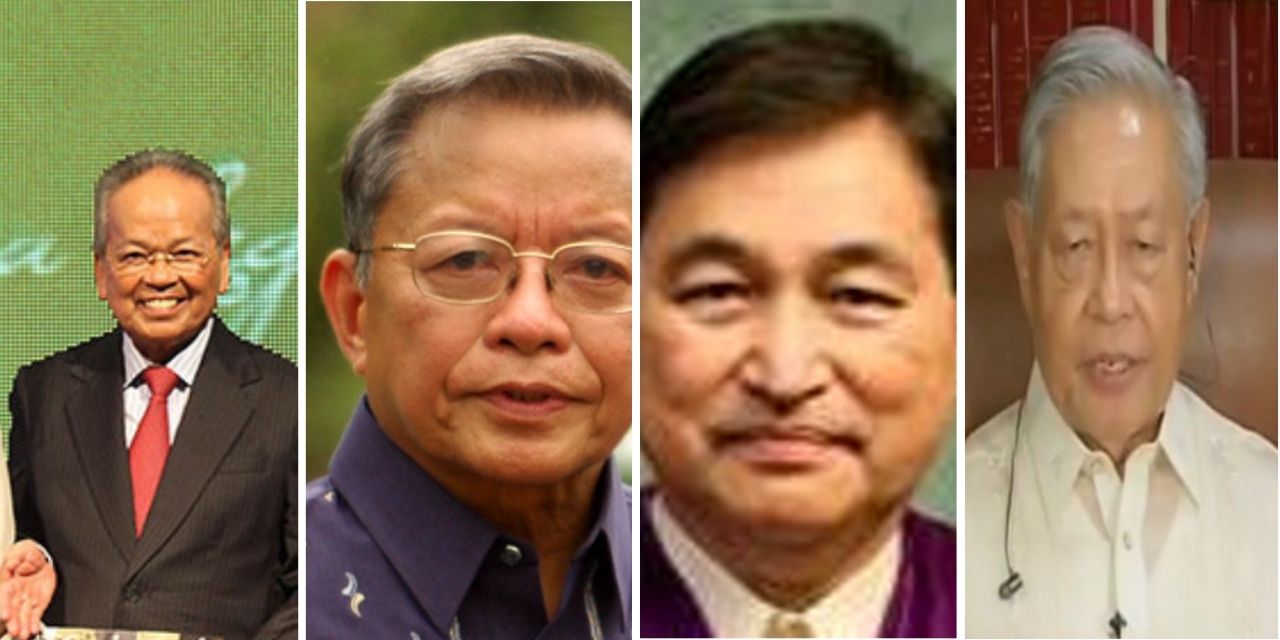
Former Supreme Court (SC) chief justices Artemio Panganiban, Reynato Puno, and Adolfo Azcuna stated on Wednesday that changing the voting threshold for convicting Vice President Sara Duterte in the Senate, acting as an impeachment court, would not constitute a violation of due process. Their remarks came amid discussions within the impeachment court regarding the interpretation of the required votes for conviction. Senator-judge Francis Kiko Pangilinan had posed a question to the three amici curiae, asking if altering the voting threshold mid-trial would infringe upon the due process rights of both the respondent and the prosecution. Pangilinan noted that some commentary suggested changing the threshold vote was akin to altering the rules during proceedings. Panganiban clarified that no violation has occurred yet, as the voting has not commenced. "There is no violation yet, because you have not voted yet. In other words, it hasn't been implemented. Not yet. It hasn't been implemented. So with what you are doing, you are anticipating the issue, the problem. So commendably, you are holding this meeting so that you cannot be accused of grave abuse of discretion should that time come," he said, adding that "You may change your mind right now, because it hasn't happened yet—you haven't taken a vote yet. That's why there is no grave abuse of discretion, in my humble opinion, as of now." Puno elaborated that the impeachment court is currently deliberating on the rule's meaning, not changing it. "It's a vague question when you say changing the rule. There isn't really a settled rule yet. Besides, if what is being done is discussing the actual meaning of that particular rule, that isn't changing the rule. It's simply correcting what the proper interpretation of the rule should be, especially for a rule that has so many reasonable interpretations," he stated. He further advised that "Whoever goes to the Supreme Court must demonstrate an injury. How can that injury be demonstrated if the Senate hasn't rendered a final interpretation yet, and when there is no applicability so far? The party raising the constitutional issue might even benefit from the new interpretation. I believe the Supreme Court will not entertain this issue at this time. It's a matter of perfect timing." Azcuna concurred, explaining that interpretations of procedural matters can be retroactive. "Because the question of the interpretation of the 2/3 is a procedural matter. And procedural matters can be retroactive. There is no vested right to a procedure. So the rule is if it's procedural, it can be applied to pending cases," he said. He concluded, "So even if the trial has already started and you change the interpretation of the presiding officer, I think there is no violation of due process. There's no vested right that has been violated because all these matters are procedural." Senator Francis Escudero, who also serves as the presiding officer of the impeachment court, reiterated that the 1987 Constitution mandates the concurrence of two-thirds of all Senate members, or 16 votes, for conviction. Escudero confirmed that his statement constituted a formal ruling, subject to available legal remedies. Meanwhile, it was noted that four of the current 24 senator-judges involved in the Vice President's trial are either detained for plunder cases or remain in hiding, a detail that could potentially impact the proceedings.
Original source
GMA News Philippines