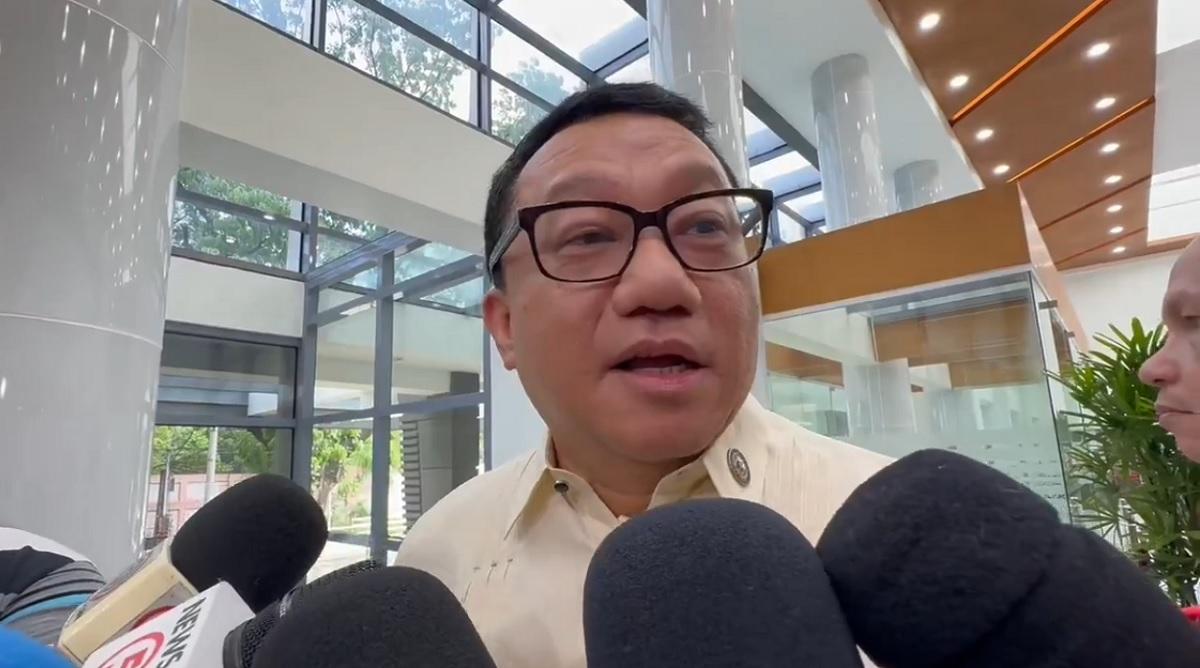
Prosecutor sought security after alleged threats from VP Sara Duterte
House prosecutor Joel Chua testified that he enhanced his security detail after Vice President Sara Duterte publicly mentioned his name in November 2024, citing concerns for his safety due to the remarks coming from the country's second-highest official. This statement is a key point in the Vice President's impeachment trial.
House prosecutor Joel Chua stated on Monday that he enhanced his security detail due to perceived threats following controversial remarks made by Vice President Sara Duterte in November 2024. Chua expressed genuine fear for his safety, emphasizing that the statements came from the country's second-highest official. Speaking to reporters after the fourth day of Duterte's impeachment trial, Chua said, "At that time, it was only natural for me to feel afraid because those words were not uttered by an ordinary person, but by the country's second-highest official." He recounted feeling genuinely threatened when the Vice President publicly mentioned his name during a late-night online press conference, which is the subject of the fourth article of impeachment. Chua confirmed that he did not have security at the time but arranged for it afterward, stating, "I didn't have security at the time, but because of that, I arranged for security. These are not words that can simply be brushed aside." Chua made the remarks after National Bureau of Investigation (NBI) Regional Director for the Bangsamoro Autonomous Region in Muslim Mindanao (BARMM) Jeremy Lotoc testified before the Senate impeachment court that investigators considered Duterte's statements "real and serious" and concluded that she had the intent, motive, and capability to carry out the alleged threats. During the same late-night online press conference in November 2024, Duterte supposedly singled out Chua, who chaired the House Committee on Good Government and Public Accountability that was then investigating the alleged misuse of confidential funds by the Office of the Vice President. "Di mo pala gusto ginagawa mo eh bakit mo sinisira pangalan ko, Joel Chua?" (If you don't even like what you're doing, then why are you ruining my name, Joel Chua?) The same press conference also included Duterte's alleged threats against President Ferdinand Marcos Jr., First Lady Liza Araneta-Marcos, and then-House Speaker Martin Romualdez, which later became the basis for the fourth article of impeachment against her. Asked whether Lotoc's testimony bolstered the prosecution's argument regarding Duterte's capability to carry out the alleged threats, Chua pointed to the history surrounding the Duterte family. "Alam naman natin ang history ng kanilang pamilya. In fact, nasaan ba ngayon ang kanyang ama? Ano ba ang kasong kinakaharap ng kanyang ama? EJK," Chua said, referring to former President Rodrigo Duterte. (We all know the history of their family. In fact, where is her father now? What case is he facing? Extrajudicial killings.) "So alam din naman natin ang itinatawag nilang Davao Death Squad. Lahat ito may kinalaman sa kung ano man ang kapasidad nila para gampanan o gawin ang mga banta." (We also know about what they call the Davao Death Squad. All of these are relevant to whatever capability they may have to carry out or act on those threats.) Chua stressed that the alleged threats should not be dismissed as ordinary remarks because they were directed at the President. "Ito ay hindi lang masasabi nating ordinaryong grave threat. Ito ay binitawan ng pangalawa sa pinakamataas na opisyal ng ating bansa against sa Pangulo. So ito ay pagbabanta sa head of state," he said. (This utterance cannot simply be considered an ordinary grave threat. It was made by the country's second-highest official against the President. It is a threat against the head of state.) He also rejected arguments that Duterte's remarks were merely conditional statements. "Maliwanag na maliwanag… wala namang tinatawag na conditional threat… threat is a threat," Chua said. (It's very clear... there is no such thing as a conditional threat. A threat is a threat.) He cited a case during the Duterte administration in which an individual was arrested for allegedly threatening the President despite supposedly lacking the means to carry out the threat. "The issue here is the threat itself," Chua added. Source: GMA News Philippines
多角的分析
本件は直接的な経済的影響は小さいが、政治的安定性への懸念は間接的に投資家心理を冷え込ませる可能性がある。副大統領の弾劾裁判という政治的リスクは、フィリピン経済への信頼感に影響を与えうる。特に、政治的混乱が続けば、国内消費や海外からの直接投資(FDI)の減退につながるリスクも否定できない。
投資家は、政治的リスクを重視する。副大統領の弾劾裁判は、フィリピンの政治的安定性に対する不確実性を高める要因となる。過去のドゥテルテ政権下での類似の政治的緊張や、法制度への信頼性に関する懸念が再燃する可能性があり、慎重な見方が求められる。特に、機密資金の不正利用疑惑は、政府の透明性への疑問を投げかけ、投資判断に影響を与える可能性がある。
ジョエル・チュア下院検察官が、副大統領からの「脅迫」により警護を強化したという事実は、フィリピンにおける権力者間の緊張関係と、個人が受ける潜在的な圧力の大きさを浮き彫りにしている。特に、公職にある者が、自身の職務遂行のために、権力者からの報復を恐れなければならない状況は、言論の自由や公務員の独立性に対する懸念を提起する。また、ドゥテルテ家とその過去の言動への言及は、国民の間に過去の政権下での治安や人権問題に対する記憶を呼び起こす可能性がある。
市民は、政治的権力闘争の余波を直接的に感じる可能性がある。副大統領の弾劾裁判という重大な政治的出来事が、日常生活に直接的な影響を与えることは少ないかもしれないが、政治的緊張の高まりは、社会全体の不安感を増幅させる。特に、過去の「ダバオ・デス・スクワッド」やEJK(司法取引外殺害)といった言葉に触れることで、一部の市民は治安への不安を再認識するかもしれない。また、公職者が権力者からの脅威を感じるという事実は、法の支配や公正な司法への信頼に影響を与える可能性がある。
背景・歴史的文脈
フィリピンにおける政治的緊張は、しばしば権力闘争や家族間の対立に根差している。サラ・ドゥテルテ副大統領は、元大統領ロドリゴ・ドゥテルテ氏の娘であり、その父は過去に「ダバオ・デス・スクワッド」や司法取引外殺害(EJK)といった物議を醸す発言や行為で国際的な非難を浴びた。今回の弾劾裁判の根拠となっているのは、副大統領が2024年11月に行ったオンライン記者会見での発言であり、これには大統領や他の高官への脅迫も含まれるとされる。下院検察官であるジョエル・チュア氏が、この発言を受けて安全確保を強化したという事実は、フィリピンの政治における権力と影響力の関係性、そして過去の政権下での人権問題の記憶が、現在の政治的状況に影を落としていることを示唆している。
原文ソース
GMA News Philippines