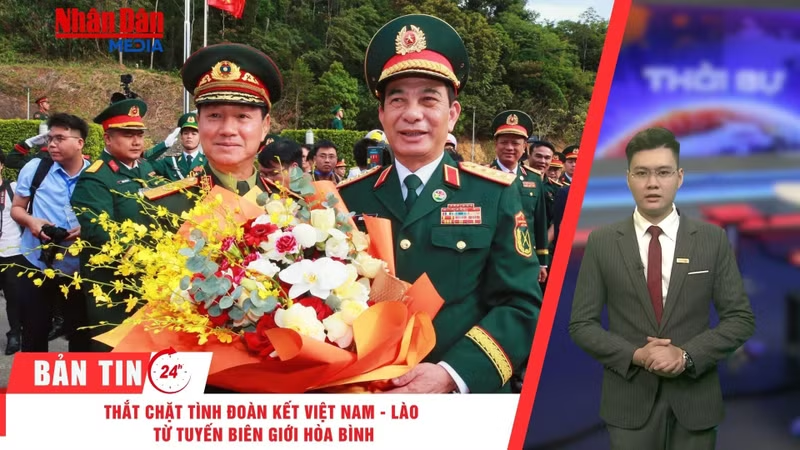
Vietnam-Laos Border: A Symbol of Peace and Solidarity as Defense Exchange Deepens
Vietnam and Laos are deepening defense exchanges along their border, fostering initiatives that symbolize peace and solidarity. Domestically, various policies are advancing, including upward revisions to GDP growth forecasts, promotion of digitalization, and development of healthcare infrastructure.
This article requires PRO
This article is outside the free access window or is a special report. PRO unlocks it and the full archive.
Related articles
- Vietnam Aims to Streamline Fuel Distribution Network, Reduce Costs by Cutting Intermediaries
The Vietnamese government has announced a policy to reduce intermediaries in fuel distribution, aiming to improve costs and efficiency. This move seeks to alleviate price burdens on consumers and ensure stable supply. Extensions of tax incentives have also been announced to stabilize the market.
- Vietnam Clarifies Cases Not Eligible for Military Service Deferment
Vietnam has clarified specific cases ineligible for military service deferment. The scope of deferment for students extending their university courses may be limited, potentially impacting career choices and development for young people.
- Vietnam, Panama Deepen Ties with Enhanced Cooperation
Vietnamese President To Lam met with Panamanian President Mulino, signing cooperation agreements in maritime transport, crime fighting, agriculture, and tourism, aiming to move bilateral ties into a new phase.
- Panama President Visits Vietnam for Official State Visit
Panama's President José Raúl Mulino arrived in Vietnam on October 6th for an official state visit, hosted by Vietnamese President Tô Lâm. The leaders met to discuss strengthening bilateral ties and expanding cooperation across various sectors.