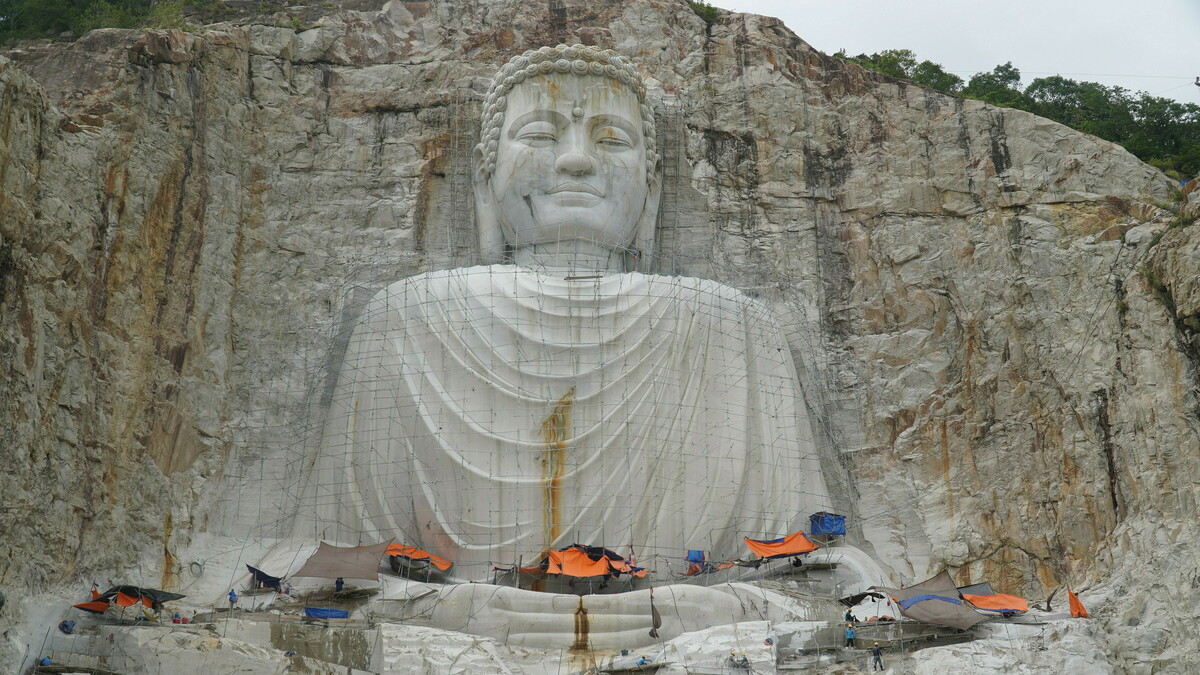
81m Buddha Statue Carved into Mountain in Western Vietnam Aims for World's Tallest
An 81-meter-tall statue of Buddha, carved directly into a mountain at Sam Mountain in An Giang Province, southern Vietnam, is under construction and expected to be completed by the end of 2027. It is poised to become the world's tallest rock-carved Buddha statue. The project is part of a cultural park featuring four statues symbolizing key moments in the Buddha's life.
This article requires PRO
This article is outside the free access window or is a special report. PRO unlocks it and the full archive.
Related articles
- Quoc Tu Giam's 950th Anniversary Celebrates Scholars' Contributions to Traditional Crafts
An exhibition themed 'Founding Craftsmen and Confucian Scholars of Vietnam' has opened at the Van Mieu – Quoc Tu Giam in Hanoi, celebrating the 950th anniversary of Quoc Tu Giam. The event highlights the contributions of scholars to traditional crafts, fostering the inheritance of history and culture.
- Vietnam Eyes New Development Stage with Japan Through Cultural Exchange
Vietnam's top leader To Lam expressed hope for a new development stage with Japan, where cultural exchanges will create mutual opportunities and tangible benefits for their people. Both nations reaffirmed strengthened cooperation across defense, economy, science-technology, and environmental sectors.
- Digital Technology Revitalizes Vietnam's Lost Cultural Heritage
In Vietnam, digital technology is revitalizing lost cultural heritage, breathing new life into ancient artifacts. At the Da Nang Museum of Cham Sculpture, augmented reality via smartphones allows viewers to see centuries-old stone sculptures, missing parts, restored to their original forms.
- Vietnam Faces Challenges Meeting Tourist Targets Amid Global Uncertainties
Vietnam is struggling to meet its tourism targets this year, with experts suggesting the goal of 25 million international visitors is increasingly unlikely despite a rise in arrivals through October. Rising oil prices impacting airfares and reduced demand from key markets are cited as major factors.