PHL Net External Liability Widens in Q1 Amid Market Volatility
Economy
2026年7月1日
5
BusinessWorld Economy

PHL Net External Liability Widens in Q1 Amid Market Volatility

AI サマリー

The Philippines' international investment position remained in net external liability in the first quarter, widening by 8.1% to $54.924 billion due to market volatility. This represents 11.2% of the gross domestic product.

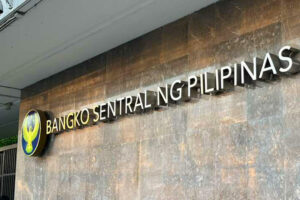
THE PHILIPPINES’ international investment position (IIP) remained at a net external liability position in the first quarter, widening 8.1% from a quarter earlier to $54.924 billion in the face of heightened market volatility, the Bangko Sentral ng Pilipinas (BSP) said. Year on year, the net liability position narrowed by 2%. The end-of-March net liability was equivalent to 11.2% of gross domestic product, up from the 10.4% recorded in the quarter prior. “This development was mainly driven by a faster decline in external financial assets relative to liabilities. The decline in assets was primarily due to lower reserve assets, largely attributable to BSP foreign exchange operations and National Government drawdowns on its foreign currency deposits with the BSP for debt servicing,” the central bank said in a statement on Wednesday. “In addition, higher bond yields caused by market concerns over geopolitical uncertainties and weak global outlook contributed to downward valuation adjustments in external assets, including foreign-issued debt securities,” it added. The IIP is a gauge of external exposure, providing a snapshot of the value of its foreign financial assets and liabilities. The net position refers to the difference between assets and liabilities and represents either a net claim on or a net liability to the rest of the world. “The IIP provides a snapshot of what the country owns abroad and owes to the rest of the world, making it a key indicator for assessing external vulnerability and financial stability,” the BSP said. Investments in foreign assets fell 2.1% from a quarter earlier to $258.625 billion at the end of March. They rose 1.6% from a year earlier. “External assets declined mainly due to a 3.8% drop in reserve assets to $106.6 billion. The decline in reserves was driven by BSP foreign exchange operations and National Government drawdowns for debt servicing. While valuation gains from higher global gold prices partly mitigated the decline, the overall movement remained downward,” the BSP said. Of the total, 42.7% or $110.4 billion were accounted for by the BSP, with banks holding 15.5% or $40 billion. Other sectors invested a total of $108.2 billion during the period, accounting for 41.8% of the total. The bulk of residents’ foreign investments were reserve assets valued at $106.6 billion (41.2% of the total), followed by debt instruments at $41.3 billion (16%), debt securities $36.7 billion (14.2%), equity capital $35.5 billion (13.7%), currency and deposits $16.6 billion (6.4%), loans $11.5 billion (4.4%) and equity securities $7.8 billion (3%). Meanwhile, external financial liabilities eased 0.4% from a quarter earlier to $313.549 billion at the end of March. Year on year, they were up 0.9%. The general government accounted for 28.5% or $89.3 billion of external financial liabilities during the period. This was followed by banks with $36.3 billion (11.6%), the BSP $3.9 billion (1.2%) and other sectors $184.2 billion (58.7%). Loans made up 26.4% or $82.8 billion of the external liabilities at the end of March. Other forms included debt instruments at $76.6 billion (24.4%), equity capital $57.6 billion (18.4%), debt securities $47.2 billion (15%), equity securities $34.1 billion (10.9%), and currency and deposits $5.3 billion (1.7%). The National Government remained a net debtor with $89.3 billion in liabilities as of March, while other sectors, such as other financial corporations, nonfinancial corporations, and households and nonprofit institutions serving households, had $76 billion in external financial liabilities. The central bank was a net lender during the period, extending $106.6 billion worth of resources worldwide, while banks lent $3.8 billion. — Aaron Michael C. Sy

多角的分析

経済的影響

フィリピンの第1四半期の対外純債務超過の拡大は、主に準備資産の減少と、地政学的不確実性や世界経済の低迷懸念による海外発行債券などの評価額下落に起因している。これは、外部からのショックに対するフィリピン経済の脆弱性を示唆する。特に、外貨準備の減少は、為替レートの安定性や対外債務の返済能力に影響を与える可能性があり、IMFなどの国際機関からの融資や、輸出収入の動向が重要となる。過去の類似事例として、アジア通貨危機(1997-98年)では、対外債務の急増と外貨準備の枯渇が経済危機を招いた。現在の状況はそこまで切迫していないものの、リスク管理の重要性が増している。

投資家心理

フィリピンの対外純債務超過の拡大は、投資家にとって警戒信号となりうる。特に、準備資産の減少は、為替レートの安定性に対する懸念を高め、為替リスクを重視する投資家にとってはマイナス要因となる。また、地政学的不確実性や世界経済の低迷が、対外資産の評価額を下落させている点は、海外投資からのリターン低下を示唆する。フィリピンへの直接投資(FDI)やポートフォリオ投資を検討する際には、これらのマクロ経済指標に加え、国内の政治的安定性、成長見通し、インフレ率などを総合的に評価する必要がある。過去には、外貨準備の減少が通貨安を招き、海外からの資本流出を加速させた例もある。

社会的影響

対外純債務超過の拡大は、国民生活に直接的な影響を与える可能性がある。準備資産の減少は、フィリピンペソの価値下落につながり、輸入品の価格上昇、ひいてはインフレの加速を招く。これは、特に低所得層の購買力を低下させ、食料品や燃料などの生活必需品の購入を困難にする。また、国家政府による債務返済のための外貨引き出しは、公共サービスへの支出を圧迫する可能性も否定できない。例えば、過去のインフレ率上昇時には、多くの家庭が食費を切り詰めざるを得なかったという報告がある。さらに、海外からの投資が減少すれば、雇用機会の創出にも影響が出かねない。

市民の声

フィリピンの対外純債務超過が広がっているというのは、私たちの生活にどう影響するのか心配だ。特に、準備資産が減っているというのは、ペソの価値が下がって、輸入品が高くなるということだろうか。そうなると、食料品やガソリンの値段が上がって、毎日の生活がますます苦しくなる。政府が借金を返済するために外貨を使っているなら、教育や医療など、私たちに必要なサービスへの予算が減ってしまうのではないかと不安になる。海外からの投資が減ると、新しい仕事も生まれにくくなるだろうか。マニラ首都圏ではすでに物価の上昇が感じられているので、このニュースはさらに心配を増幅させる。

背景・歴史的文脈

フィリピンの国際投資ポジション(IIP)は、対外資産と負債の差額を示す指標であり、その純債務超過額の推移は国の経済的脆弱性を測る上で重要視されてきた。過去、特にアジア通貨危機(1997-98年)やリーマン・ショック(2008年)のような世界的な金融危機時には、新興国経済は対外債務の急増や資本流出に苦しみ、フィリピンもその影響を受けた。近年、フィリピン経済は堅調な成長を続けてきたが、その一方で、インフラ開発や政府債務の増加に伴い、対外債務も増加傾向にある。今回の第1四半期の対外純債務超過の拡大は、こうした構造的な要因に加え、近年の地政学的不確実性や世界的なインフレ圧力といった外部要因が複合的に影響した結果と考えられる。

原文ソース

BusinessWorld Economy

原文を読む