General articles are free for 24 hours after publish.
Cambodian Information Ministry Officials Visit World Heritage Sites in India, Fostering Cultural Exchange and Tech Training
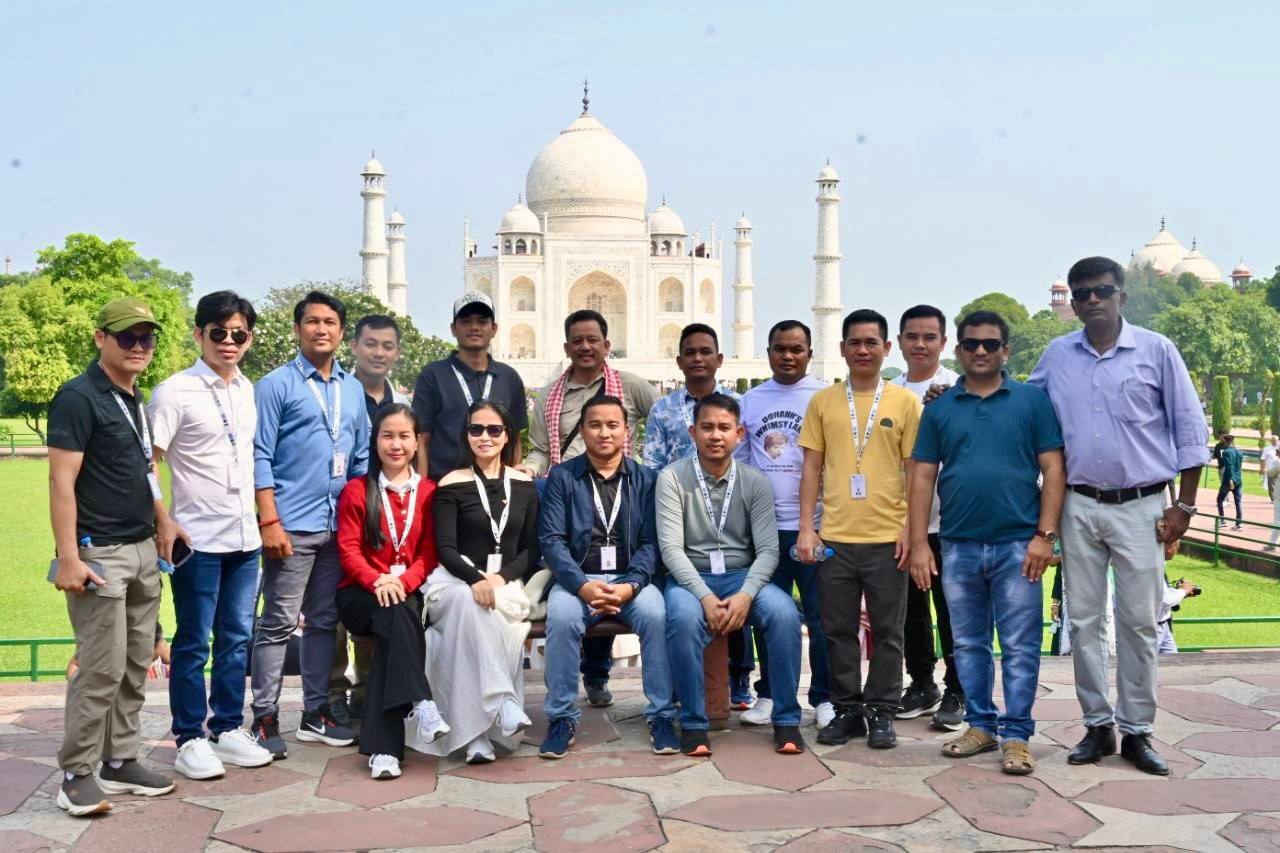
Fourteen officials from Cambodia's Ministry of Information visited the Taj Mahal and Agra Fort in India as part of a media and IT training program. The visit aimed to study heritage management, tourism promotion, and IT, strengthening bilateral ties.
Fourteen officials from the Ministry of Information of the Kingdom of Cambodia, currently on a training mission in India, visited the renowned world heritage sites of the Taj Mahal and Agra Fort. The visit is part of their "New Age Media & IT" training program in India. The purpose of the visit by the Cambodian Ministry of Information officials was to gain a deeper understanding of heritage management, history, and culture, and to compare cultural relations between Cambodia and India. This visit is also part of an extracurricular study program during their two-week training on information technology and digital media skills at the C-DAC center in New Delhi, India. Furthermore, the visit to the Taj Mahal allowed them to explore the magnificent architecture of the marble mausoleum, a UNESCO World Heritage site, and to exchange experiences on promoting tourism information and preserving cultural heritage, drawing parallels with Cambodia's Angkor Wat. Meanwhile, during the visit to Agra Fort, officials from the Ministry of Information of the Kingdom of Cambodia observed the historical architecture of the Mughal era. They studied the history of its construction, the organization of the city's defensive infrastructure, and methods for attracting international tourists. The Agra Fort was built and expanded for several key purposes: as a royal palace and seat of governance, serving as the official residence and exclusive administrative center for many Mughal emperors such as Akbar, Jahangir, Shah Jahan, and Aurangzeb. Additionally, it served as a military fortress with thick, high red sandstone walls (approximately 2.5 kilometers long), designed to be robust in protecting the king and army from enemy attacks. It was also a center for protocol and state affairs, featuring important assembly halls like the Diwan-i-Am (for public gatherings) and the Diwan-i-Khas (for internal discussions with high-ranking officials and foreign envoys). In summary, Agra Fort was constructed as both a "palace and a national defense military fortress" during the glorious era of the Mughal Empire. This visit not only enriches the general cultural knowledge of Cambodian media officials but also contributes to further strengthening the bonds of friendship and cooperation between Cambodia and India. By: Kong Sirirat © All rights reserved by National News Agency of Cambodia 2018
Original source
AKP Khmer