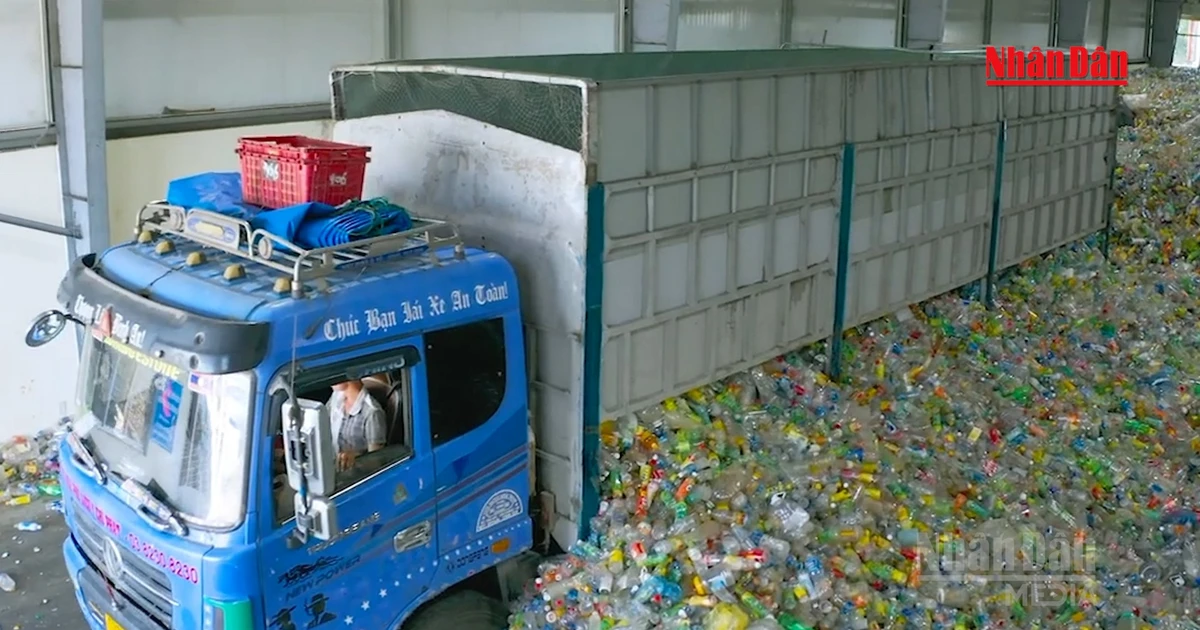
Vietnam's Plastic Waste Paradox: Abundant Garbage, Scarce Recycled Materials
Vietnam generates approximately 5.64 million tons of plastic waste annually, yet only about 11% is recycled. Consequently, the country imports around 400,000 tons of recycled materials each year. To address this paradox, enhanced coordination among collectors, transporters, and recyclers, along with improved household waste sorting, is crucial.
Read up to 3 eligible full articles per Japan day (JST) for free
Create a free account to open up to 3 eligible full articles per Japan calendar day (JST). Headlines and summaries remain available across ASEAN 7.
Related articles
- Vietnam Strengthens International Cooperation in Robotics Industry, Promoting Green Growth and Technological Innovation
A strategic partnership was announced at an event in Ho Chi Minh City involving the China Industrial Robot Development Alliance and Ho Chi Minh City University of Technology. The collaboration aims to establish Vietnam's advantage in the robotics value chain.
- Ho Chi Minh City Opens GRECO 2026 to Drive Green Growth
Ho Chi Minh City will host the 2026 Asia-Pacific Roundtable for Sustainable Consumption and Production (APRSCP), aiming to boost green growth. This initiative is a crucial step for Vietnam to meet tightening environmental regulations and international market demands. Challenges include low-emission transitions in agriculture and integrated planning for infrastructure development.
- Vietnam Needs More Than Land for High-Tech Investment: 2026 Economic Forum
Vietnam's pursuit of high-tech investment requires integrated infrastructure development beyond land, including power, telecommunications, and supporting services, according to discussions at the 2026 Autumn Economic Forum. Investors seek clear information on land availability, power capacity, and connectivity.
- Hanoi Affirms Role as Core, Growth Pole of Capital Region
Hanoi is poised to transition from a development mindset confined by administrative boundaries to one focused on regional spatial growth, as identified by Politburo’s Resolution No. 27-NQ/TW. The capital city is designated as a major growth pole, necessitating enhanced connectivity with surrounding localities.