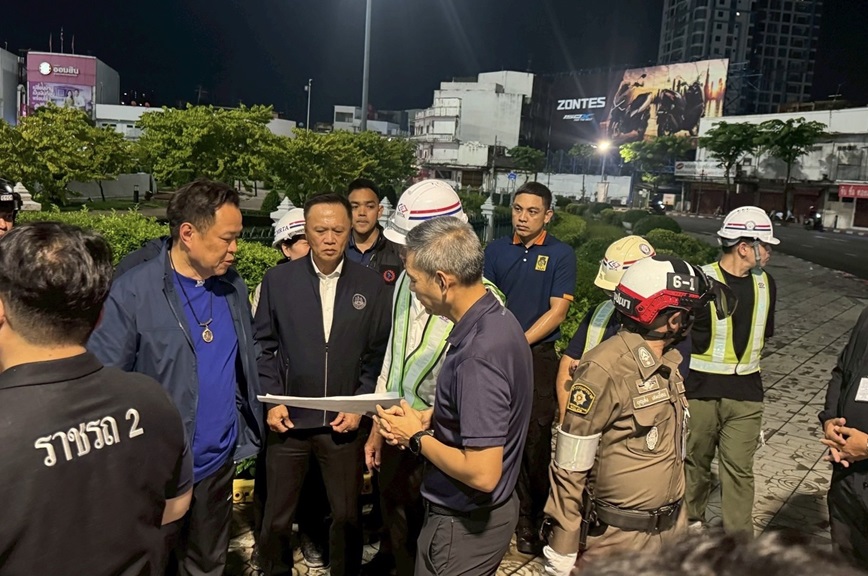
Bangkok's Purple Line Subway Tunnel Floods, Authorities Assure No Structural Impact
A tunnel section of Bangkok's Purple Line MRT, near Wongwian Yai station, experienced water leakage. The Mass Rapid Transit Authority of Thailand (MRTA) stated the issue stemmed from a joint in a water collection pit and poses no threat to the tunnel's structural integrity.
This article requires PRO
This article is outside the free access window or is a special report. PRO unlocks it and the full archive.
Related articles
- Bangkok's Purple Line Subway Tunnel Undergoes Urgent Repairs for Water Leakage
An urgent repair operation has commenced on Bangkok's Purple Line subway tunnel due to a consistent water leakage. No adverse effects on surrounding buildings have been reported, and railway authorities are prioritizing safety during the repair work.
- Wong Wian Yai Subway Tunnel Collapse Repairs Expected to Finish in 12 Days
Repairs to the Southern Purple Line subway tunnel at Bangkok's Wong Wian Yai roundabout, which suffered flooding and subsidence, are expected to be completed within 12 days. The affected road will remain closed during this period as authorities monitor progress and ensure safety.
- Bangkok's Purple Line Tunnel Leakage Under Repair, Progress Reported
Bangkok authorities reported progress in repairing the leaky Purple Line subway tunnel in Klong San district, with significant reduction in water flow. Evacuations were carried out, highlighting the urgent need to ensure infrastructure safety.
- Purple Line Tunnel Suffers Flooding, Subsidence; Residents Evacuated, Road Closed
The Bangkok Metropolitan Administration (BMA) is intensifying monitoring and safety measures for residents following water seepage in the under-construction Purple Line extension tunnel and road subsidence on Prajadhipok Road. Some residents have been evacuated and a section of the road remains closed.