Cambodia's Cyber-Fraud Crackdown: Rule of Law Concerns Emerge
Security
2026年7月28日
5
Kampuchea Thmey English

General articles are free for 24 hours after publish.

Cambodia's Cyber-Fraud Crackdown: Rule of Law Concerns Emerge

Share
AI Summary

Cambodia's intensified crackdown on cyber-fraud syndicates, while essential, is raising concerns about the implementation of the rule of law. Legal practitioners highlight issues such as property freezes and potential wrongful detentions, calling for stricter adherence to due process and human rights protections.

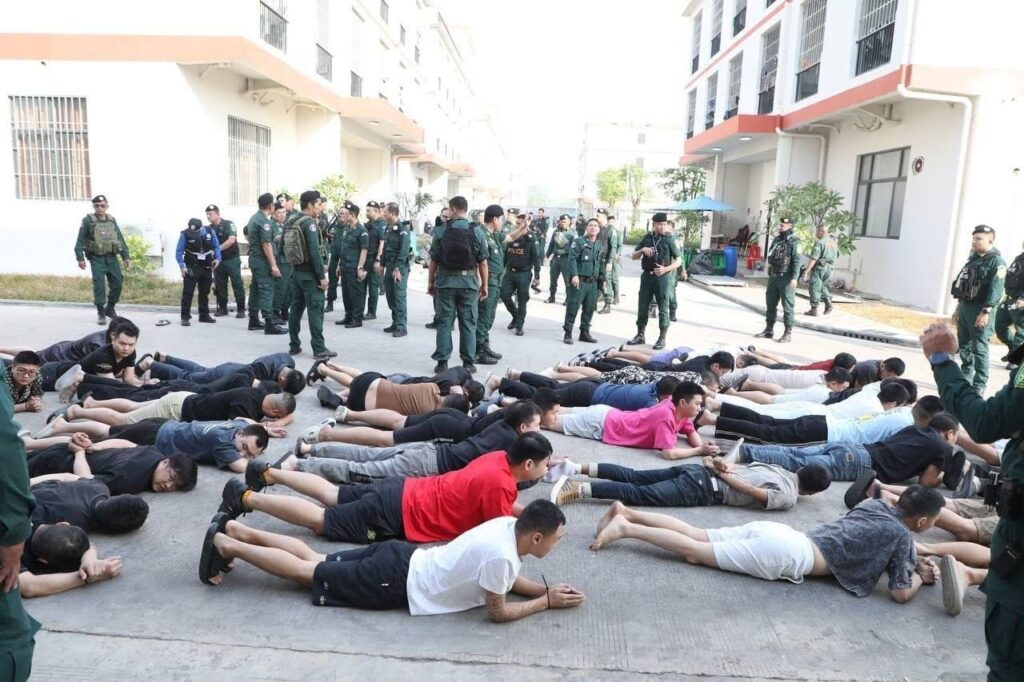
PHNOM PENH, July 28, 2026 (KPT)- Cambodia’s decisive push to eradicate online scam syndicates is an essential national imperative. The promulgation of the Law on Combating Online Scams and the ongoing multi-agency operations demonstrate an unyielding political will to dismantle a dark economy that victimizes individuals across the globe and severely harms the Kingdom’s international standing. Cyber-fraud and human trafficking destroy public trust, cripple market integrity, and prey upon vulnerable populations. As legal practitioners representing clients across the spectrum—from victims of severe online exploitation seeking justice to property owners and individuals unjustly caught in the administrative net—our commitment to eradicating these illicit networks is absolute. Yet, as legal counsel standing at the intersection of these complex matters, the realities observed on the ground reveal deep reservations regarding how the law is being implemented. Having represented both victims seeking urgent redress and individuals or property owners facing acute accusations, it has become evident that the current execution creates severe systemic distortions. Whether advocating for those shattered by modern-day slavery or defending those wrongly ensnared by broad administrative overreach, my professional practice remains dedicated to a singular, unwavering principle: independent, rigorous, and fearless advocacy for justice and due process. Every individual—whether a survivor of human exploitation demanding accountability or an accused citizen fighting to protect their civil liberty and property rights—deserves uncompromising, ethical representation rooted strictly in the rule of law. The Economic Threat: Spiraling Debts and Regional Discrimination Beyond immediate legal vulnerabilities, current enforcement patterns risk creating deep structural inequalities, regional discrimination, and financial ruin for local property owners across the Kingdom: • The Trap of Forced Indebtedness: By arbitrarily freezing properties, criminalizing passive lessors under a presumption of guilt, and paralyzing bank-mortgaged assets, enforcement actions inadvertently push innocent citizens into a downward spiral of debt. Landlords are stripped of their rental income while remaining legally bound to satisfy heavy commercial loan obligations to financial institutions, turning routine real estate investments into unmanageable liabilities. • Geographic and Demographic Discrimination: Overzealous implementation creates a dangerous climate of discrimination against specific localities and populations. Property owners and business operators in certain provinces or secondary commercial hubs face disproportionate surveillance, blanket stigma, and severe market alienation simply due to their regional location. This regional profiling deters legitimate domestic investment, penalizes entire communities for the underground actions of a few bad actors, and fractures equal protection under the law.The Procedural Trap: Rush-to-Detention Realities and International Pressures Compounding these economic anxieties is a profound procedural distortion within the administration of justice. Under intense geopolitical scrutiny and foreign diplomatic pressure to demonstrate immediate, high-volume results, the judicial processing of individuals caught in scam-related sweeps has tilted heavily toward automatic penal measures. • The Erosion of Provisional Liberty: In practice, suspects and lessors swept into these investigations face severe hurdles in securing fair evaluations for provisional release or bail. Driven by public relations imperatives to appease international stakeholders, standard pre-trial detention is frequently over-utilized as a default political posture rather than a strict judicial necessity. • The Due Process Vacuum: While actual criminal organizers often exploit administrative blind spots or evade deep custody, ordinary citizens and secondary participants find themselves trapped in prolonged provisional detention without realistic pathways to test the legality of their confinement or present defense evidence under true procedural equity. This rush to lock down suspects to satisfy external critics ultimately compromises domestic judicial integrity, substituting genuine rule-of-law standards with reactionary optics.The Human-Economic Paradox: Trafficking Victims Expelled While Innocent Property Owners Are Criminalized A profound contradiction lies at the heart of current anti-scam implementation: the systemic mismatch in how accountability is applied to the human components versus the property components of the illegal enterprise. • The Fate of Workers and Trafficking Victims: Thousands of individuals found inside these compounds—many of whom are documented human trafficking victims subjected to forced labor, debt bondage, and severe coercion—frequently face superficial screening. Rather than receiving comprehensive protection or justice under the non-punishment principle, low-level operatives and victims are routinely swept up, detained, and subjected to rapid administrative expulsion or deportation. The human core of the criminal operation is thus cleared out via immigration channels without addressing root exploitation or prosecuting the actual syndicate bosses. • The Fate of Property Owners: Conversely, while the actual human perpetrators are often quietly deported or slip away, property lessors who merely exercised their civil rights by leasing real estate for standard market rent find themselves facing the full, draconian weight of criminal prosecution. Treated as proxy accomplices or money launderers under constructive mens rea assumptions, these owners face asset confiscation and ruined livelihoods. This creates a perverse and arbitrary double standard: the individuals physically trapped inside the compounds—who bear the primary victim characteristics—are expedited out of the country through summary expulsion, leaving no local accountability for the ringleaders. Meanwhile, innocent property owners, whose only act was participating in legal commerce, are left behind to face criminal stigma, frozen bank collateral, and the permanent destruction of their economic livelihoods. Sub-Decree Frameworks and the Imposition of “Watchdog” Liability The implementation crisis is heavily compounded by secondary regulatory frameworks—such as administrative directives and sub-decrees governing residential and commercial security. While the Ministry of Justice maintains that asset confiscation requires formal proof of active criminal participation, these regulatory instruments introduce an alarming legal bottleneck: the effective outsourcing of police duties onto private citizens. Under these administrative rules, property owners and lessors are mandated to act as frontline immigration and security monitors—requiring them to track foreign occupants, verify legal residency, and report temporary pre

0

Original source

Kampuchea Thmey English

原文を読む