General articles are free for 24 hours after publish.
Birds Steal Snake Sheds for Nests, Scientists Solve Century-Old Mystery
A century-old mystery of why birds incorporate snake sheds into their nests has been solved by new research. The sheds, offering no warmth or comfort, function as a defense mechanism to protect eggs and chicks from predators, a behavior observed in dozens of bird species worldwide.
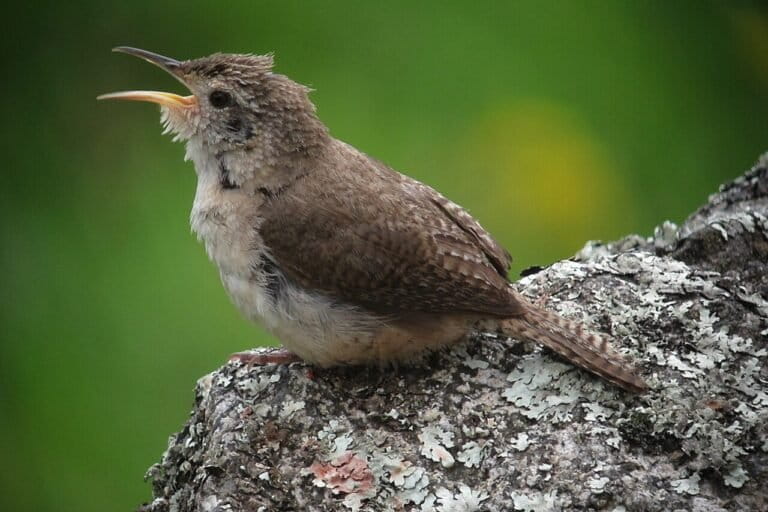
A century-old mystery of why birds incorporate snake sheds into their nests has been solved by new research. Previously, it was puzzling why birds went to the trouble of collecting dry, stiff snake skins, which offered no warmth or comfort to their eggs. However, a study led by Vanya Rohwer, curator at the Cornell University Museum of Vertebrates, has revealed that these sheds serve as a defense mechanism, intentionally sought by birds to protect their eggs and chicks from predators. Rohwer and her team examined data from 78 bird species across 22 families known to carry snake sheds to their nests. This behavior is not limited to a few species and includes birds like the House Wren (Troglodytes aedon), which nests in tree cavities, and the Blue Grosbeak (Passerina caerulea), which builds open cup nests. The researchers noted that snake sheds are a relatively rare material in the wild, and the effort birds expend to acquire them indicates they are deliberately sought as valuable assets, not merely picked up by chance. The research team utilized historical resources, including egg collection cards from the Western Foundation of Vertebrate Zoology. These records, compiled by naturalists over time, highlight the widespread and diverse use of snake sheds by birds. They provide a unique glimpse into past observations and confirm the extensive nature of this behavior across different avian groups. This discovery represents a significant advancement in avian behavioral ecology, deepening our understanding of how birds utilize environmental materials and develop survival strategies. The use of snake sheds is shown to be a complex outcome of adaptation to the environment and predator avoidance, rather than a simple instinctive behavior. Source: Mongabay Indonesia
Original source
Mongabay Indonesia