Listed Thai Firms Urged to Reinvent Supply Chains for Sustainability
Business
2026年7月22日
5
Bangkok Post

General articles are free for 24 hours after publish.

Listed Thai Firms Urged to Reinvent Supply Chains for Sustainability

Share
AI Summary

The Stock Exchange of Thailand (SET) and the Federation of Thai Capital Market Organizations (Fetco) are urging listed companies to transform their supply chains with a focus on sustainability to attract global capital. The era of competing solely on low costs is over, with resilience and transparency becoming essential.

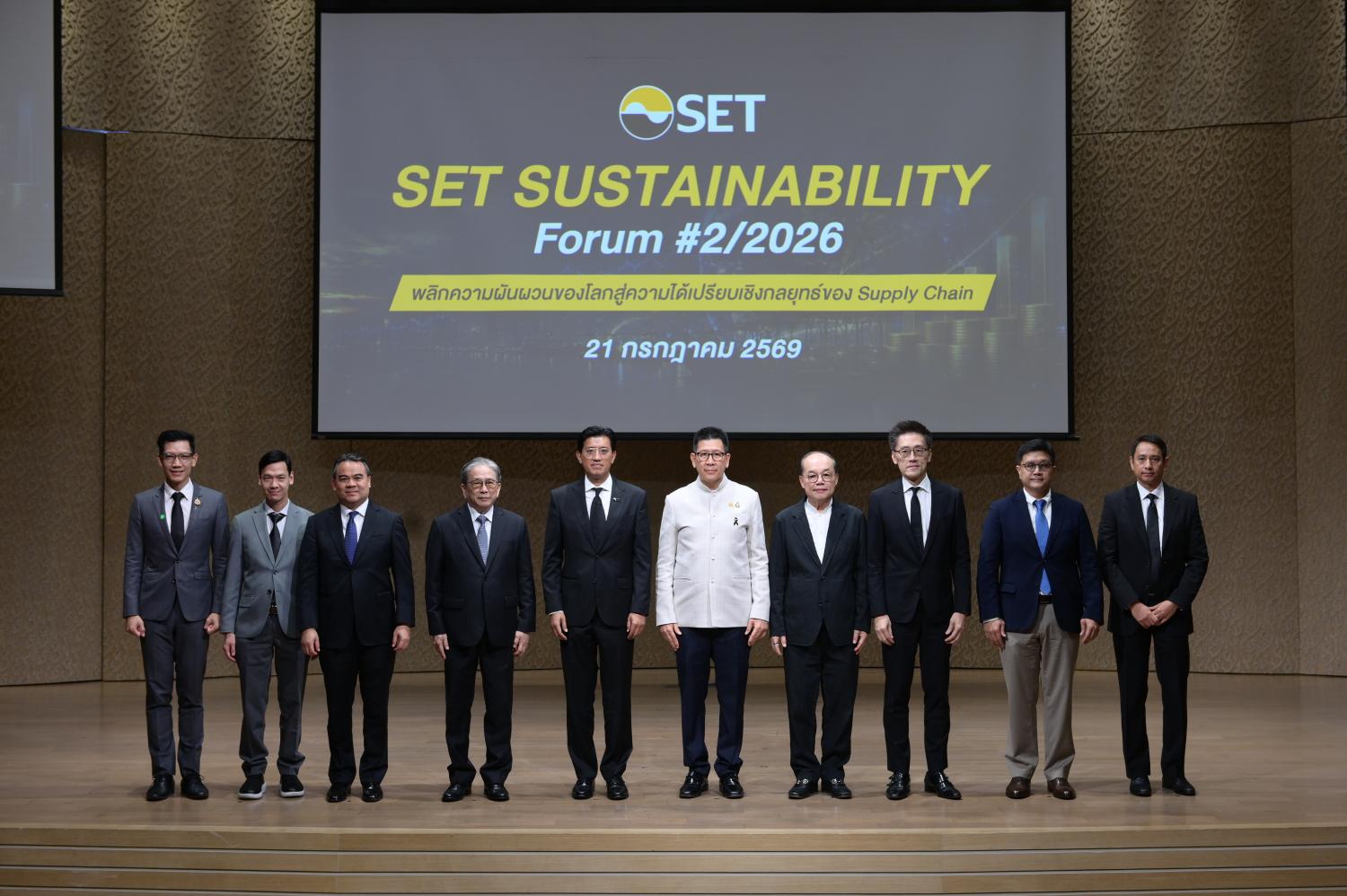
Listed Thai companies are being urged to ramp up efforts to reinvent their supply chains as sustainability becomes an essential factor in winning global capital, according to executives from the Stock Exchange of Thailand (SET) and the Federation of Thai Capital Market Organizations (Fetco). Resilient supply chains, standardised carbon reporting and environmental, social and governance (ESG) integration are becoming decisive factors for competitiveness and long-term investment. Listed Thai firms must transform their supply chains from cost-driven networks into resilient, sustainable structures if they are to remain competitive and attract long-term investment in an increasingly fragmented global economy, according to executives from the Stock Exchange of Thailand (SET) and the Federation of Thai Capital Market Organizations (Fetco). Speaking at the SET Sustainability Forum, SET president Asadej Kongsiri said sustainability is no longer simply a matter of regulatory compliance, but a core business strategy that will shape companies' ability to compete, raise capital and withstand future disruptions. "The era of competing solely on low costs or fast delivery is over," Mr Asadej said. "Companies with resilient, transparent and sustainable supply chains will be better positioned to compete globally and adapt to future disruptions." He called on large listed companies to mentor suppliers, particularly small and medium-sized enterprises, by helping them strengthen sustainability practices and prepare for stricter environmental disclosure requirements, including greenhouse gas emissions and carbon reporting. According to Mr Asadej, investors are increasingly evaluating companies not only on financial performance, but also on the quality, transparency and comparability of sustainability data across their value chains. Companies unable to obtain reliable environmental data from suppliers risk higher compliance costs, weaker supply chain resilience and declining competitiveness in global markets. To support the transition, he said the SET is developing a centralised platform for sustainability data collection, reporting and innovation. The exchange is also investing in digital infrastructure alongside training initiatives to help businesses and suppliers transition to a low-carbon economy while aligning with international reporting standards. Fetco chairman Paiboon Nalinthrangkurn said geopolitical tensions are reshaping global investment flows, creating a new supply chain landscape in which resilience, reliability and trust are becoming more valuable than simply minimising production costs. He said the restructuring of global manufacturing networks presents Thailand with an opportunity to attract a new wave of investment, particularly in digital industries, advanced manufacturing and innovation-driven businesses seeking diversified and resilient production bases. According to Mr Paiboon, listed companies now face two simultaneous strategic priorities: developing supply chains for emerging industries and new technologies while upgrading supplier networks to meet higher standards for quality, sustainability and ESG performance. "If we plan well, Thailand can continue to prosper by integrating capital markets, businesses and public policy to strengthen confidence in our supply chains," he said. Thailand's public and household debt combined exceed 250% of GDP, limiting the government's capacity to finance large infrastructure projects. As a result, the capital market will play an increasingly important role in mobilising funding for new industries and attracting global investment to support long-term economic growth, said Mr Paiboon. Meanwhile, investor expectations have shifted as global investors now assess companies on supply chain resilience, risk management, corporate governance and ESG performance alongside traditional financial indicators. Thailand's geopolitical neutrality and industrial base could help attract multinationals to relocate production, provided the country continues strengthening infrastructure, enhancing supply chain capabilities and fostering close collaboration among government, businesses and the capital market, he noted. Both the SET and Fetco advised sustainable supply chains, improving the credibility of carbon disclosures and building collaboration across value chains to grow investor confidence and position Thailand as a regional hub for sustainable investment.

0

Original source

Bangkok Post

原文を読む