General articles are free for 24 hours after publish.
UN Human Rights Expert Pledges Cooperation to Facilitate Return of Residents Affected by Cambodia-Thailand Border Dispute
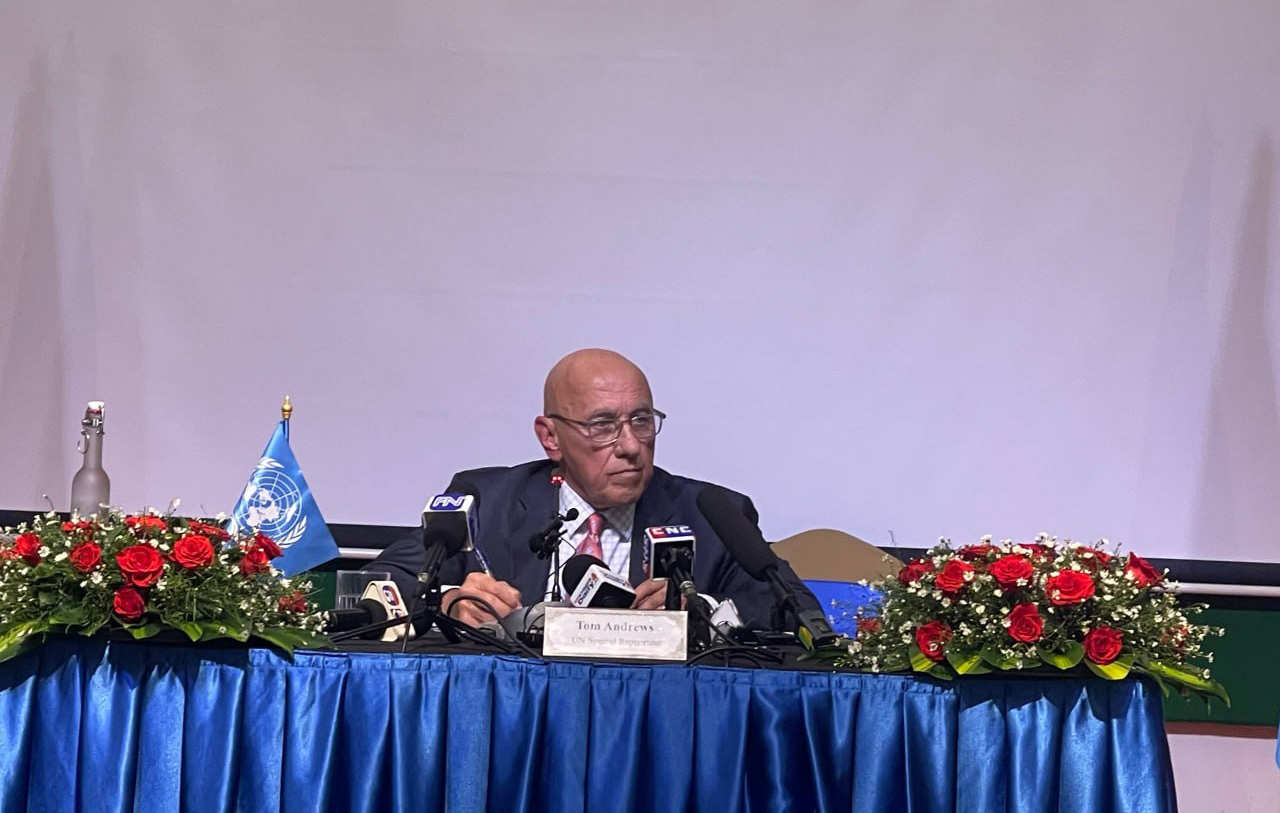
UN Special Rapporteur on the human rights situation in Cambodia, Tom Andrews, expressed strong willingness to cooperate with both Cambodian and Thai governments to facilitate the return of residents displaced by border disputes. He highlighted the severity of human rights violations caused by the conflict and stressed the importance of international law and swift, peaceful resolution.
Tom Andrews, the UN Special Rapporteur on the human rights situation in Cambodia, has expressed his strong willingness to cooperate with both the Cambodian and Thai governments to resolve human rights issues arising from the border conflict between the two countries. Speaking at a press conference on July 31, 2026, Andrews stated that he was deeply moved by the testimonies of Cambodian citizens displaced by the conflict, who reported that their homes are now under Thai control and they cannot return. He affirmed that under international law, displaced persons have the right to return to their homes. "I stand ready and am firmly committed to working with both the Royal Government of Cambodia and the Royal Government of Thailand to resolve the human rights issues arising from this conflict," Andrews stated. "I reiterate that it is of utmost importance to resolve this conflict swiftly and peacefully, so that citizens can return to their homes in a stable and secure environment and have access to the economic opportunities that border trade can provide." Andrews further reported that after discussions with the Governor of Banteay Meanchey Province and receiving detailed presentations, he visited a temporary shelter organized by Cambodian authorities. There, he observed many children queuing for their morning meal under a food program by the World Food Programme. "What has affected me most deeply is the conversations with many families who, with tears in their eyes, described their losses of all kinds. Some mothers spoke of the horror when their villages were bombed, while others described the pain of their homes being destroyed by bulldozers," he said. He added that by the end of 2025, approximately 650,000 Cambodian civilians in border areas were forced to displace, and more than 20,000 of them continue to live outside their homes to this day. Regarding his encounter with displaced persons, Andrews shared, "I have heard from many citizens that they cannot return to their homes because their villages and towns are currently under the occupation of the Thai army. I traveled to the edge of a town in the border area and saw defensive barriers and barbed wire preventing citizens, including some I met personally, from returning to their homes. I also saw many houses riddled with bullet holes and destroyed warehouses, along with an unexploded bomb amidst the rubble. According to the principles of international law, citizens displaced due to armed conflict have the right to return to their homes." Andrews also highlighted that the ceasefire agreement of December 27 between Cambodia and Thailand clearly stipulates that civilians must be able to return to their homes and livelihoods safely and without hindrance. Therefore, he stressed the necessity for both countries to cooperate to expedite the return of displaced persons. "This is also the basis that Cambodian government officials have told me could be a foundation for finding a just resolution to the border conflict between Cambodia and Thailand. I traveled to the border area to understand firsthand the impact of this conflict and to meet with citizens whose lives have been severely disrupted and changed by the conflict," Andrews added. He further asserted that they need to return home, and they deserve that right. The human rights issues stemming from this conflict are not limited to displacement alone. Simultaneously, residents at the temporary shelters told him they have lost their jobs, their property, and are living in great anxiety about how they will be able to provide food for their families. Andrews also noted that the border closures have severely impacted Cambodia's economy and communities in the border regions, which rely on trade in agricultural products and other goods. Education, healthcare services, and other public services in border areas have also been severely disrupted. © 2018 National News Agency of Cambodia
Original source
AKP Khmer