General articles are free for 24 hours after publish.
Channda Sok: Leading Cambodia's Digital Transformation as MekongNet CEO
Channda Sok, CEO of MekongNet, is driving Cambodia's digital transformation by expanding reliable internet access nationwide. She emphasizes closing the digital divide, promoting women and youth in STEM, and enhancing digital literacy and online safety.
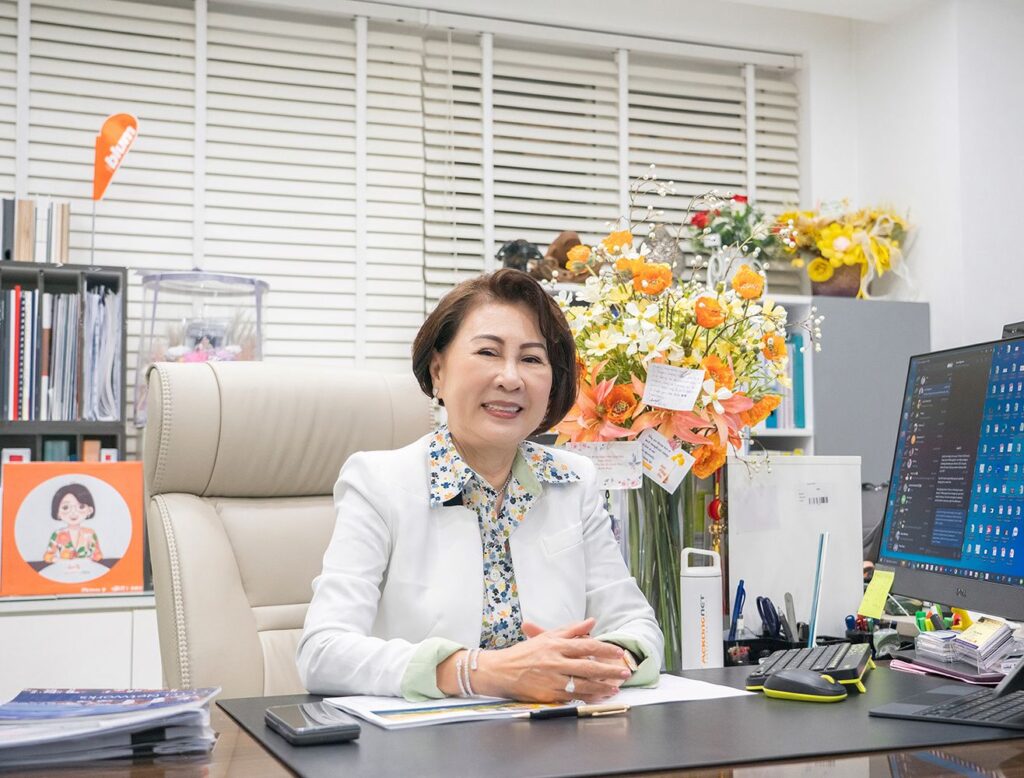
As CEO Cambodia of MekongNet, Channda Sok leads one of the Kingdom’s longest-established internet service providers, delivering connectivity solutions to households, businesses, and institutions across all 25 provinces of Cambodia. With a career spanning sales, marketing, creative leadership, and executive management, she has played an important role in supporting Cambodia’s digital transformation at a time when reliable internet access has become essential for education, business, and economic development. Under her leadership, MekongNet continues to invest in expanding connectivity while promoting digital literacy, online safety, and customer trust. In this edition of 50 Khmer Women Voices 2026, Channda reflects on the importance of reliable digital infrastructure, expanding opportunities for women and girls in STEM, building a safer online environment, leading through rapid technological change, and how Cambodia’s digital economy can create greater opportunities for future generations. Expanding Digital Access Across Cambodia CLR: Internet connectivity is becoming increasingly important for education, business, and daily life across Cambodia. From your perspective, how important is improving reliable internet access for communities across both urban and rural areas of the country? Channda: Reliable internet is no longer a convenience in Cambodia. It has become essential infrastructure, as fundamental as roads or electricity. A student in a provincial town now access to the same online course as a student in Phnom Penh. A farmer can check for new technique, selling their products or harvest. A small shop can reach customers far beyond its own district. When connectivity is reliable, distance stops being a barrier to opportunity. But the word ‘reliable’ matters as much as ‘access.’ An unstable connection that drops during an online exam, a video consultation, or a customer payment does not simply inconvenience people. It erodes their trust in the digital economy altogether. At MekongNet, our commitment to serving all 25 provinces reflects a belief that a young person’s potential should not be limited by their postcode. The gap I think about most is not only urban versus rural; it is consistency of quality. Closing that gap is how we make sure the benefits of Cambodia’s digital growth are shared widely, not concentrated in a few cities. When a community comes online reliably for the first time, you see local businesses formalise, you see students reaching beyond their classrooms, and you see families staying connected across borders. That is the real return on connectivity, and it is why this work feels less like a service and more like nation-building. Technology, STEM & Women’s Opportunities CLR: Access to technology and digital learning is opening new opportunities for young people, particularly in STEM-related fields. How can better internet access help encourage more Cambodian women and girls to pursue education and careers in science, technology, engineering, and mathematics? Channda: Better internet access is one of the great equalisers for women and girls in Cambodia. So much of the historical barrier to STEM was simply exposure, because you cannot aspire to a career you have never seen. When a girl in a provincial town can watch an engineer explain her work, follow a coding tutorial, or enrol in an online course, the field of what feels possible expands enormously. Connectivity puts a library, a classroom, and a role model in her hands. It also lowers the practical obstacles that have held many women back. Online learning can fit around family responsibilities and reduce the need to relocate, which for many families is the deciding factor in whether a daughter continues her studies. Remote and flexible work, made possible by good connectivity, allows women to build technical careers without choosing between profession and family. Access alone is not the whole answer. Visibility is the other half. Within our own organisation, I see talented women in our creative and technical teams, and I think it matters that girls watching from outside can see them there. The more we can show Cambodian women already succeeding in technology, the more we replace the question “can someone like me do this?” with “where do I start?” That shift in mindset, multiplied across the country, is how a generation changes. Digital Literacy and Online Safety CLR: As Cambodia becomes more digitally connected, issues such as digital literacy, misinformation, and online safety are becoming increasingly important. How can businesses, schools, and communities better support women and young people in navigating the digital world safely and confidently? Channda: As more Cambodians come online, the priority has to shift from access to confidence, and confidence comes from digital literacy. Rapid adoption has brought real risks alongside the opportunities. We see online scams, impersonation, and misinformation spreading quickly, and these often target the people who are newest to the digital world. Protecting them is a shared responsibility that no single business, school, or family can carry alone. In our own work, we have seen first-hand how fraudsters impersonate trusted brands and institutions to deceive people, and how important it is to communicate clearly and quickly when that happens. That experience taught me that companies cannot treat safety as something separate from their service. We have a duty to warn customers plainly, to make it easy to verify what is genuine, and to never assume people already know how to spot a fraud. Schools have a parallel role: digital literacy deserves a place beside traditional subjects, so young people learn to question a source, protect their personal information, and recognise manipulation before they encounter it. And communities and families create the safe space where someone can ask “is this real?” without embarrassment. For women and young people in particular, confidence online is built through honest conversation, not fear. The goal is not to make people afraid of technology, but to make them feel capable within it. Leadership In Cambodia’s Digital Infrastructure Sector CLR: As CEO Cambodia at MekongNet, how do you approach leadership within a sector that is rapidly evolving alongside Cambodia’s digital economy and connectivity needs? Channda: Leading in this sector means accepting that the ground is always moving. The technology, the customer expectations, and the competitive landscape all change faster than any annual plan can anticipate. So I try to lead less by fixed instruction and more by clear direction, making sure our teams understand where we are going and why, then trusting them with the freedom to find the best route there. In a fast-moving market, the organisation that listens closest to its customers and its frontline staff usually adapts fastest.
Original source
Cambodia Investment Review