Thailand's Gas Addiction: Navigating Energy Security and Environmental Goals Amidst Declining Domestic Supply
Technology
2026年7月21日
6
Chiang Rai Times
Relations
🇹🇭Thailand🇲🇲Myanmar

General articles are free for 24 hours after publish.

Thailand's Gas Addiction: Navigating Energy Security and Environmental Goals Amidst Declining Domestic Supply

Share
AI Summary

Thailand is rapidly increasing LNG imports due to declining domestic natural gas production and uncertain supplies from Myanmar. This gas dependency poses significant challenges to the economy, public life, and the achievement of its 2050 carbon neutrality goals.

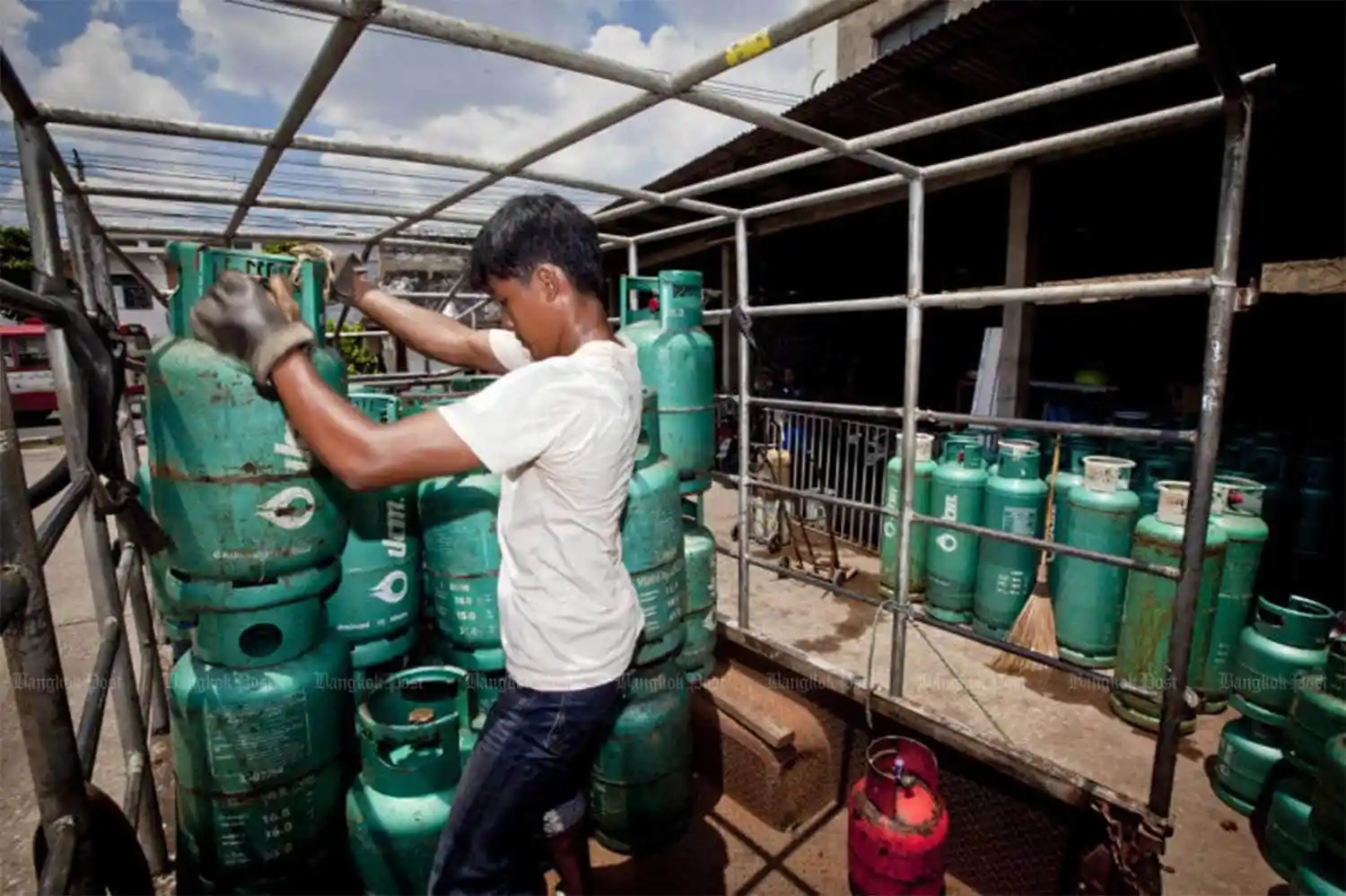
Home - Environment - Thailand’s Gas Addiction: How Gas Fuels Everything From Home Kitchens to the National Grid Walk down any bustling street in Bangkok, and you will hear the fierce roar of gas burners. Street food vendors and home cooks alike rely daily on natural gas to prepare the nation’s beloved dishes. But this visible flame is just a tiny fraction of a massive, nationwide dependency. Behind the scenes, natural gas quietly powers the air conditioners, factories, and glittering skyscrapers that define modern Thailand. Key Takeaways Thailand operates one of the most gas-dependent power systems in all of Asia. According to national energy records, natural gas typically generates between 55 and 60 percent of the country’s electricity. This heavy reliance is not a new phenomenon for the Southeast Asian kingdom. For over four decades, abundant offshore reserves helped drive an era of rapid industrialization and economic growth. Today, that historical advantage has transformed into a pressing structural vulnerability. The entire national power grid is essentially tethered to the steady flow of this single fossil fuel. The Gulf of Thailand was once a highly reliable treasure trove of domestic energy. Major production sites, like the Erawan gas field, provided the bulk of the nation’s power needs. Unfortunately, those golden days of energy independence are fading fast. Domestic gas production peaked around 2013, and the legacy fields are now gradually running dry. With no massive discoveries on the horizon, the government faces a severe supply gap. To make up for this shortfall, Thailand has historically piped in gas from neighboring Myanmar. About 14 percent of Thailand’s total gas supply has recently come across the western border. This imported pipeline gas is particularly crucial for power plants located in western Thailand. However, ongoing political instability in Myanmar has turned this once-reliable source into a major geopolitical risk. International sanctions on Myanmar’s state-owned energy enterprises complicate the future of these cross-border imports. With domestic wells drying up and pipeline imports uncertain, Thailand has turned to the global market. The country is rapidly scaling up its purchases of liquefied natural gas, commonly known as LNG. Over the past decade, the volume of LNG imported into Thailand has skyrocketed by more than sevenfold. Projections suggest LNG could account for nearly 50 percent of Thailand’s total gas supply by 2030. Relying on imported LNG means tying the local economy to unpredictable global events. Whenever international energy markets panic, Thai utility companies feel the immediate sting. We saw this clearly following the outbreak of the war in Ukraine, which sent global gas prices soaring. Those sudden price shocks eventually trickled down to ordinary Thai consumers. When fuel generation costs rise, authorities must inevitably adjust the national electricity tariff. This directly increases the cost of living for families and the cost of production for local businesses. While power plants consume the lion’s share, gas remains intimately woven into daily life. Millions of households rely on bottled liquefied petroleum gas for their daily cooking needs. The government frequently subsidizes cooking gas prices to prevent public outrage and ease financial burdens. However, these massive subsidy programs cost the state billions of baht every year. Beyond electricity and cooking, the industrial sector is a massive consumer of this fossil fuel. Roughly 15 to 18 percent of the national gas supply goes directly to industrial parks. Thailand boasts a booming petrochemical industry concentrated closely on its eastern seaboard. These massive facilities rely on gas not just for power, but as a raw chemical feedstock. A new and aggressive consumer of electricity is also emerging on the Thai horizon. Global technology giants are pouring billions of dollars into building massive data centers across the country. These digital fortresses require an enormous and uninterrupted supply of electricity to operate securely. Energy officials are already preparing new electricity tariff structures specifically for these intensive tech facilities. The critical question is whether this massive new demand will be met by clean energy or more natural gas. Thailand’s deep attachment to gas creates a severe roadblock for its future environmental commitments. The country has publicly pledged to reach complete carbon neutrality by the year 2050. Burning natural gas emits significantly fewer greenhouse gases than burning traditional coal. However, it is still a fossil fuel, and its widespread use generates millions of tonnes of carbon dioxide. Current energy plans suggest gas will still generate over 40 percent of electricity in 2037. Environmental experts argue this high figure is entirely incompatible with a net-zero future. Transitioning away from gas is incredibly difficult because of long-term legal and financial commitments. The government has signed numerous long-term power purchase agreements with private gas-fired generators. In 2024, gas-fired plants accounted for a staggering 60 percent of all installed power capacity. Building new gas terminals further locks the country into a high-carbon trajectory for decades. To break the gas addiction, Thailand desperately needs to expand its renewable energy footprint. The government ambitiously aims to increase the share of clean energy to 51 percent by 2037. Currently, renewables account for roughly a fifth of the nation’s total electricity generation. Solar, wind, and bioenergy are all growing, but they struggle to match the sheer scale of gas. The primary issue with solar and wind power is their inherent daily intermittency. The grid requires steady, reliable power round the clock, regardless of the local weather conditions. To solve this problem, energy planners must invest heavily in massive battery storage systems. Unfortunately, utility-scale battery technology remains relatively expensive and difficult to deploy quickly. Until these storage costs drop further, gas-fired plants remain the easiest backup option for grid operators. Industry leaders are urgently pushing the government to upgrade the national infrastructure with smart grid technologies. In a surprising twist, Thai energy officials are now openly discussing the complex nuclear option. Specifically, they are looking closely at small modular reactors, commonly referred to as SMRs. These advanced reactors are physically smaller and theoretically safer than traditional nuclear power plants. They can provide stable, 24-hour baseline power without emitting any harmful carbon dioxide. However, establishing a nuclear energy program in Thailand will face intense public scrutiny. Gaining widespread public acceptance for nuclear power could easily take a decade or more. International corporations are also heavily influencing T

0

Original source

Chiang Rai Times

原文を読む