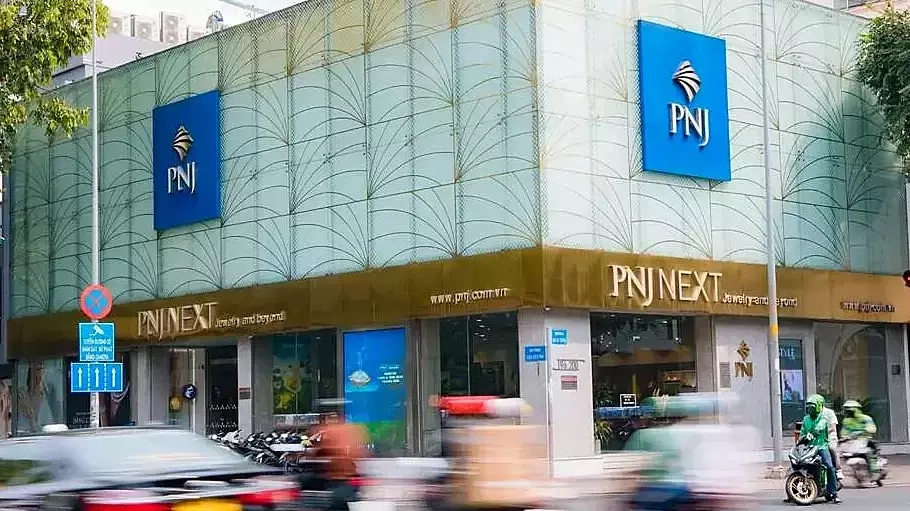
VinaCapital Reduces PNJ Stake Below 5%
Investment funds under VinaCapital have sold approximately 1.24% of their stake in Phu Nhuan Jewelry Joint Stock Company (PNJ), bringing their total ownership below 5%. This divestment follows a sharp stock price decline after a diamond smuggling scandal involving a subsidiary, P-Lab. Market analysts view restoring confidence in PNJ's corporate governance as a key challenge ahead.
Investment funds under VinaCapital have reduced their stake in Phu Nhuan Jewelry Joint Stock Company (PNJ) to below 5%. VinaCapital announced that as of July 8, it is no longer a major shareholder in PNJ. The divestment occurred after PNJ's stock price showed signs of recovery, following three consecutive sessions of hitting the floor due to the impact of a scandal involving its subsidiary, P-Lab, which is linked to a diamond smuggling ring involving 28,000 stones. Five institutional investors related to VinaCapital sold 6.35 million shares, equivalent to approximately 1.24% of PNJ's capital. Among these, Generali Vietnam Life Insurance Company and VinaCapital Frontier Opportunities Equity Fund divested their entire holdings, while other investors sold hundreds of thousands to over a million shares. VinaCapital stated that the group of investment funds still holds over 25.8 million shares, equivalent to nearly 5% of the leading jewelry enterprise's capital. This means they will not need to publicly disclose trading information in the future unless their ownership stake exceeds 5%. PNJ's stock has experienced its most volatile week in years. After a three-day consecutive decline, PNJ reversed to a 2.4% increase, reaching VND 52,000 per share, with a record trading volume of over 25 million shares. However, this recovery was short-lived. In the subsequent two sessions, the stock fell by 3.9% and 6.8% respectively, closing the week at VND 46,000. Since the P-Lab incident was announced, PNJ's stock has dropped by more than 26%, reaching its lowest price in over a year. The market capitalization has shrunk by approximately VND 8.5 trillion (about $330 million). This sharp correction has led many securities firms to tighten their margin lending ratios for PNJ shares. FPTS reduced its margin ratio for PNJ from 50% to 30%, and SSI lowered its margin lending for PNJ shares to 40%. Some other securities companies, such as Phu Hung and TCBS, have removed PNJ from their margin lending lists altogether, despite previously offering up to 50% ratios. Mid-week, PNJ announced a plan to repurchase treasury shares, which management described as a measure to protect the company's value and shareholder interests. They affirmed that business operations remain stable and long-term development strategies are proceeding as planned. Some analytical groups, such as SSI and ACBS, have temporarily moved PNJ shares to a 'review' status, rather than recommending a buy, pending further information from regulatory bodies and the company. Meanwhile, others, like MBS, believe the stock has been significantly discounted and is at an attractive valuation for investors with a medium to long-term perspective. Most securities companies believe that PNJ's biggest challenge at this stage is to restore the confidence of both customers and investors in its corporate governance. According to MBS, if the investigation does not uncover further details related to senior personnel or PNJ's legal liabilities, the impact on business results will be short-term. "Customer confidence can be gradually restored through remedial measures, enhanced internal controls, and transparent communication," stated an MBS report. Source: VnExpress
多角的分析
VinaCapitalのPNJ株売却は、ベトナムの宝飾品市場における大手企業の不祥事が、投資家のセンチメントに与える影響の大きさを浮き彫りにしている。P-Labのダイヤモンド密輸事件は、PNJの株価を大きく下落させ、時価総額を約500億円減少させた。これは、ベトナム経済が輸出主導型であり、一部の主要企業に依存している側面を示唆している。また、信用取引の融資比率引き下げは、市場の流動性リスクに対する警戒感の高まりを示しており、金融市場の安定性にも影響を与えうる。
VinaCapitalの行動は、リスク管理とポートフォリオ再構築の観点から理解できる。P-Lab事件によるPNJの企業統治への信頼低下は、投資家にとって無視できないリスク要因となった。特に、事件が子会社レベルであっても、その影響が親会社株価に直接的に現れることは、ベトナム市場における企業統治の透明性やリスク管理体制への懸念を再認識させる。VinaCapitalが保有比率を5%未満に抑えたことは、今後、情報公開義務を回避しつつ、市場の動向を注視する戦略であると考えられる。
PNJの株価急落とそれに伴う信用取引の制限は、一般の個人投資家、特に信用取引を利用していた層に直接的な経済的打撃を与えている。また、宝飾品は富裕層や中間層にとって重要な消費財であり、PNJの信頼失墜は、消費者の購買行動にも影響を与える可能性がある。P-Lab事件は、企業のコンプライアンス体制や倫理観が、社会的な信頼と事業継続性にいかに重要であるかを改めて示している。PNJが顧客の信頼を回復できるかどうかが、今後の業績を左右する鍵となる。
P-Labのダイヤモンド密輸事件は、PNJという国民に馴染み深いブランドの信頼性を揺るがした。多くの市民は、宝飾品を購入する際に、品質だけでなく、企業の信頼性も重視する。今回の事件は、一部の従業員の不正行為が、企業全体の評判を傷つけ、株価下落を通じて多くの投資家(個人投資家を含む)に損失をもたらすという、社会における企業の責任の重さを示している。PNJがどのようにこの危機を乗り越え、国民からの信頼を再構築できるかが、今後の注目点となるだろう。
背景・歴史的文脈
ベトナムの一党体制下では、経済成長が最優先課題とされており、外国からの投資誘致に積極的である。その一方で、企業統治やコンプライアンス体制の整備は、経済成長のスピードに追いついていない側面がある。PNJのような大手企業で発生した不祥事は、ベトナム経済の発展における構造的な課題、すなわち「成長と統治の乖離」を浮き彫りにする。過去にも、一部の国有企業や民間企業の不正会計、汚職事件などが報じられており、これらは投資家や一般市民の信頼を揺るがす要因となってきた。今回のP-Lab事件は、こうした過去の事例を踏まえ、企業における内部統制の重要性を改めて示すものと言える。
原文ソース
VnExpress