Empty Nest Syndrome Emerges as Children Leave Home
As Vietnamese children increasingly leave home for overseas studies or universities, parents are grappling with 'empty nest syndrome.' Many, having centered their lives around their children for decades, face an identity crisis and a sense of loss, necessitating adaptation to a new normal.
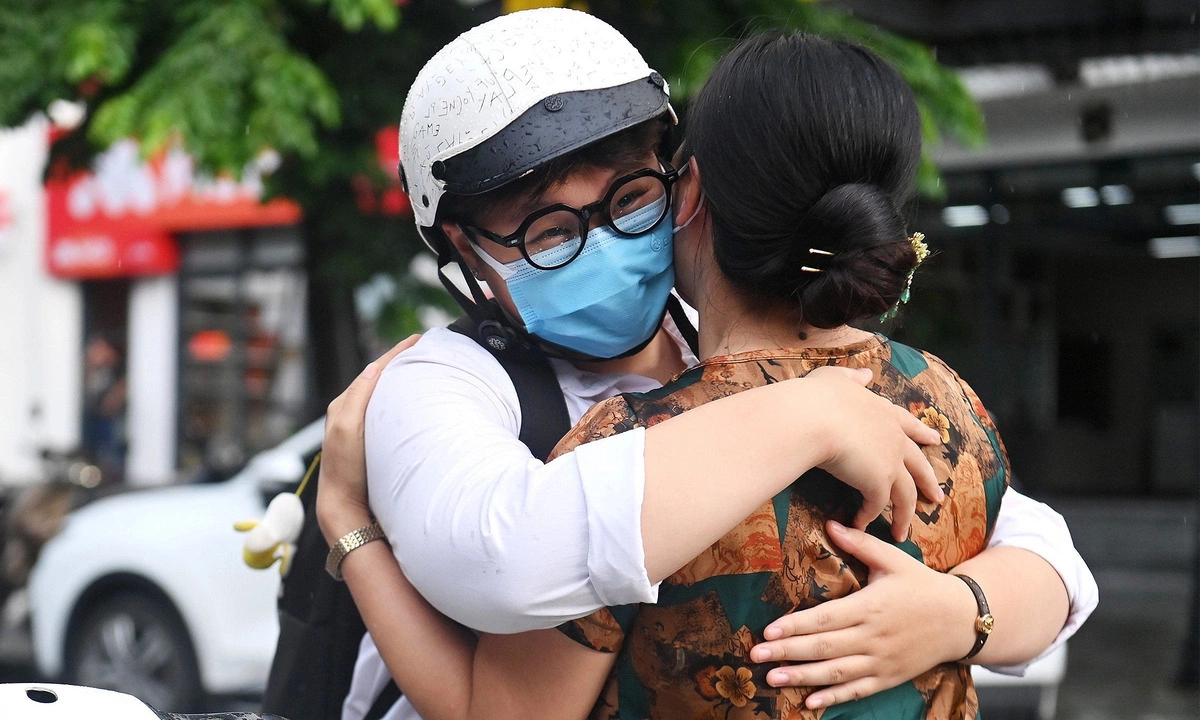
As students prepare to start university or head abroad to study, many families enter a period of transition. Children begin building their own lives far from home while parents must learn to adapt to a "new normal." Routines repeated for decades, school runs, preparing dinner, helping with homework, suddenly vanish from daily life. The resulting sense of loss gives rise to the empty nest syndrome. According to a report by UNESCO and the Ministry of Education and Training, as of the 2025-2026 academic year Vietnam has more than 250,000 students studying abroad. "The phase is a necessary transitional milestone for children to achieve independence and for parents to redefine their own lives," Dr. Hoang Phuong of the British University Vietnam says. As director of a study abroad consultancy, Phuong Hao had helped hundreds of students prepare for the journey, but it was only when she went through it herself that she truly felt the disruption. When her son left for the U.K. 10 years ago, life changed little because her daughter was still at home. Even so, she kept everything in his room exactly as he had left it. Every so often, she would open social media to rewatch videos of him playing football. Once, spotting a teenage boy on the street wearing the same shirt as her son, she stood still for a long time. The real psychological crisis hit when her second child, her daughter, also left for the U.K. last year. "Every day I open the door and walk in, I have to face the silence," she says. To ward off the emptiness, the first thing she does when she gets home is turn on every light and open all the bedroom doors. She moved her work desk into her daughter's room to feel a little closer to her. "There are mornings when I rush over in a panic to knock on her door and call her to get up for school, only to remember she is far away," she says. A parent hugs their child before the 2023 university entrance exam in Hanoi. Photo by Giang Huy Missing them often comes with anxiety. Because of the time difference, many parents stay awake until two or three in the morning just to see a green dot confirming their child is online. One of Hao's clients once panicked after seeing that her child had been offline for eleven hours straight. Quang Khai and his wife also went through an anxious stretch when they learned their daughter had been robbed of her phone, and again when the dormitory cut off internet access after 10 p.m. According to Phuong, what parents feel in these moments is an "identity crisis." For two decades, the role of caregiver has been the central purpose of their lives. But when a child leaves home, the empty house is only the surface; the deeper cause is that parents have suddenly lost their emotional anchor, she says. Years of close involvement can also inadvertently create a "role addiction", a form of emotional dependence on being the protector, which makes parents feel adrift when children no longer need them in that way, she explains. In many Asian cultures, where parents tend to build much of their lives around their children, this feeling is especially pronounced, she explains. "Letting go is not just a behavioral change, it is an ideological revolution." Phuong Hao sees her two children off at the airport in 2025. Photo courtesy of Hao A transitional phase for the whole family The process of letting go also calls for help from the children themselves. Having been closely monitored by his mother throughout secondary school, Minh Thanh, 19, a university student in Hanoi, found himself under equally strict supervision when he moved to the city. From their hometown, his mother tracked his eating and sleeping schedule over phone and sent care packages every week without fail. "If I was a little slow to reply to a message, the two of us would end up tense," he says. Feeling stifled, he turned to his father for help, asking him to take his mother out more. The turning point came when she signed up for a yoga class and began building new friendships. A busier life helped her fill the psychological void. "Now whether I come home late or go out early or want to eat whatever I like, she doesn't have the time to worry about it anymore," he says. According to Phuong, to move through the empty nest phase, parents need the courage to "break their addiction to control." From the time children are in school, parents should shift from a surveillance mindset to a "scaffolding" approach, supporting children in completing tasks and then gradually stepping back, she says. Allowing children to stumble is precisely how their psychological resilience is built, she points out. This understanding of parenting has borne fruit. Hao's son completed his master's degree in the U.K. and is preparing to take up citizenship there. Her daughter achieved straight A's in her first year of secondary school. Khai's daughter has also managed to organize her own studies and daily life abroad. Hao herself has found a new equilibrium. In the early days after her children left, she treated it as a time to "decompress", a break from the kitchen. But she eventually realized she needed to maintain regular routines, keep cooking, and look after her health. "I tell my children they must live tidily and know how to take care of themselves. If I can't do that myself, it's hard to set an example," she says. Looking back on her journey through empty nest syndrome, Hao has come to a quiet realization. "People assume that once you're free from the caregiver role you'll have freedom and peace, but the truth is that when your children go away to study, it's actually the parents who have to learn how to be independent."
多角的分析
ベトナムにおける海外留学の増加は、教育関連産業、特に留学エージェントや関連サービスにとって経済的な恩恵をもたらしている。一方で、優秀な若年層が国外へ流出することは、国内の人的資本の損失となり、長期的な経済成長の潜在力を削ぐ可能性も指摘できる。政府は、国内高等教育の質向上や、卒業後の国内就職支援策を強化することで、この人材流出を緩和し、国内経済への貢献を最大化する必要がある。
海外留学市場の拡大は、教育機関、留学支援サービス、さらには学生向けの金融サービスなど、関連分野への投資機会を示唆している。しかし、投資家は、ベトナム国内の経済成長率や、政府の教育政策、為替レートの変動リスクなどを考慮する必要がある。また、子供の海外での生活費や学費の高騰は、親世代の貯蓄や資産運用にも影響を与えるため、関連する金融商品への需要も高まる可能性がある。
子供の巣立ちによる親の「空の巣症候群」は、ベトナム社会における家族関係のあり方や、個人のアイデンティティ形成における課題を浮き彫りにしている。特に、伝統的に家族中心の価値観が強いベトナム社会では、親が長年担ってきた「保護者」という役割の変化への適応が、精神的な負担となる場合がある。この問題は、高齢化社会における親の孤立や、メンタルヘルスケアの重要性といった、より広範な社会課題とも関連している。
長年子供のために生活を捧げてきた親たちは、子供が巣立った後、急にぽっかりと空いた時間と静寂に戸惑っている。日々のルーチンがなくなり、話す相手もいなくなると、自分が何のために生きているのか分からなくなる人もいる。子供のオンライン状況を深夜まで確認したり、子供の部屋を片付けられなかったりする姿は、親たちの深い愛情と、それゆえの不安を表している。社会全体として、親たちが孤立せず、新たな生きがいを見つけられるような支援策が求められている。
背景・歴史的文脈
ベトナムでは、ドイモイ政策以降、経済成長と教育への投資が推進されてきた。特に、国際的な視野を持つ人材育成への関心が高まり、海外留学が奨励されてきた背景がある。しかし、経済発展に伴う中間層の拡大と、教育熱の高まりが、子供の早期海外進出を後押しする一方で、親世代の価値観や家族構造との間にズレが生じている。長年、子供の成長を最優先してきた親たちが、子供の独立によって生じる喪失感やアイデンティティの危機に直面するのは、こうした社会構造の変化と、伝統的な家族観が影響していると考えられる。
原文ソース
VnExpress International