General articles are free for 24 hours after publish.
Philippine Vice President's Impeachment Trial Faces Delays Amid Public Disinterest
The impeachment trial of Philippine Vice President Sara Duterte has entered its second month, but public interest is waning, overshadowed by ongoing corruption controversies and massive flooding. Delays and the absence of some senator-judges may impact the trial's future proceedings.
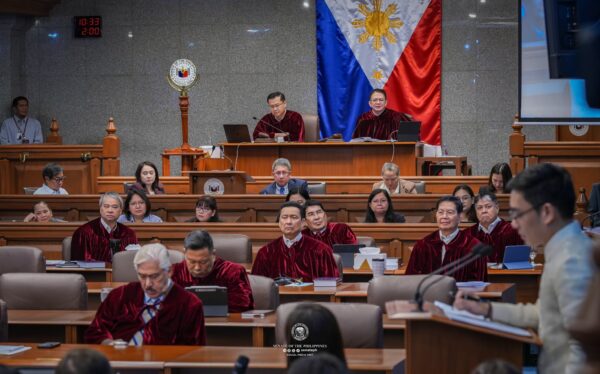
The trial has dropped from the headlines amid ongoing corruption controversies and the massive flooding that hit vast areas of Luzon this month. Philippine senators take part in the impeachment trial of Vice President Sara Duterte, Sept. 2, 2026. This week marks the second month of the impeachment trial of Philippine Vice President Sara Duterte, who is accused of betrayal of public trust over the alleged misuse of public funds, accumulation of unexplained wealth, and making grave threats against the president. What has happened over the past two months, and what’s the prospect of her conviction or acquittal? Two articles of the impeachment complaint have been presented already to the public. The first accusation refers to her involvement in a conspiracy to assassinate President Ferdinand Marcos Jr. The second issue, which is considered by anti-corruption advocates as the main aspect of the case, is about Duterte’s anomalous spending of confidential funds. Perhaps the prosecution decided to prioritize the presentation of the issue of grave threats to galvanize and unite the president’s constituency. The evidence was clear even if Duterte’s camp tried hard to undermine the testimony of the witnesses from law enforcement bodies. Duterte’s defense tactic is expected to double down on the argument about the vice president exercising her freedom of speech. As expected, the confidential funds issue has produced old and new documentary evidence showing the irregular spending of Duterte’s office. The prosecution is not yet done presenting the case, and they could follow this up by highlighting the suspicious bank transactions made by Duterte and her husband. Based on the line of questioning and earlier manifestations of Duterte’s legal team, they could try to link the questionable use of funds to the counterinsurgency operations of security forces. They could also assert the inadmissibility of evidence by citing bank secrecy laws. Duterte is not required to appear at the trial, but she has been called out for her absence while disparaging her accusers in her public appearances. In particular, she has lambasted prosecutors for “fishing for evidence” and concocting “wild stories” of alleged wrongdoing. The defense panel has also criticized some prosecutors for posting offensive remarks on social media. The impeachment is more than just a legal process; it is a political mechanism designed to hold officials accountable. A vicious exchange of political rhetoric from both parties and other stakeholders is intended to gather public support. Nevertheless, the presiding officer issued a ruling that prohibited all those directly involved in the trial from commenting about the case. The ruling covers Duterte, which might restrict her ability to argue her case and influence public opinion. After two months, there have been suggestions to shorten the duration of the trial. The prosecution is studying the option of foregoing the presentation of other articles of impeachment since they believe they have already made a solid case for the conviction of Duterte. It could also mean that they wanted to expedite the trial to sustain public interest. A crucial decision point is the legal assertion by some lawmakers to lower the number of votes required to convict Duterte, since some senator-judges have been unable to participate in the proceedings because they have been detained over corruption charges. Another senator-judge has left the country and is reportedly seeking medical treatment. This legal question could reach the Supreme Court and potentially make a huge impact on the case and the country’s politics ahead of the 2028 elections. Contrary to initial impressions, it is not impeachment matters that have dominated recent political debates but the unresolved corruption controversies and the massive flooding that hit vast areas of the country, the country’s biggest island. This was less because the impeachment was less interesting than the fact that residents had to prioritize survival amid rising floodwaters and point out the continuing failure to hold accountable the corrupt officials implicated in the infrastructure scam. It didn’t help that the draft budget bill for 2027 retained fund items that can be used for political patronage and pork barrel distribution. As the nation marks the first anniversary of last year’s widespread anti-corruption protests, residents in flooded communities are joined by concerned citizens who are outraged over the continuing impunity and the apparent failure or reluctance of the Marcos government to overhaul the budget system that enabled the systematic stealing of the country’s resources. Duterte might try to echo the public discontent against the entrenched corruption in the bureaucracy to divert attention from her trial, but she has no credibility in leading the advocacy for good governance. She is a target of the citizen-led anti-corruption movement, which is demanding accountability from the country’s two highest officials. The impeachment could soon end before the end of the year, and the supposedly transparent and inclusive 2027 budget bill may be enacted into law on time; but as things stand today, the struggle to end corruption could take much longer. Subscribe today and join thousands of diplomats, analysts, policy professionals and business readers who rely on The Diplomat for expert Asia-Pacific coverage. Get unlimited access to in-depth analysis you won't find anywhere else, from South China Sea tensions to ASEAN diplomacy to India-Pakistan relations. More than 5,000 articles a year. Already have an account? Log in. Mong Palatino served for two terms in the House of Representatives in the Philippines representing the youth sector. Get briefed on the story of the week, and developing stories to watch across the Asia-Pacific.
Original source
The Diplomat Indonesia