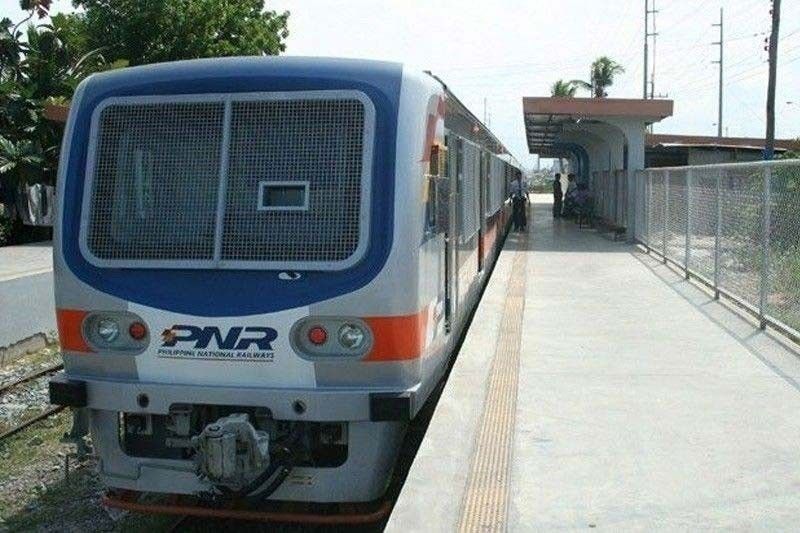
Philippines Courts US Funding for Bicol Rail Revival, Shifting from China
The Philippine National Railways (PNR) is seeking US funding for a P175-billion railway project connecting Manila and Bicol. The project was initially intended to be financed by a Chinese loan, but faced setbacks due to interest rate disputes and South China Sea tensions. The PNR is now engaging with American investors to secure new backing.
MANILA, Philippines — The Philippines is turning to the US to find a potential backer for a P175-billion railway between Manila and Bicol, hoping Washington will pick up a project formerly contracted to Beijing. The Philippine National Railways (PNR) is pitching the PNR South Long Haul to private groups in the US in a last-ditch effort to start the project before the end of the Marcos administration. PNR general manager Deovanni Miranda will be meeting with American investors next week to talk about the prospects of funding the project also known as PNR Bicol. “PNR was invited to present in the US-Philippines Rail Technology Exchange to be held on July 21. I believe several US firms are expected to attend it and have one-on-one (meetings)with us,” Miranda told The STAR. Miranda earlier discussed PNR Bicol with the commercial team of the US embassy to gauge interest. The embassy played an important role in convincing Washington to extend technical assistance for the Subic-Clark-Manila-Batangas (SCMB) Railway. In 2025, the US Trade and Development Agency said it was funding the feasibility study for the SCMB Railway, a 250-kilometer line that aims to connect Luzon’s largest ports. PNR Bicol, however, requires larger financing and technical requirements as it will cost P175.32 billion to put up its 557-kilometer line between Sucat, Muntinlupa City, and Matnog, Sorsogon. Originally, the project mirroring the old line of the Bicol Express was supposed to be funded by a Chinese loan, but President Marcos withdrew the borrowing application in 2023. There had been disputes on the interest rates the loan would carry, with China reportedly eyeing a premium rate of three percent per annum. It also did not help that the countries are fighting for control in the West Philippine Sea. Washington could be a perfect replacement for Beijing, as the US owns the world’s largest rail network of around 140,000 miles. Annually, the US interstate trains move 1.5 billion tons of goods and close to 29 million passengers, according to the American Society of Civil Engineers. Likewise, Miranda is exploring a potential public-private partnership (PPP) with Taiwan, another Chinese rival, to fund PNR Bicol, although this model would include developing the land around the alignment. “Taiwanese private companies for PPP also had interest last year, but since PNR ridership is low, they expect to include land use for their development,” Miranda said. As the government searches for a new PNR Bicol backer, Miranda said his agency has proposed an P11.46-billion budget for 2027 to support commuter operations in southern Luzon. PNR is currently working on reviving the 422-kilometer service between Calamba, Laguna, and Legazpi, Albay. The initiative will cost at least P1.81 billion since the PNR has to buy three new train sets. The PNR will also spend P1.84 billion for ballasting works to improve the structural integrity of working lines in Southern Tagalog and Bicol Region. The agency will also invest P850.5 million to upgrade rail vehicles given that most of them are already old. The proposal has earned the support of Bicol Saro Rep. Terry Ridon, who said Bicol is in urgent need of more transport modes because air travel is costly and bus trips are time-consuming. “The PNR’s P11-billion proposal to refleet and upgrade the Bicol line is a fantastic development for our endeavor to restart operations in the region while waiting for funding for the South Long Haul,” Ridon told The STAR. Currently, the PNR runs limited trips between Naga and Lupi Viejo in Camarines Sur, as well as between San Pablo, Laguna, and Lucena, Quezon by way of Calamba.
多角的分析
フィリピン政府は、インフラ開発における中国への依存度を減らし、米国との経済協力を強化する戦略を推進している。PNRビコール鉄道プロジェクトは、その象徴的な事例となる可能性がある。プロジェクトの遅延は、フィリピン国内の物流コスト増加や地域経済の発展阻害につながるため、早期実現が望まれる。米国の参入は、長期的なインフラ整備計画の推進だけでなく、米国企業による技術移転や雇用創出にも寄与する可能性がある。ただし、プロジェクトの規模と複雑さを考慮すると、資金調達だけでなく、技術的・運営的な課題も克服する必要がある。
米国投資家にとって、フィリピンのインフラプロジェクトは、成長市場へのアクセスと、地政学的なパートナーシップ強化の機会を提供する。PNRビコール鉄道は、その巨大な投資規模から、インフラファンドや大手建設会社にとって魅力的な案件となりうる。しかし、過去の中国との交渉の経緯や、フィリピン国内の政治的・規制的リスクを慎重に評価する必要がある。特に、PPPモデルでの土地利用開発は、収益性を高める可能性がある一方、複雑な権利関係や環境アセスメントが課題となることも考えられる。
ビコール地域住民にとって、鉄道の復活は生活の利便性を劇的に向上させる可能性を秘めている。現在、高価な航空運賃や時間のかかるバス移動に頼らざるを得ない状況から解放され、地域間の移動が容易になれば、経済活動の活性化や観光客の増加も期待できる。しかし、プロジェクトの進捗が遅れれば、住民の期待は失望に変わり、代替交通手段への依存が続くことになる。また、大規模インフラプロジェクトは、沿線住民の移転や生活環境の変化を伴う可能性があり、丁寧な説明と補償が不可欠となる。
フィリピン国民、特にビコール地域住民は、長らく期待されてきた鉄道プロジェクトの実現に注目している。現在の交通手段の不便さや高コストは、日々の生活に大きな負担となっている。米国からの資金調達の動きは、プロジェクト実現への希望を与える一方で、過去の中国との交渉の経緯を踏まえ、実質的な進展を慎重に見守る姿勢も存在する。若年層は、海外就労の機会拡大や、より効率的な国内移動手段の整備を期待しており、PNRビコール鉄道の早期完成は、これらの期待に応える重要な一歩となるだろう。
背景・歴史的文脈
フィリピンは、経済発展と国民生活の向上を目指し、大規模インフラ投資を推進してきた。特に、中国が主導する「一帯一路」構想の下、鉄道プロジェクトへの中国からの融資や技術支援が期待されてきた。しかし、2023年、マルコス政権は、PNRビコール鉄道プロジェクトに関する中国からの融資申請を撤回した。この背景には、中国側が提示した高金利への懸念や、南シナ海における中国の海洋進出に対するフィリピン政府の警戒感があると見られている。この撤回を受け、フィリピン政府は、米国や台湾など、新たなパートナーシップを模索し、インフラ開発の多様化を図ろうとしている。
原文ソース
Philstar Business