General articles are free for 24 hours after publish.
BRICS Summit Concludes with Diplomatic Gains, Expanding Influence with New Partners
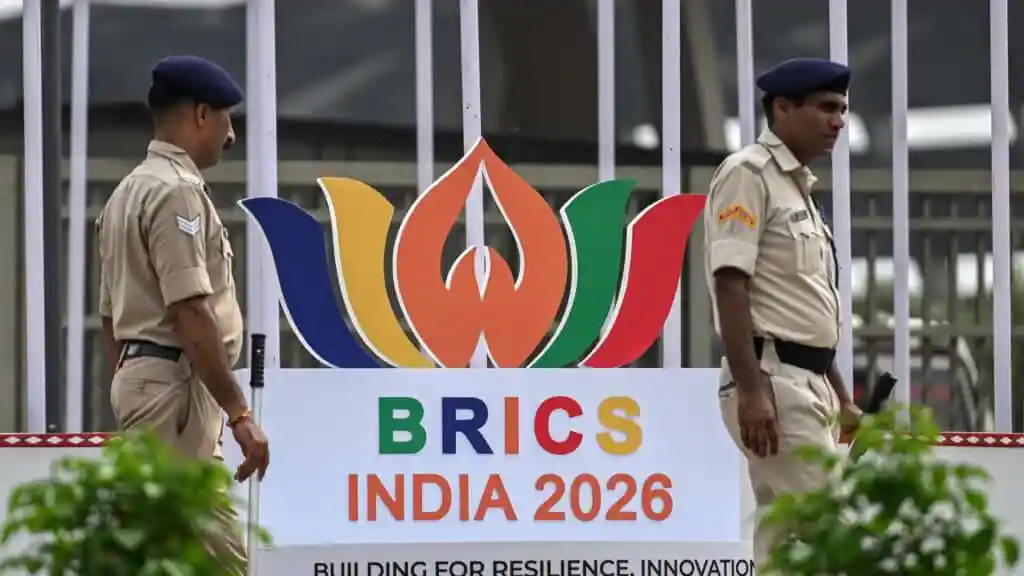
The BRICS Summit in India concluded with a diplomatic victory, welcoming 10 new partner countries to a bloc of 21. The summit underscored the group's growing influence as a voice for the Global South, addressing global order challenges, economic risks, and conflict resolution through cooperation.
The BRICS Summit in New Delhi has concluded with a significant diplomatic victory, as leaders from a diverse group of nations found rare common ground amidst high global stakes. The event marked a major milestone for the rapidly growing bloc, demonstrating that even rivals can agree when global interests are paramount. The summit, spanning two intense days of high-level talks, saw its second day spotlighting outreach to ten new partner countries, bringing the total participating nations to twenty-one. This expansion underscored the group’s growing influence on the world stage. Chinese President Xi Jinping arrived with a clear vision, advocating for a more integrated and powerful “Greater BRICS” to act as a leading voice for the Global South and challenge the traditional Western-dominated world order. The addition of ten partner countries injects fresh economic and political power, with leaders from across the developing world eager to join forces for shared growth and mutual support. These new partners actively participated, enriching the dialogue with unique regional perspectives. Indian Prime Minister Narendra Modi highlighted urgent economic risks, warning against the weaponization of technology and critical minerals. He called for securing global supply chains and immediate action on practical solutions, emphasizing BRICS as a hub for actionable economic progress. The focus on supply chains resonated deeply, given recent trade disruptions and economic sanctions that have hurt ordinary people. Global conflicts, particularly the wars in Ukraine and West Asia, dominated private discussions. Despite initial challenges, leaders navigated the tension skillfully. President Xi Jinping urged the bloc to become a global peacemaker, calling for a ceasefire in the Middle East. The final statement expressed deep concern over escalating violence, urging restraint without naming specific aggressors – a diplomatic feat that kept all parties engaged. Reaching unanimous agreement on the New Delhi Declaration was a massive win for India. Indian diplomats worked tirelessly behind the scenes to bridge gaps, soothing tensions between regional rivals like Iran and the UAE through intense negotiations. Beyond core BRICS, PM Modi also boosted bilateral relationships with newly invited partner nations, solidifying India’s role as a trusted global mediator. Economic independence was a major theme. Leaders discussed reducing reliance on the US dollar and promoting local currency use for cross-border trade. While cautious on a common currency, they focused on improving digital payment systems between member states, aiming for faster and cheaper intra-BRICS trade and empowering developing nations financially. The Delhi summit cemented BRICS as the true voice of the Global South, offering a realistic alternative for nations feeling ignored by traditional bodies like the UN. The bloc’s leaders also united in their call for reforming the UN Security Council, supporting permanent seats for nations like India and Brazil to better reflect modern world realities. Climate change was also central, with developing nations demanding fairer climate financing from industrialized countries and agreeing to share green technology for a safe transition. India’s role as a balancing force was evident, carefully managing competing interests and keeping the agenda focused on mutual development. PM Modi explicitly stated the group is not aimed against anyone but seeks to build a more inclusive and representative global system, an approach that appeals strongly to many non-aligned developing nations.
Original source
Chiang Rai Times