General articles are free for 24 hours after publish.
Indonesia and Australia Forge Partnership in Aquaculture Technology to Bolster Food Security
Indonesia and Australia are strengthening cooperation in the development of aquaculture technology to enhance food security. A key focus is the implementation of mini Recirculating Aquaculture System (RAS) technology, which allows for water recycling and reuse.
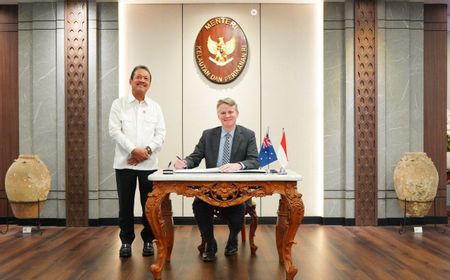
Indonesia and Australia are strengthening cooperation in the fisheries sector through the development of cultivation technology to increase productivity while supporting food security in both countries. One of the collaborations is directed at the utilization of mini Recirculating Aquaculture System (RAS) technology, a cultivation system that allows water to be managed and reused so that the fish-keeping environment can be controlled more optimally. Minister of Maritime Affairs and Fisheries (KP) Sakti Wahyu Trenggono said that Australia's experience in implementing RAS technology is one of the references for Indonesia to develop technology-based fisheries. "I have seen firsthand how this RAS system works in Tasmania to increase the productivity of aquaculture fisheries there. In Indonesia, we are ready to develop 40,000 units of mini-RAS to be implemented in hundreds of villages in Indonesia," said Trenggono when meeting with the Australian Ambassador to Indonesia Rod Brazier at the KKP office, Jakarta, Tuesday, September 2. According to Trenggono, the development of this cultivation technology is in line with the thematic land cultivation program prepared by the Ministry of Marine Affairs and Fisheries to be implemented in hundreds of potential fishing villages in Indonesia. The mini-RAS technology will currently be used to develop the commodities of nila and catfish. In the future, its application is planned to be expanded to a number of other commodities, such as pangasius, barramundi, grouper to jade perch. The implementation of RAS is expected to increase productivity and efficiency of cultivation because the system allows the reuse of water in the production process. With more controlled maintenance environment management, the technology is also considered to support the development of more sustainable cultivation. Trenggono emphasized that strengthening cooperation with Australia is not only directed at increasing production and investment in the fisheries sector, but can have a wider impact on the community. "Our hope is that this increase in fisheries cooperation is not limited to investment, but also on community empowerment, production capacity improvement, technology transfer and the sustainability of the ecosystem that is being built," he said. Meanwhile, Australian Ambassador to Indonesia Rod Brazier said Australia has experience in the development of technology and aquaculture industries that can be a space for exchanging knowledge with Indonesia. Brazier assessed that the experience includes research to increase cultivation productivity while reducing environmental impacts. The experience and knowledge are considered to be part of strengthening collaboration between the two countries. "Cooperation between Indonesia and Australia is very important. Hopefully in the future Indonesia and Australia can see each other's strengths so that they can work together to build and maintain the ecosystem and food security," he said. The cooperation in Indonesian-Australian aquaculture technology is expected to strengthen the capacity of the aquaculture fisheries sector of the two countries. For Indonesia, the application of mini-RAS technology is also part of efforts to expand village-based aquaculture and increase the contribution of the fisheries sector to food security.
Original source
VOI English