General articles are free for 24 hours after publish.
Indonesian Haze From Kalimantan Fires Reaches Philippines, Health Advisories Issued
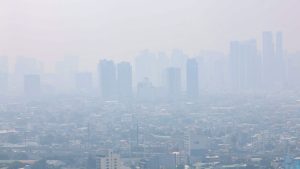
Haze originating from forest fires in Kalimantan, Indonesia, has been observed across the Philippines, including the National Capital Region. The Department of Environment and Natural Resources is urging the public to take precautions due to potential health impacts.
Haze linked to forest fires in Kalimantan, Indonesia, was observed in the National Capital Region (NCR) and other parts of the country, with the public urged to take precautions due to its potential health effects, according to the Department of Environment and Natural Resources (DENR) on Wednesday. In a news release, DENR-Environmental Management Bureau (DENR-EMB) added that the haze was also observed in Central Luzon, CALABARZON, MIMAROPA, and parts of Central Visayas. “Based on current monitoring and meteorological assessments, the haze is possibly associated with smoke and transboundary haze from ongoing fires in Kalimantan, Indonesia, which may have been transported toward the Philippines by prevailing winds,” DENR-EMB said in a statement. The agency also said that it is continuously monitoring air quality conditions through its nationwide network of monitoring stations. This helps assess the extent of the haze and its potential effects on public health and the environment. As of 12 p.m., monitoring stations of the Department of Environment and Natural Resources–Environmental Management Bureau (DENR-EMB) in Metro Manila recorded good to fair air quality based on particulate matter (PM) 10 and PM2.5 levels. Similar air quality was also recorded in Antipolo and Biñan stations in CALABARZON. PM10 and PM2.5 are types of particulate matter measured in the air to assess air quality. PM10 refers to particles 10 micrometers or smaller, while PM2.5 refers to finer particles 2.5 micrometers or smaller that can penetrate deeper into the respiratory system. The Department of Health (DoH) earlier warned that exposure to haze could cause difficulty breathing, cough, chest pain, watery eyes, and an itchy nose, and may worsen existing respiratory conditions such as asthma. Amid potential effects on health, DENR-EMB urged the public to take necessary precautions such as minimizing prolonged outdoor activities, especially in areas where haze is visible. People in vulnerable populations such as children and people with comorbidities are also urged to stay indoors. DENR-EMB also advised the public to wear a face mask, preferably an N95 mask, when going to areas affected by haze. — Edg Adrian A. Eva
Original source
BusinessWorld Nation