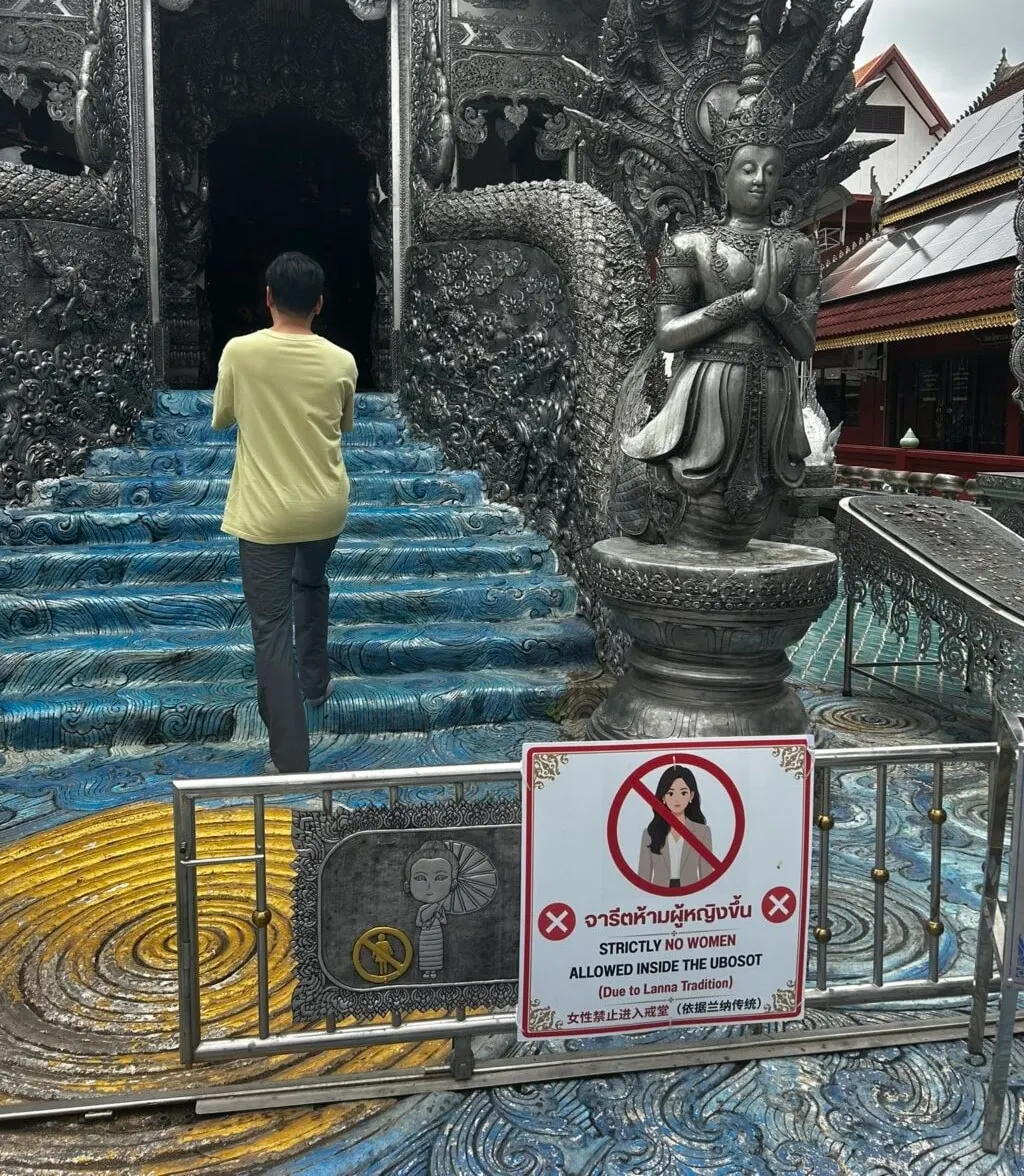
Chiang Mai Temple Sign Sparks Global Feminist Debate
Culture
2026年7月25日
6
Chiang Rai Times

General articles are free for 24 hours after publish.

Chiang Mai Temple Sign Sparks Global Feminist Debate

Share
AI Summary

A temple in Chiang Mai, Thailand, has ignited an international debate on gender equality and cultural traditions with a sign barring women from its main hall. The issue, amplified on social media, also highlights concerns over ticketing practices and signage, reigniting discussions within Thailand about the clash between tradition and modern values.

CHIANG MAI – A social media post about a famous temple in northern Thailand has triggered an intense international debate among feminists over gender equality and cultural traditions. The controversy began when a foreign tourist shared a photo of an entry sign on social media that explicitly barred women from entering the main hall. The viral image showed that while men and women pay the same admission fee, women cannot enter the sacred area. Instead, female tourists are instructed to view the beautiful silver interior through their mobile screens while standing outside the building. The photo quickly gained traction on social platform X, where it accumulated over 4.5 million views within a few days. Online commenters from around the globe voiced strong criticism regarding the temple’s gender policies and ticketing practices. Many users questioned why female visitors are required to pay full price when they are denied access to the main attraction. Adding to the controversy, online users pointed out noticeable spelling mistakes on the official English information sign. The entrance board contained awkward phrases like “Think you for your donation and respectation,” which drew further negative attention online. International travelers argued that major cultural sites welcoming global tourists should maintain clearer signage and fair entry rules for everyone. According to a news report by Khaosod English, the viral post has renewed long-standing conversations across Thailand regarding traditional customs and modern tourism expectations. The incident highlights how local traditions can conflict with modern views on equality when international travelers visit sacred historic sites. As the online debate expanded, many Thai citizens stepped forward to provide important historical and cultural context for international readers. They explained that the rule is not a nationwide doctrine taught by traditional Theravada Buddhism across Thailand. Instead, the restriction originates from centuries-old Lanna Kingdom customs specific to certain northern provinces like Chiang Mai. These local customs are deeply rooted in ancient animist beliefs and spirit worship that existed long before Buddhism arrived in northern Thailand. Under these traditional beliefs, local communities believed that female energy could disrupt the sacred energy of consecrated ground. Specifically, ancient traditions held that menstruating women might render holy spaces ritually impure or weaken protective spiritual charms buried beneath the floor. Because of these enduring spiritual traditions, several historic temples in northern regions continue to preserve these traditional boundaries today. Thai social media users emphasized that the vast majority of Buddhist temples throughout Thailand welcome female visitors inside all public spaces without any restrictions. The viral incident has reignited an ongoing internal conversation within Thai society regarding gender equity and tourism management. Many local citizens, particularly Thai women, noted that these traditional rules have caused frustration among visitors for many years. However, temple administrators and local heritage boards have made very few structural changes despite recurring complaints from international tourists. To solve the fairness issue, many residents suggest that temples should adjust their pricing structures to match visitor access levels. They argue that female visitors should receive discounted tickets or even free admission since they cannot enter the main sanctuary. Alternatively, critics suggest that temples must display clear warning signs before tourists purchase their tickets at the main entrance gate. Furthermore, cultural experts advocate for adding comprehensive educational plaques near the entrance of historical sites. Clear explanations would help international visitors understand the unique Lanna history behind the restrictions instead of misinterpreting the policy as standard Buddhist practice. Proper context helps bridge the gap between preserving local heritage and respecting diverse international guests. This debate underscores the delicate challenge that traditional communities face when opening sacred religious sites to global tourism. Local authorities must carefully balance the preservation of ancient regional customs against modern international expectations regarding gender equality. When historical traditions clash with contemporary social values, clear communication becomes essential for maintaining respect on all sides. As international travel continues to rebound, cultural institutions in Thailand face growing pressure to update their visitor policies. Providing transparent information, fair pricing options, and respectful educational signage will ensure that ancient sites can welcome the world while honoring their unique cultural history.

0

Original source

Chiang Rai Times

原文を読む