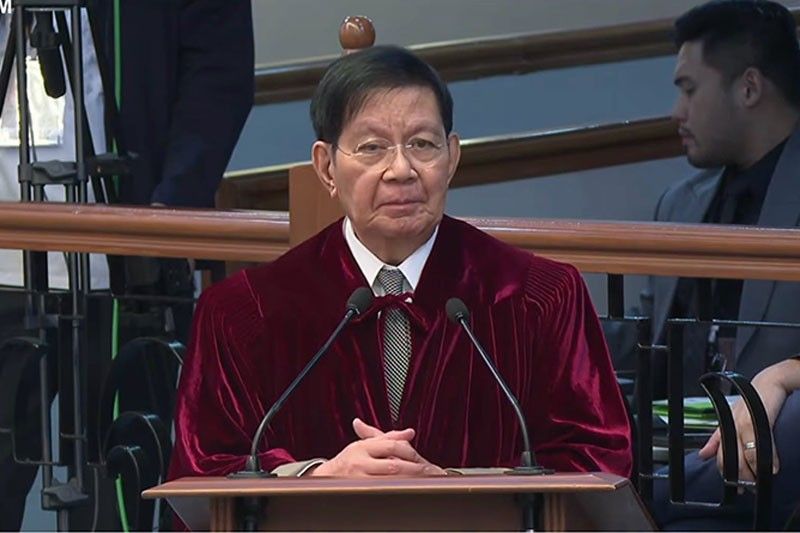
Senators Frustrated by Delays in VP Duterte's Impeachment Trial
Politics
2026年7月17日
5
Philstar Nation

Senators Frustrated by Delays in VP Duterte's Impeachment Trial

AI サマリー

Senators are growing impatient with the slow pace of Vice President Sara Duterte's impeachment trial, citing "obviously irrelevant" manifestations that are delaying proceedings. Proposals to expedite the trial have been made, but disagreements persist among stakeholders.

MANILA, Philippines — Having to deal with "obviously irrelevant" manifestations is testing the patience of senators – and possibly just about every observer of the trial of impeached Vice President Sara Duterte, Sen. Panfilo Lacson said yesterday. In a post on X, Lacson also shared a lighthearted exchange with a fellow senator following the conclusion of last Wednesday’s trial, its sixth day. “A fellow senator-judge has jokingly asked me if he can move for the division of the house every time he feels annoyed by manifestations obviously irrelevant to the impeachment trial. I told him, a motion to adjourn will elicit more applause from the equally annoyed gallery,” Lacson said. Wednesday’s proceedings ended without any witness taking the stand as lengthy manifestations, including discussions on the timing of the National Bureau of Investigation’s probe on the multibillion-peso sports complex built for the 2019 Southeast Asian Games in Tarlac, took much of the time. Last weekend, Lacson proposed several measures to speed up the impeachment trial, including requiring witnesses scheduled for the week to remain at the Senate while proceedings are ongoing to avoid delays between testimonies. He said the proposal aims to maximize the limited trial schedule without compromising the presentation of evidence. Lacson stressed that Duterte, like any respondent in a regular court proceeding, is entitled to a speedy trial. He said improving the pace of the proceedings would help ensure the efficient conduct of the trial while preserving the integrity of the process. Senate impeachment court spokesman Reginald Tongol defended the decision to allow senators to raise concerns affecting the credibility of the court during the trial, saying there are limited opportunities for them to discuss such matters at other forums. “The presiding officer is concerned about every senator-judge and, as a matter of respect and comity, does not want to prevent them from speaking. They just have to respect the time periods allotted for their manifestations,” Tongol told reporters. Sen. Alan Peter Cayetano used Wednesday’s proceedings to express concerns that the NBI’s public announcement of its probe on 2019 SEA Games could affect the integrity of the impeachment court. “I think Sen. Alan Cayetano was pointing out that such statements could have a chilling effect on possible witnesses or parties, or even affect the judges as they decide or ask difficult questions of future witnesses,” Tongol said. He said the decision of the prosecution to drop six names from its list of witnesses for grave threat charge against Duterte or Article IV will not necessarily mean an earlier-than-expected conclusion of the trial. The trial is projected to cover 92 days. Rep. Gerville Luistro, lead prosecutor in the House of Representatives, said she hopes to see the trial reach its conclusion before Christmas “so that we will all be happy.” Meanwhile, former NBI chief Jaime Santiago who first investigated Duterte’s kill remarks, has maintained that “Operation Romanov” was a plot against President Marcos and his family. “‘Romanov’ first came out from the words of Mayor Baste (Duterte) in one of his Maisug rallies in January 2024,” Santiago told radio dzRH on Wednesday. “He told President Marcos that before going to bed, he should think about Romanov, and then there’s Mussolini, and then he should remember what happened to his family in 1986.” Romanov refers to the last imperial dynasty of Russia, members of which were executed by Bolshevik revolutionaries after their ouster in 1917. Benito Mussolini ruled fascist Italy from 1922 to 1943 before he was captured and killed by partisans in 1945. And 1986 was the year the Marcos family went into exile following the strongman’s ouster through people power revolution. — EJ Macababbad

0

多角的分析

経済的影響

弾劾裁判の遅延は、副大統領の政治的地位の不確実性を高め、投資家心理に悪影響を与える可能性がある。特に、経済政策の安定性や将来の政策決定への影響が懸念される。また、裁判に費やされる時間とリソースは、本来であれば経済成長に資する活動に振り向けられるべきものであり、機会費用の観点からも経済的損失と言える。

投資家心理

投資家にとって、政治的リスクは常に重要な判断材料となる。副大統領の弾劾裁判の長期化や不透明な展開は、フィリピンの政治的安定性に対する懸念を増幅させ、新規投資の抑制や既存投資の撤退を検討させる要因となり得る。特に、インフラ開発や外国直接投資(FDI)といった長期的なプロジェクトにおいては、政治的安定性が不可欠である。

社会的影響

弾劾裁判の遅延は、国民の政治への関心を低下させるだけでなく、司法制度への信頼を損なう可能性がある。 senators が無関係な議論に時間を費やす様子は、庶民の生活に直結する問題への取り組みを怠っていると映るかもしれない。また、元NBI長官の発言に見られるような、歴史上の権威主義的指導者や政治的激動の時代との関連付けは、国民の間に不安や分断を煽る恐れがある。

市民の声

マニラ首都圏で暮らす市民としては、日々の生活に直接影響のない裁判の長期化にはうんざりしている。物価上昇や交通渋滞といった現実的な問題に senator たちがもっと向き合ってほしいというのが本音だ。裁判が長引けば、副大統領の職務遂行能力にも疑問符がつき、それが政策決定にどう影響するのか、漠然とした不安を感じる。

背景・歴史的文脈

フィリピンでは、弾劾裁判は政治的な権力闘争の手段としてしばしば用いられてきた。過去には、大統領や最高裁判所長官などが弾劾の対象となった例がある。今回の副大統領弾劾裁判も、現政権と副大統領派閥との間の権力バランスの変化や、将来の大統領選挙を見据えた政治的駆け引きの一環と見ることができる。 senator たちが陳述に時間を費やすのは、単に審理を遅らせるだけでなく、自らの政治的立場を表明し、支持基盤にアピールする機会ともなっている。

原文ソース

Philstar Nation

原文を読む