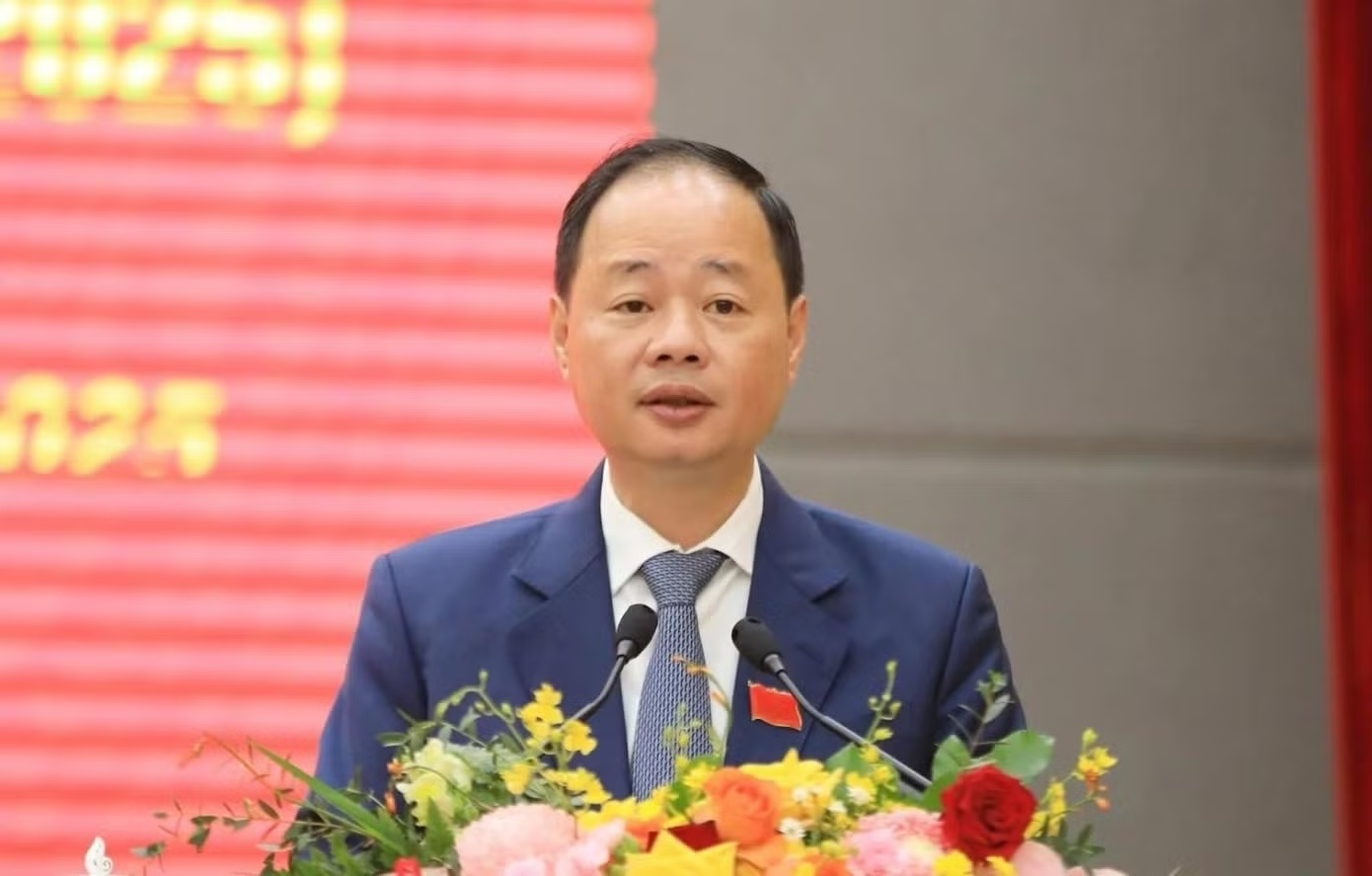
Vietnam Accelerates Quantum Technology Investment, Experts Cite Four Key Drivers
Technology
2026年7月21日
5
Vietnam Insider
Relations
🇻🇳Vietnam🇹🇭Thailand🇨🇳China

General articles are free for 24 hours after publish.

Vietnam Accelerates Quantum Technology Investment, Experts Cite Four Key Drivers

Share
AI Summary

Tran Hong Thai, President of the Vietnam Academy of Science and Technology, highlighted four key reasons for prioritizing quantum technology investment: maintaining technological leadership, ensuring data security, unlocking unprecedented capabilities, and fostering future talent. He warned against delaying entry until international standards and markets are established, risking lost opportunities.

Vietnam is strategically positioning quantum technology as a cornerstone of its future development, aligning it with other high-priority fields like AI and semiconductors. The Prime Minister's directive in May 2026 officially designated quantum communications, quantum computing, and quantum sensors as critical technologies vital for both economic expansion and national security. This strategic emphasis is further underscored by Politburo Resolution 57, which elevates quantum technology to a level of national importance comparable to emerging technologies such as artificial intelligence, advanced semiconductors, 5G/6G networks, and blockchain. During a recent scientific seminar focused on "Quantum Technology in the New Era: International Trends, Opportunities, and Requirements for Vietnam," Tran Hong Thai, President of the Vietnam Academy of Science and Technology, articulated four compelling reasons why Vietnam must invest in this complex field now. His central argument was that theoretical understanding and policy directives are insufficient without concrete action plans, robust mechanisms, effective execution structures, and tangible capabilities. Firstly, President Thai emphasized the imperative to avoid falling behind in the global technological race. He cautioned that if Vietnam waits until pioneering nations establish international standards, structure global markets, and monopolize supply chains, the windows of opportunity for entry will significantly shrink. With numerous countries already designating quantum technology as a strategic direction, he stressed that Vietnam cannot afford to be a passive observer. The second critical driver identified is the imperative to secure data in the face of future quantum computing advancements. The advent of powerful quantum machines threatens to render current widespread encryption systems vulnerable. This creates a risk where malicious actors could potentially stockpile data today, with the intention of decrypting it once the necessary quantum computing capabilities become available. Thirdly, the potential for quantum technology to unlock unprecedented capabilities was highlighted. These advancements span enhanced measurement, sensing, simulation, calculation, and materials science. Such capabilities hold the promise of revolutionizing fundamental science and deploying transformative solutions across vital sectors including defense, national security, telecommunications, finance, healthcare, energy, natural resources, environmental management, and high-tech industries. Finally, President Thai underscored the long-term challenge of cultivating human capital. Developing the specialized talent required for quantum technology is a multi-year endeavor that cannot be accomplished through short training programs. It necessitates a cadre of interdisciplinary professionals with expertise spanning physics, mathematics, computer science, cryptography, photonics, materials science, electronics, control systems, metrology, software engineering, and data science. President Thai advocated for a proactive yet measured strategic approach for Vietnam, stating, "We must have early awareness, solidify our foundation, and precisely target the levers that generate substantive capabilities suited to Vietnam's conditions." He acknowledged that Vietnam's resources and research infrastructure are currently dispersed but asserted that effective organization can coalesce these fragments into a formidable collective strength. This requires the establishment of core research teams, shared laboratories, expert networks, computational platforms, and shared data systems. To this end, the Vietnam Academy of Science and Technology has initiated collaborations with a wide array of domestic agencies and units. These partnerships aim to pool resources across key institutions, including the Ho Chi Minh National Academy of Politics, the Central Commission for Policy and Strategy, the Central Propaganda and Mass Mobilization Department, the Government Cipher Committee, the Ministry of Defense, the Ministry of Public Security, the Ministry of Foreign Affairs, the Ministry of Industry and Trade, the Vietnam Institute for Advanced Study in Mathematics, Vietnam National University Hanoi, Vietnam National University Ho Chi Minh City, Hanoi University of Science and Technology, VinUniversity, Phenikaa University, and the International Centre for Interdisciplinary Science and Education. This collaborative network is designed to bind research directly to practical application needs through an interdisciplinary, multi-agency approach. Concurrently, the Academy is actively engaging in dialogue and consultation with international partners from the Russian Federation, the United States, the United Kingdom, Japan, and South Korea. These engagements also include international organizations and overseas Vietnamese scientists working in quantum technology-related disciplines. These cooperative endeavors are crucial for Vietnam to update its understanding of global development trends, refine its recognition of technical boundaries, evaluate the feasibility of practical deployment, and select development paths that are most attuned to the nation's specific conditions. Source: Vietnam Insider

0

Original source

Vietnam Insider

原文を読む