Cambodia Protests Thai Border Violations
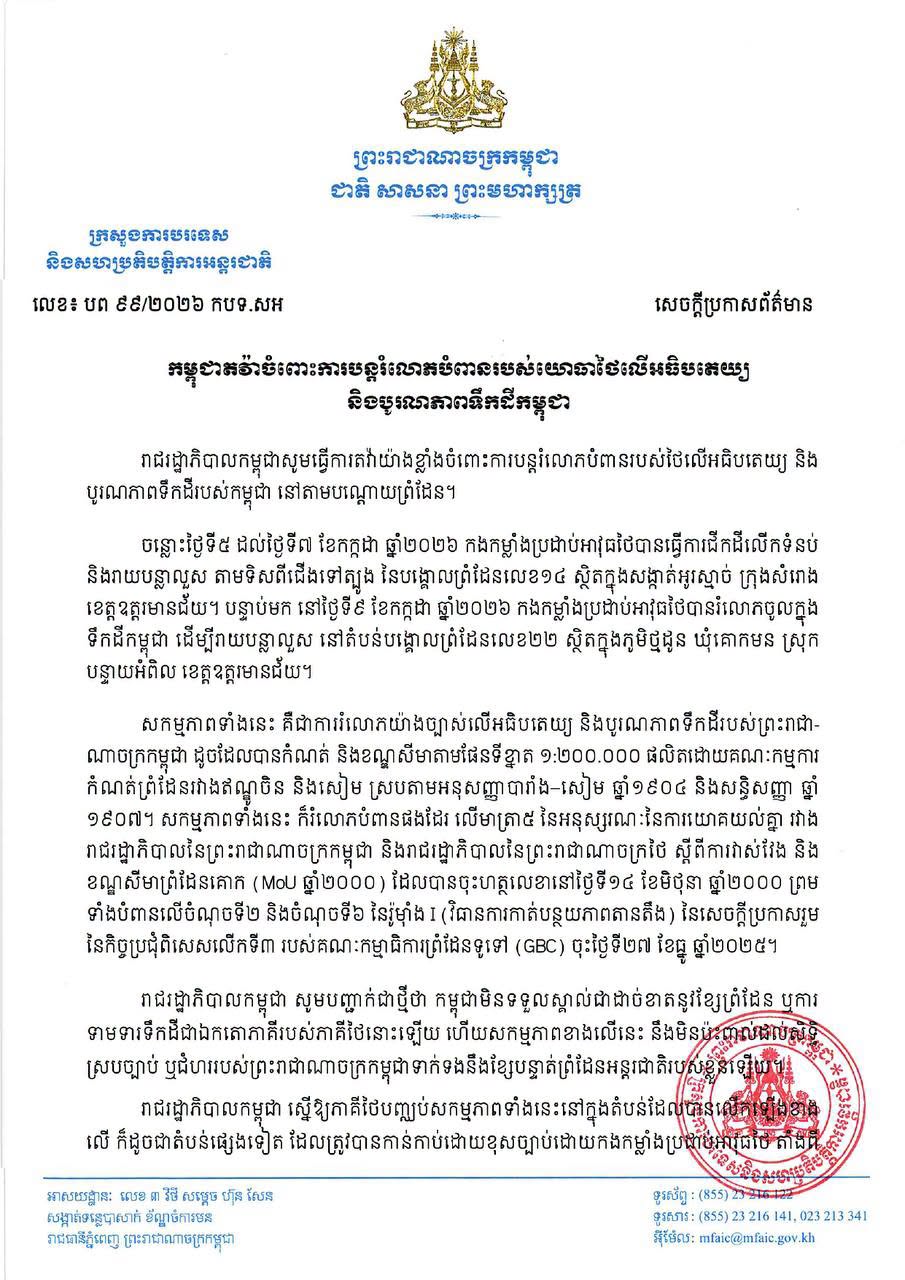
Cambodia's Ministry of Foreign Affairs and International Cooperation issued a strong protest on July 10 against repeated violations of its sovereignty and territorial integrity by Thai forces along the border. Thai troops allegedly encroached and conducted activities near border pillars 14 and 22 in early July.
This article requires PRO
This article is outside the free access window or is a special report. PRO unlocks it and the full archive.
Related articles
- Cambodia Protests Thai Border Violations, Reiterates Commitment to Peaceful Resolution
The Cambodian government has strongly protested alleged violations of its sovereignty and territorial integrity by Thai armed forces along the border. Citing incidents of excavation and barbed wire installation in early July, Cambodia reiterated its commitment to peaceful resolution based on international law and bilateral agreements.
- Cambodia Protests Thai Military's Continued Violations of Sovereignty
The Cambodian government has issued a strong protest against repeated incursions by the Thai military into its territory. In early July, Thai forces engaged in earthworks and barbed wire installations near the border, with incursions into Cambodian territory also confirmed. Cambodia asserts these actions violate bilateral agreements and international law, demanding an immediate cessation.
- Cambodia Protests Thai Military Incursions Across Border
The Cambodian government has issued a strong protest against repeated violations of its sovereignty and territorial integrity by the Thai military, including incursions, construction, and mine-laying. Cambodia points to violations of the 2000 MOU and international law, demanding an immediate halt to these actions.
- Cambodia Protests Thai Military's Continued Violations of Sovereignty and Territorial Integrity
The Cambodian Ministry of Foreign Affairs and International Cooperation has issued a strong protest against repeated incursions by the Thai military into Cambodian airspace and territory. The ministry stated these actions violate international law and the principles of bilateral relations, demanding their immediate cessation.