Cambodia Accelerates Efforts to Leverage Demographic Dividend for High-Income Status
Business
2026年8月4日
8
AKP Cambodia
Relations
🇰🇭Cambodia🇨🇳China🇯🇵Japan🇰🇷South Korea

General articles are free for 24 hours after publish.

Cambodia Accelerates Efforts to Leverage Demographic Dividend for High-Income Status

Share
AI Summary

Cambodia is intensifying efforts to leverage its demographic dividend as a key driver for achieving high-income status by 2050. Discussions focused on enhancing productivity and human capital before the working-age population peaks, aiming to avoid the middle-income trap.

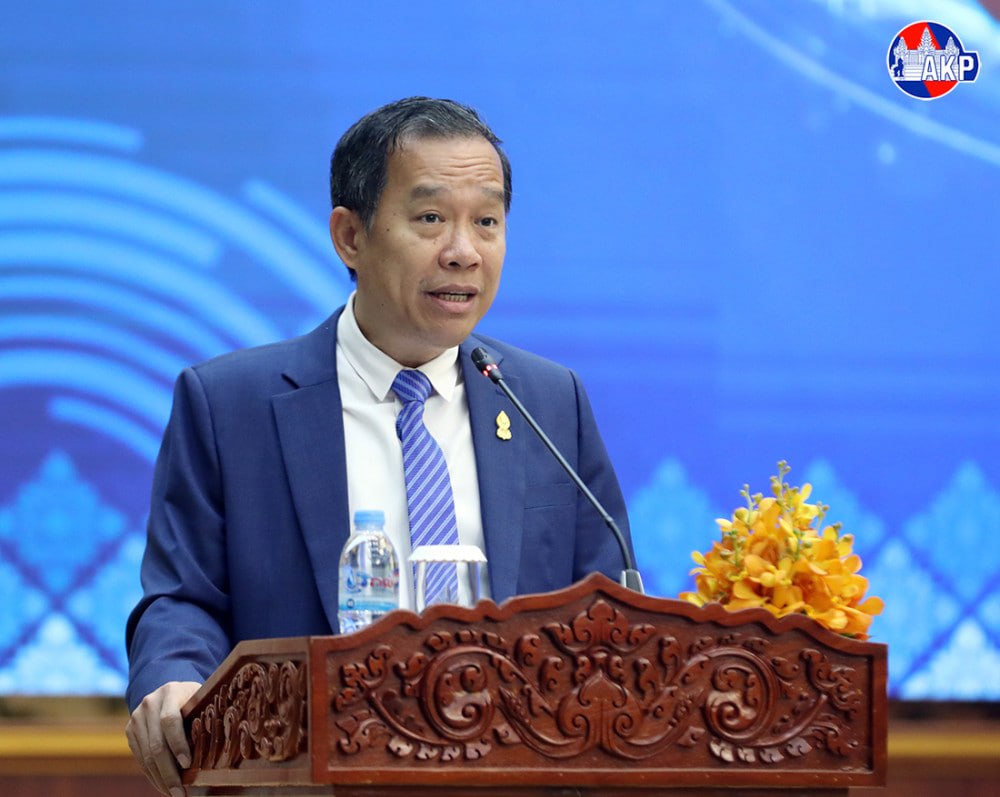
Cambodia is intensifying efforts to capitalize on its demographic dividend as a key driver of long-term economic growth, with policymakers highlighting the country’s limited window of opportunity to achieve high-income status by 2050 and avoid the middle-income trap. The message was underscored during a high-level seminar on “Cambodia Economic Update and the Road to Vision 2050,” organised by the Senate on Monday at the Senate’s Solidarity Palace. The event, chaired by Second Vice President of the Senate H.E. Dr. Thun Vathana, brought together more than 270 participants from the legislative and executive branches, the World Bank, the private sector, research institutions, and development partners. Opening the seminar, H.E. Dr. Thun Vathana recalled Senate President Samdech Akka Moha Sena Padei Techo Hun Sen’s national vision of transforming Cambodia into an upper-middle-income country by 2030 and a high-income country by 2050. He stressed that achieving these ambitions will require comprehensive preparation and well-defined strategies to prevent Cambodia from falling into the middle-income trap that has constrained the progress of many developing economies. Citing the World Bank’s latest Cambodia Economic Update, H.E. Dr. Thun Vathana noted that the country’s working-age population is expected to peak around 2043, creating what economists refer to as a “demographic dividend” — a critical opportunity to convert a large labour force into sustained economic growth and long-term prosperity. “This is a time-bound golden opportunity for Cambodia to raise productivity, improve job quality, strengthen human capital, and enhance the competitiveness of the national economy,” he said. The Second Vice President highlighted Cambodia’s significant socio-economic progress over the past two decades, including poverty reduction, infrastructure development, and deeper regional and global integration. He said the Royal Government has introduced a wide range of policies to reinforce the country’s economic foundations, including maintaining fiscal stability, supporting vulnerable households, developing labour market skills, improving education and healthcare, expanding social protection, and promoting investment. On employment, he noted that Cambodia created around 800,000 jobs in 2025, including more than 400,000 formal-sector positions. He also pointed to the implementation of the Skills Development Roadmap 2023-2035, designed to enhance workforce quality and equip workers with skills demanded by the future labour market. In education, H.E. Dr. Thun Vathana laid stress on the implementation of the Education Strategic Plan 2024-2028 and the Teacher Policy Action Plan 2024-2030, aimed at improving learning outcomes and strengthening teaching quality. Meanwhile, the National Social Protection Policy Framework 2024-2035 and the Health Strategic Plan 2025-2034 have been adopted to address demographic changes, including the country’s ageing population. Despite these achievements, he acknowledged that Cambodia still faces several structural challenges. These include strengthening domestic small and medium-sized enterprises (SMEs), enhancing STEM and digital skills, preparing for an ageing society, diversifying the economy, and improving linkages between local businesses and foreign investors to increase domestic value-added and technology transfer. H.E. Dr. Thun Vathana also noted that foreign direct investment (FDI) remained robust, reaching approximately US$5.1 billion in 2025, with investment increasingly expanding into higher-value sectors such as electronics, electrical equipment, renewable energy, and advanced manufacturing. During the seminar, participants discussed key policy priorities, including fiscal discipline, labour productivity, workforce development, social protection, and strategies to attract greater private investment. The recommendations generated from the discussions will contribute to shaping Cambodia’s long-term economic roadmap toward 2050. Closing the seminar, H.E. Dr. Thun Vathana called on all stakeholders to work together to seize the country’s demographic dividend, describing it as a rare opportunity to build a resilient, sustainable, and inclusive economy capable of achieving Cambodia’s vision of becoming a high-income nation by 2050.

0

Original source

AKP Cambodia

原文を読む